












Server management panels have become essential for WordPress professionals, with the global cloud management market projected to reach $17.1 billion by 2026 (according to MarketsandMarkets).
While RunCloud has served the WordPress community well, recent pricing changes and the discontinuation of their free tier have prompted developers, agencies, and site owners to actively search for RunCloud Alternatives that deliver better value, flexibility, and long-term scalability.
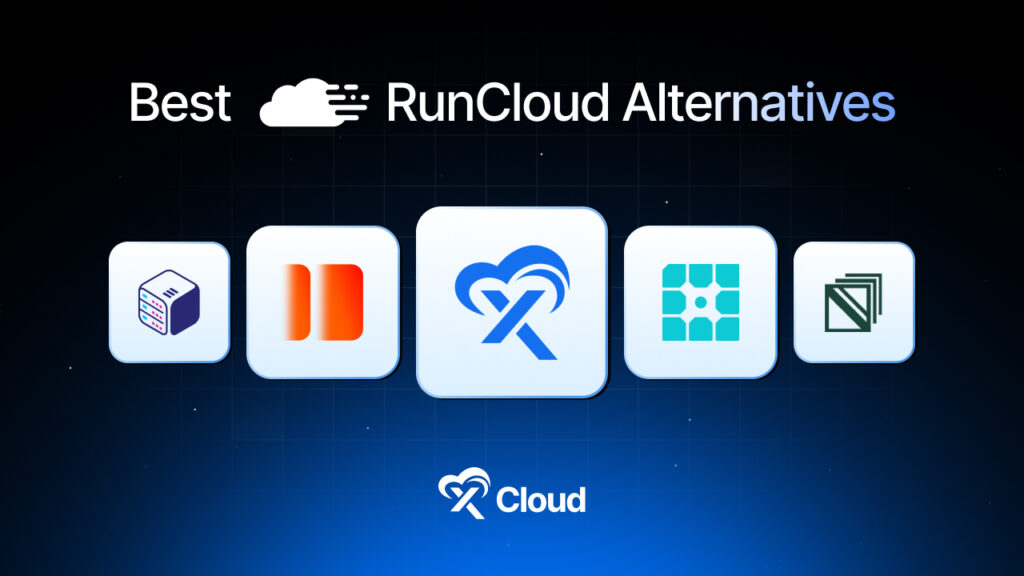
Read this guide to learn about the top RunCloud Alternatives based on hands-on testing, verified user reviews from Trustpilot and G2, and recommendations from industry experts. Each RunCloud alternative was evaluated for pricing, WordPress optimization, support quality, and scalability.
Whether you’re managing a single WordPress site or running an agency with dozens of clients, you’ll find a solution that matches your requirements and budget.
Table of Contents
Quick Summary / TL;DR
Too Long; Didn’t Read? Here’s what you need to know about the best RunCloud Alternatives available in 2026:
| If You Want To… | Use This | Expected Savings | Setup Time |
|---|---|---|---|
| Get a free tier with unlimited sites | xCloud | Up to 40% vs RunCloud | 5 minutes |
| Maximum WordPress optimization | GridPane | Premium performance | 15 minutes |
| Affordable multi-app hosting | ServerAvatar | $0 starting price | 10 minutes |
| WordPress-focused simplicity | SpinupWP | 70% vs managed hosts | 8 minutes |
| Laravel + WordPress flexibility | Ploi | €8/month starting | 12 minutes |
Industry Expert Pick for Beginners: Among all of the RunCloud Alternatives, xCloud offers a genuinely free tier with 1 server and 10 sites, plus a 5-star Trustpilot rating from 297+ verified reviews, making it one of the most beginner-friendly RunCloud Alternatives.
Best for WordPress Agencies: GridPane is purpose-built for WordPress professionals with advanced security and Object Cache Pro integration.
Best for Budget-Conscious Users: ServerAvatar has a $0/month starting tier with WordPress, PHP, and Node.js support.
Why WordPress Professionals Are Seeking RunCloud Alternatives in 2026
The server management landscape has shifted significantly. According to W3Techs, WordPress powers 43.5% of all websites globally, creating massive demand for efficient server management tools. Here’s why professionals are exploring alternatives:
Pricing Structure Changes: RunCloud’s Essentials plan starts at $9/month for a single server, while many modern RunCloud Alternatives now offer free tiers or far more generous entry-level plans.
Free Tier Discontinuation: RunCloud no longer offers a free tier, pushing budget-conscious users toward alternatives that still provide no-cost options.
Feature Gaps: Some users report that advanced features like one-click app deployment for tools like n8n, Mautic, and custom Docker stacks require higher-tier plans or aren’t available at all — a key reason many users migrate to more flexible RunCloud Alternatives.
Support Limitations: According to G2 reviews, support on lower-tier RunCloud plans can be limited, with some users noting that “you are on your own with your configuration and applications.”
How We Ranked These Alternatives
The evaluation methodology for these RunCloud alternatives follows industry-standard criteria used by hosting experts at publications like WPBeginner and HostingAdvice, ensuring each RunCloud alternative is compared fairly and objectively.
| Criterion | Why It Matters | Weight |
|---|---|---|
| Pricing & Value | Total cost including all needed features | High |
| Free Tier Availability | Entry barrier for testing/small projects | High |
| WordPress Optimization | Caching, staging, one-click installs | High |
| User Reviews | Trustpilot, G2, Capterra ratings | Medium |
| Cloud Provider Support | DigitalOcean, Vultr, AWS, Hetzner, etc. | Medium |
| Support Quality | Response time, technical depth | Medium |
| Feature Breadth | Backups, SSL, monitoring, team management | Medium |
Master Comparison Between the Best RunCloud Alternatives
| Rank | Platform | Rating | Free Tier | Starting Price | Best For |
|---|---|---|---|---|---|
| 🥇 | xCloud | ★★★★★ | ✅ Yes (1 server, 10 sites) | $0/month | WordPress professionals wanting free tier + growth |
| 🥈 | GridPane | ★★★★★ | ✅ Yes (Core plan, 25 sites) | $0/month | Agencies demanding maximum WordPress performance |
| 🥉 | ServerAvatar | ★★★★☆ | ✅ Yes (1 server, 1 site) | $0/month | Multi-stack developers (PHP, Node.js, WordPress) |
| 4 | SpinupWP | ★★★★☆ | ❌ No | $12/month | WordPress developers wanting clean simplicity |
| 5 | Ploi | ★★★★☆ | ✅ Yes (1 server, 1 site) | €8/month | Laravel and WordPress hybrid projects |
| 6 | Moss.sh | ★★★☆☆ | ✅ Yes (1 integration) | $0/month | Teams needing collaboration features |
| 7 | CloudPanel | ★★★★☆ | ✅ Yes (Open source) | $0/month | Self-hosted enthusiasts wanting full control |
🥇 xCloud – Best for WordPress Professionals Seeking Value
According to Trustpilot, xCloud has emerged as a leading alternative with a 5-star rating from 297+ verified users. The platform, developed by WPDeveloper (the team behind Essential Addons for Elementor with 2M+ active users), has rapidly gained recognition for combining enterprise features with accessible pricing.
What sets xCloud apart from other RunCloud alternatives is its genuinely free tier that includes 1 server and 10 sites – a significant advantage over RunCloud’s paid-only model.
Users consistently report substantial cost savings, with Online Media Masters noting “up to 40% cost savings at equivalent specs” when comparing to other managed solutions.
The platform supports major cloud providers, including Vultr, DigitalOcean, AWS, Hetzner, Google Cloud, and Linode, giving users flexibility in choosing their infrastructure. Beyond WordPress, xCloud offers one-click deployment for n8n automation workflows, Mautic marketing automation, and custom Docker stacks.
Real user feedback highlights why xCloud is quickly becoming one of the most talked-about RunCloud Alternatives, especially among WordPress freelancers and agencies seeking fast iteration and responsive support. One Trustpilot reviewer shared: “Nearly every suggestion I and others in their Facebook group have shared has been acknowledged, considered, discussed, and in a huge chunk of cases, have actually been implemented… that’s rare in this industry.”
Another user noted significant cost savings: “Reduced server costs by 60% when I switched to xCloud from shared cPanel hosting. Had a few hiccups but nothing xCloud’s amazing support couldn’t handle.”
Key Features
- Free Tier: 1 server, 10 sites, unlimited bandwidth.
- One-Click Apps: WordPress, WooCommerce, n8n, Mautic, LLM hosting, and 15+ applications
- Server Stacks: LEMP, OpenLiteSpeed, MERN — choose based on your needs
- Caching: Full-page NGINX FastCGI caching and Redis Object caching
- Security: Free SSL, automatic updates, isolated environments
- Backups: Automated backups to AWS S3, DigitalOcean Spaces, or any S3-compatible storage
How to Get Started with xCloud?
Getting started with xCloud is pretty simple. Follow these steps:
Option A(Free Tier Availabe):
- Sign up at xCloud.
- Connect your cloud provider (Vultr, DigitalOcean, etc.)
- Deploy your first server in under 5 minutes
- Install WordPress with one click
Option B: Managed Hosting
Choose xCloud’s managed server option starting at $5/month for a fully managed experience with included server resources.
Helpful Resources:
Pros and Cons
| Pros | Cons |
|---|---|
| ✅ Genuinely free tier with 10 sites | ❌ Newer platform (launched 2024) |
| ✅ 5-star Trustpilot rating (297+ reviews) | ❌ Email hosting still maturing |
| ✅ One-click n8n, Mautic, Docker deployment | ❌ Some advanced features require paid plans |
| ✅ White-label reseller option included | |
| ✅ 24/7 support with video call option |
Best for: WordPress developers, agencies, and freelancers who want enterprise-grade features without enterprise pricing and are evaluating modern RunCloud Alternatives. Ideal for those migrating from RunCloud who need a free tier to test before committing.
🥈 GridPane – Best for WordPress Agencies Demanding Performance
GridPane has built a strong reputation among serious WordPress professionals, hosting over 120,000 websites according to their official data. The platform focuses exclusively on WordPress, making it the go-to choice for agencies and developers who prioritize performance and security above all else.
According to G2 reviews, GridPane users consistently praise its performance capabilities, with one reviewer noting: “None of the alternative cloud web hosting control panels offer the same level of performance.” The platform includes premium features like Object Cache Pro integration and Fortress security, typically available only in expensive enterprise solutions.
GridPane introduced a free Core plan in late 2025, allowing users to host up to 25 websites on Vultr or their managed PeakFreq servers. This democratizes access to enterprise-grade WordPress hosting for smaller operations.
Key Features
- Free Core Plan: 25 websites, server page caching, Redis object caching, 7G Firewall
- WordPress-Specific: WP-CLI, staging environments, WordPress multisite support
- Security: Fortress security, Fail2Ban, malware scanning with Maldet + ClamAV
- Performance: Object Cache Pro integration, OpenLiteSpeed or Nginx stacks
- Team Features: Client portal, white-label branding (higher tiers)
How to Get Started with GridPane?
Option A: Free Core Plan
- Sign up for GridPane Core (free)
- Connect your Vultr account or use PeakFreq managed servers
- Provision your first WordPress-optimized server
- Deploy sites with built-in security and caching
Option B: Panel Plan ($100/month)
Unlock unlimited servers, 50 sites, and support ticket access for growing agencies.
Pros and Cons
| Pros | Cons |
|---|---|
| ✅ Free tier with 25 sites | ❌ WordPress-only (no Laravel, Node.js) |
| ✅ Object Cache Pro integration | ❌ Paid plans start at $100/month |
| ✅ Enterprise security (Fortress) | ❌ Learning curve for non-technical users |
| ✅ Excellent Facebook community support | ❌ Limited cloud provider integrations on free tier |
| ✅ Snapshot failover for disaster recovery |
Best for: WordPress agencies managing 20+ client sites who need maximum performance, advanced security, and don’t mind the WordPress-only limitation.
🥉 ServerAvatar – Best for Multi-Stack Developers on a Budget
ServerAvatar stands out as a versatile platform supporting WordPress, Laravel, PHP, and Node.js applications — making it ideal for developers working across multiple technology stacks. With a free tier that includes 1 server and 1 site, it’s accessible to beginners while scaling to enterprise needs.
According to G2 reviews, ServerAvatar has earned recognition for its balance of pricing and features. One verified reviewer noted: “ServerAvatar has been fantastic, striking the perfect balance of competitive pricing, good server availability, and highly knowledgeable technical support.”
The platform integrates with 100+ cloud providers, offering flexibility that few competitors match. ServerAvatar also provides a white-label suite for agencies wanting to resell hosting under their own brand.
Key Features
- Free Tier: 1 server, 1 site, essential features included
- Multi-Stack: WordPress, Laravel, PHP, Node.js support
- One-Click Apps: WordPress, n8n, Mautic, Nextcloud, Moodle, and 15+ applications
- Server Stacks: Apache, Nginx, OpenLiteSpeed, MERN
- Security: 8G Firewall, Fail2ban, isolated environments
- Team Management: Roles, permissions, and alias credentials
How to Get Started with ServerAvatar?
Option A: Free Tier ($0/month)
- Create a ServerAvatar account
- Connect your VPS provider (Vultr, Hetzner, DigitalOcean, etc.)
- Provision a server with your preferred stack
- Deploy applications via one-click installer
Option B: Tier 2 ($19/month)
Unlock up to 25 self-managed servers with team management features.
Pros and Cons
| Pros | Cons |
|---|---|
| ✅ $0 free tier available | ❌ Panel not multi-language |
| ✅ Supports 100+ cloud providers | ❌ No ModSecurity one-click setup |
| ✅ WordPress + Node.js + Laravel support | ❌ Site migration could be smoother |
| ✅ White-label reseller included | |
| ✅ Active Facebook community (4.8/5 rating) |
Best for: Full-stack developers and agencies managing diverse projects across WordPress, Laravel, and Node.js who need maximum provider flexibility at minimum cost.
4. SpinupWP – Best for WordPress Developers Wanting Simplicity
SpinupWP, created by the team behind WP Migrate, has earned a reputation as one of the cleanest and most developer-friendly RunCloud Alternatives for WordPress-focused professionals. The platform bridges the gap between “scary self-hosting and expensive managed hosting,” as their community describes it.
According to Capterra reviews, SpinupWP users consistently praise its simplicity: “SpinupWP made setting up and managing my own WordPress server super simple. The dashboard is powerful yet intuitive, and the documentation is comprehensive and helpful.”
While SpinupWP doesn’t offer a free tier, its $12/month Personal plan includes all essential features, making it competitive for serious WordPress developers.
Key Features
- WordPress-Focused: Optimized specifically for WordPress with built-in caching and security
- Clean Dashboard: Intuitive interface with excellent documentation
- Git Deployment: Push code directly from GitHub, GitLab, or Bitbucket
- Staging: One-click staging environments for testing
- Backups: Automated backups to Amazon S3, DigitalOcean Spaces, etc.
- REST API & CLI: Full programmatic control for automation
How to Get Started with SpinupWP?
Option A: Personal Plan ($12/month)
- Start the free trial.
- Connect DigitalOcean, Vultr, Linode, or other supported providers
- Spin up your first WordPress-optimized server
- Add sites with automatic SSL configuration
Option B: Team Plan ($39/month)
Add team members, unlimited servers, and priority support.
Pros and Cons
| Pros | Cons |
|---|---|
| ✅ Best-in-class documentation | ❌ No free tier available |
| ✅ Clean, intuitive dashboard | ❌ WordPress/PHP only (no Node.js) |
| ✅ Git deployment built-in | ❌ No file manager in dashboard |
| ✅ Free plan available | ❌ Pricing per-server model |
| ✅ Created by trusted WP developers |
Best for: WordPress developers who value clean design, excellent documentation, and don’t mind paying for a premium experience. Ideal for those who found managed hosting too restrictive.
5. Ploi – Best for Laravel and WordPress Hybrid Projects
Ploi has carved out a niche as the preferred server management tool for Laravel developers who also work with WordPress. The platform’s Laravel optimization is unmatched, while still providing solid WordPress support with one-click installation.
According to SaaSworthy, Ploi is “generally praised for its ease of use, comprehensive features, and affordability.” The platform starts at €8/month (approximately $10), making it one of the most affordable paid options available.
Ploi’s 2025 recap highlighted significant improvements, including IPv6 support, a CLI tool for terminal-based management, and making Ploi Core completely free and open-source.
Key Features
- Laravel Optimized: Automatic detection and environment editor
- WordPress Support: One-click WordPress installation
- Git Deployment: GitHub, GitLab, Bitbucket with auto-deploy on push
- Load Balancers: Easy load balancer setup
- DNS Management: Built-in DNS record management
- Notifications: Email, Slack, Discord, Telegram, and mobile app alerts
Pros and Cons
| Pros | Cons |
|---|---|
| ✅ Best Laravel integration | ❌ Support can be slow on basic plans |
| ✅ Affordable €8/month starting price | ❌ Less WordPress-specific features |
| ✅ 5-day free trial | ❌ Limited documentation in some areas |
| ✅ Open-source Ploi Core | ❌ Node.js support not out-of-box |
| ✅ Active development and updates |
Best for: Developers who work primarily with Laravel but also maintain WordPress projects. The €8/month starting price makes it accessible for freelancers and small agencies.
6. Moss.sh – Best for Team Collaboration
Moss positions itself as a “virtual sysadmin” that handles server management tasks while enabling team collaboration. The platform is unique in its approach to connecting team members around shared server infrastructure.
With a free tier that includes 1 integration and 25 Git deployments, Moss offers an accessible entry point for small teams. The platform supports WordPress, Laravel, Symfony, and other PHP applications.
Pros and Cons
| Pros | Cons |
|---|---|
| ✅ Free tier available | ❌ No backup functionality |
| ✅ Team collaboration focus | ❌ Ubuntu only |
| ✅ Zero downtime deployments | ❌ Server monitoring costs extra |
| ✅ Clean interface | ❌ Limited cloud provider integrations |
Best for: Development teams who need collaboration features and zero-downtime deployments. Less suitable for solo developers or WordPress-only users.
7. CloudPanel – Best for Self-Hosted Control
CloudPanel, is a free, open-source server control panel that has gained significant traction among users searching for self-hosted RunCloud Alternatives with complete control and zero licensing fees.
As an open-source solution, there are no licensing fees — ever.
The platform supports PHP, Node.js, Python, and static sites, making it versatile for various web applications. CloudPanel is particularly popular among users coming from cPanel who want a modern alternative without monthly fees.
Pros and Cons
| Pros | Cons |
|---|---|
| ✅ 100% free and open-source | ❌ Self-managed (you handle updates) |
| ✅ No licensing fees ever | ❌ No managed server option |
| ✅ Modern, clean interface | ❌ Limited compared to paid panels |
| ✅ Active community support | ❌ Requires more technical knowledge |
Best for: Technically proficient users who want maximum control without any recurring panel costs. Ideal for self-hosted enthusiasts and budget-constrained projects.
Feature Comparison Matrix
| Feature | xCloud | GridPane | ServerAvatar | SpinupWP | Ploi |
|---|---|---|---|---|---|
| Free Tier | ✅ | ✅ | ✅ | ❌ | ✅ |
| WordPress One-Click | ✅ | ✅ | ✅ | ✅ | ✅ |
| n8n Deployment | ✅ | ❌ | ✅ | ❌ | ❌ |
| Node.js Support | ✅ | ❌ | ✅ | ❌ | ❌ |
| Laravel Support | ✅ | ❌ | ✅ | ❌ | ✅ |
| Team Management | ✅ | ✅ | ✅ | ✅ | ✅ |
| White-Label | ✅ | ✅ | ✅ | ❌ | ❌ |
| OpenLiteSpeed | ✅ | ✅ | ✅ | ❌ | ❌ |
| Object Caching | ✅ | ✅ | ✅ | ✅ | ✅ |
| Git Deployment | ✅ | ✅ | ✅ | ✅ | ✅ |
Cost Breakdown: Free vs Paid Options
| Platform | Free Option | First Paid Tier | Best Value Plan |
|---|---|---|---|
| xCloud | 1 server, 10 sites | $5/mo (managed) | Pro at $19/mo |
| GridPane | 25 sites (Core) | $100/mo (Panel) | Panel at $100/mo |
| ServerAvatar | 1 server, 1 site | $19/mo (Tier 2) | Tier 2 at $19/mo |
| SpinupWP | Free trial only | $12/mo (Personal) | Team at $39/mo |
| Ploi | 1 server, 1 site | €8/mo | Unlimited at €30/mo |
| Moss.sh | 1 integration | $9/mo (Starter) | Professional at $19/mo |
| CloudPanel | Full (open-source) | N/A | N/A (free) |
Common Mistakes to Avoid When Switching
- Not Testing Migration First: Always test your migration on a staging site before moving production. Most platforms offer free trials — use them.
- Ignoring Server Location: Choose a data center close to your audience. All platforms support multiple regions — select wisely.
- Overlooking Backup Strategy: Even with built-in backups, maintain off-platform backups. Connect to S3, DigitalOcean Spaces, or similar.
- Choosing Based on Price Alone: The cheapest option isn’t always best. Consider support quality, features you’ll actually use, and long-term scalability.
- Forgetting DNS TTL: Before migration, lower your DNS TTL to 300 seconds (5 minutes) at least 24-48 hours ahead to enable faster propagation.
- Not Documenting Current Setup: Screenshot your RunCloud configurations, note PHP versions, caching settings, and custom rules before switching.
Frequently Asked Questions
Which RunCloud alternative should I start with?
Start with xCloud if you want a free tier with room to grow. Among all RunCloud Alternatives, it offers the most generous free plan while remaining scalable for agencies and professionals. It offers the most generous free plan (1 server, 10 sites) and has earned a 5-star Trustpilot rating. For WordPress-only with maximum performance, GridPane’s free Core plan is excellent
Do I need to pay for a server management panel?
No, several alternatives offer genuinely free tiers. xCloud, ServerAvatar, GridPane (Core), and CloudPanel all have free options. However, paid plans typically include better support and advanced features like team management and white-labeling
How long does migration from RunCloud take?
Most migrations complete in 1-3 hours per site depending on database size. Platforms like xCloud and ServerAvatar offer free migration tools. Plan for DNS propagation time (up to 24-48 hours) after the technical migration.
Can I manage non-WordPress sites with these alternatives?
Yes, ServerAvatar, Ploi, and xCloud support Laravel, PHP, Node.js, and other applications. GridPane and SpinupWP are WordPress-only. CloudPanel supports PHP, Node.js, Python, and static sites.
What’s the most underrated RunCloud alternative?
ServerAvatar is often overlooked despite offering WordPress, Laravel, Node.js, and 100+ cloud provider integrations at $0/month starting. Users report support that “spent hours running tests until problems were completely fixed.
Will these alternatives work for WooCommerce stores?
Yes, all platforms support WooCommerce. GridPane and xCloud are particularly optimized for WooCommerce with Redis object caching and performance-tuned stacks. For high-traffic stores, GridPane’s Object Cache Pro integration is valuable.
How do I know if my server resources are adequate?
All platforms provide server monitoring. Start with 2GB RAM for small-medium WordPress sites. Monitor CPU and memory usage for 1-2 weeks, then scale as needed. Most platforms allow vertical scaling without migration.
What happens to my sites if I cancel my panel subscription?
Your sites remain on your cloud server – you just lose panel access. You’d need to manage via SSH/command line or migrate to another panel. This is why self-hosted options like CloudPanel are attractive for maximum control.
Can I try multiple alternatives simultaneously?
Absolutely, and you should. Use free tiers to test interfaces, performance, and support responsiveness. Many professionals maintain accounts on 2-3 platforms for different use cases or client requirements.
Where can I get help if I’m stuck during migration?
Most platforms offer documentation and community forums. xCloud provides 24/7 support with video call options. GridPane has an active Facebook community. SpinupWP’s documentation is considered industry-leading.
Your 2026 Server Management Roadmap
The server management panel landscape offers more choice than ever, with RunCloud Alternatives now outperforming traditional panels in pricing, flexibility, and feature depth. Based on the analysis above, here are the expert picks by goal:
Expert Picks by Goal
| Your Goal | Best Choice | Why |
|---|---|---|
| Best Free Tier | xCloud | 1 server, 10 sites |
| Maximum WordPress Performance | GridPane | Object Cache Pro, Fortress security |
| Multi-Stack Development | ServerAvatar | WordPress + Node.js + Laravel |
| Simplest WordPress Experience | SpinupWP | Clean UI, excellent docs |
| Laravel + WordPress | Ploi | Best Laravel integration |
| Complete Control (Self-Hosted) | CloudPanel | 100% free, open-source |
Action Plan
- Get started: Sign up for free tiers on xCloud and GridPane to test interfaces and performance
- Within 30 Days: Migrate one non-critical site to your chosen platform and monitor for 2-3 weeks
- Within 60 Days: Complete full migration from RunCloud, maintaining documented configurations
The WordPress server management ecosystem continues to evolve rapidly. The alternatives highlighted in this guide represent the current state of the industry, each offering unique advantages for different use cases. Choose the platform that aligns with your technical requirements, budget constraints, and growth trajectory and don’t hesitate to test multiple RunCloud Alternatives before committing long-term.