













The web development landscape in 2026 is defined by speed, scale and intelligence. Developers are building AI-powered platforms, real-time collaboration tools, high-traffic APIs and cloud-native microservices at a pace that demands a backend technology that can keep up. Node.js is an open-source, cross-platform JavaScript runtime built on Google’s V8 engine that executes JavaScript code outside the browser.
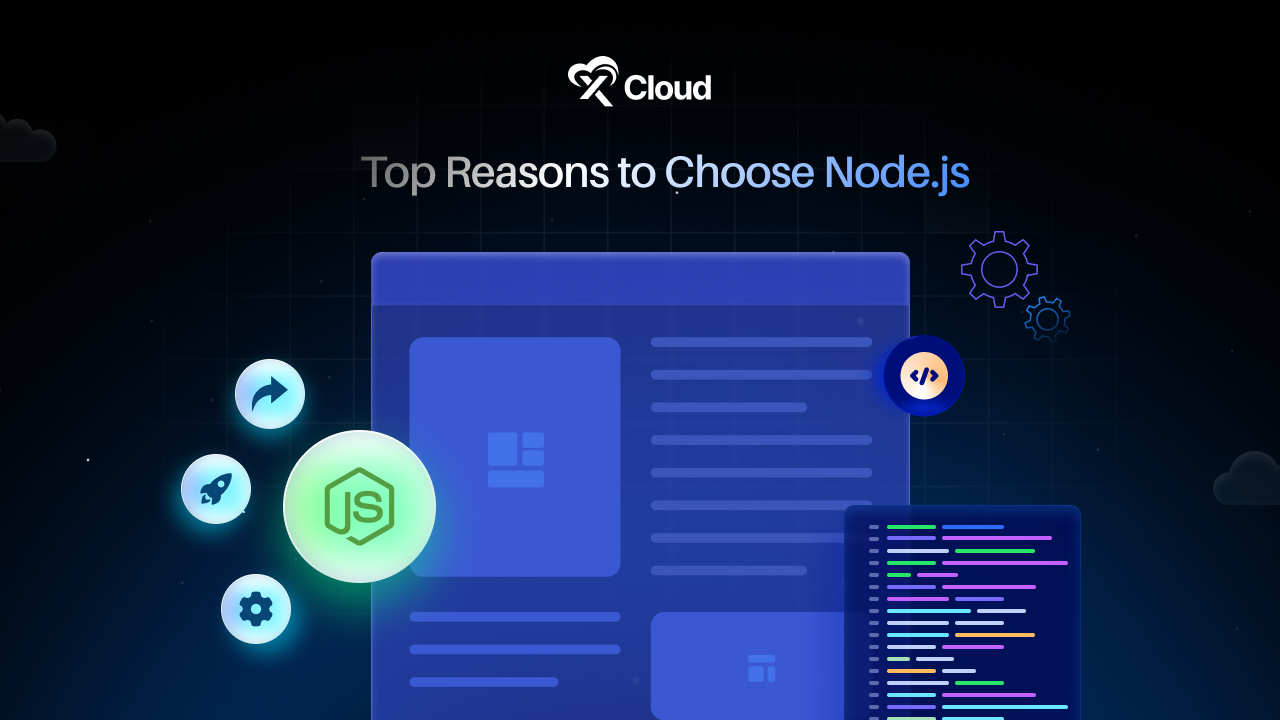
It uses an event-driven, non-blocking I/O model that makes it exceptionally efficient for building fast, scalable network applications. Since its release, Node.js has become one of the most widely adopted backend technologies in the world, powering everything from startup MVPs to enterprise-grade platforms.
This guide walks through seven compelling reasons developers and technical decision makers continue to reach for Node.js when starting a new web project.
TL;DR (Too long, Didn’t Read)
Node.js is JavaScript on the server: the same language you use in the browser, now powering your backend, APIs and real‑time apps.
| What it does | How it helps |
| Ships features faster with JavaScript on both frontend and backend. | Faster iteration, less context‑switching, quicker releases. |
| Built for APIs, real‑time apps, and microservices. | Fits modern web, chat, streaming, and modular backends. |
| Scales cheaply and efficiently under load. | Great for cloud and serverless, low cost per request. |
| Huge NPM ecosystem for AI, edge, and dev‑ops. | Plug‑and‑play tools instead of building from scratch. |
| Future‑proof for cloud‑native and AI‑enabled products. | Strong for modern apps; less ideal for heavy CPU or legacy Java. |
Why Choose Node.js for Web Development in 2026?
Node.js remains a top choice for web development in 2026 because it aligns perfectly with modern demands for speed, scalability and real‑time functionality, with more than 45% of backend developers worldwide actively using it in production environments today.
Here is a direct answer to the core question before we dive deeper:
- Performance: Node.js handles thousands of concurrent connections efficiently using its single-threaded event loop and non-blocking I/O model.
Scalability: Its microservices-friendly architecture allows teams to scale individual components without rebuilding the entire application.
Unified stack: JavaScript runs on both frontend and backend, which reduces context switching and speeds up development cycles. - Ecosystem: The NPM registry contains over two million packages, giving developers pre-built solutions for nearly every common development challenge.
AI and API readiness: Node.js integrates cleanly with AI services, REST APIs and GraphQL layers, making it well-suited for modern intelligent applications.
1. High Performance And V8 Engine Efficiency
Speed is not a luxury in 2026. Users expect sub-second responses and slow applications lose conversions. Node.js was built with performance as a first principle.
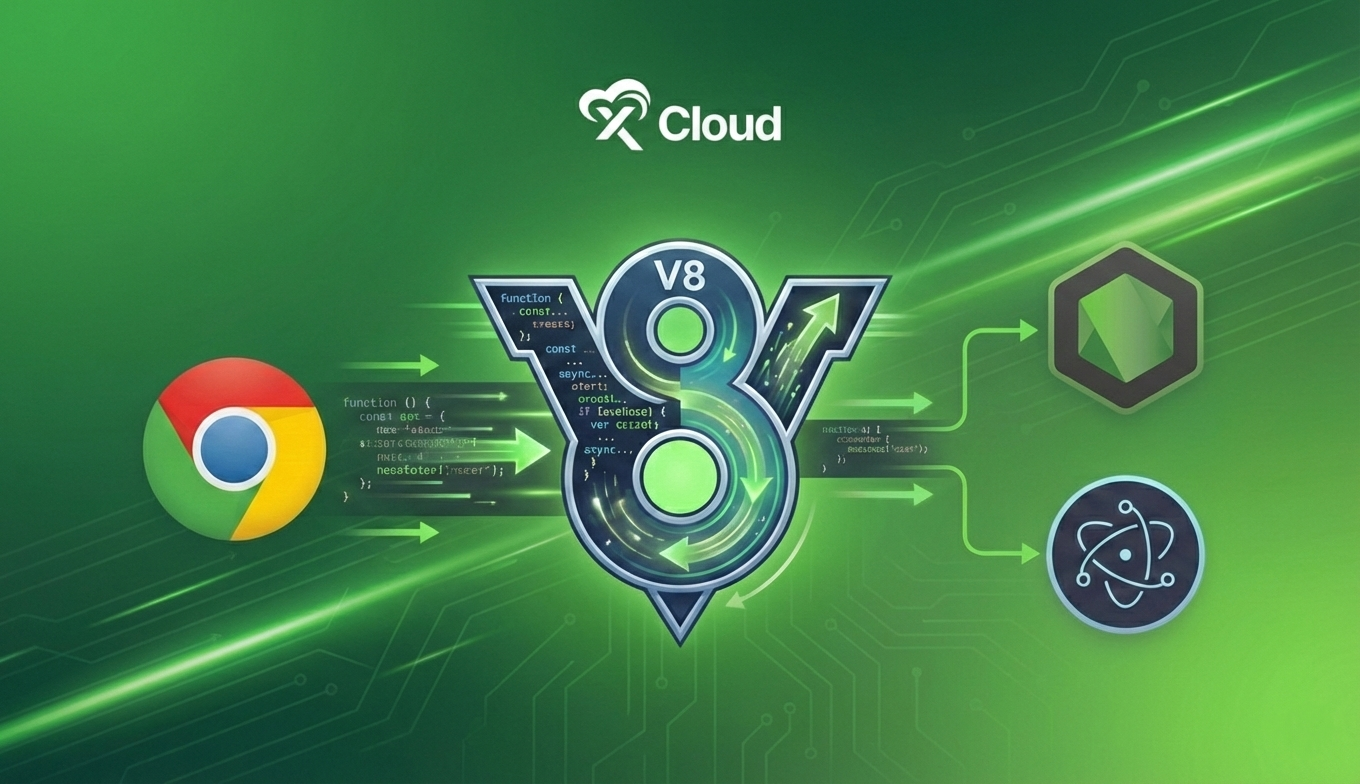
Node.js runs on Chrome’s V8, which compiles JavaScript directly into native machine code instead of interpreting it line by line. This design removes much of the overhead that slowed traditional scripting languages. Combined with a single-threaded event loop, it handles requests asynchronously without waiting for earlier operations to finish.
In practical terms, the non-blocking I/O model keeps your server active during database queries or file reads. It processes other requests and returns when the data is ready.
Key Performance Advantages
- Native machine code compilation through the V8 engine
- Reduced execution overhead compared to interpreted runtimes
- Single-threaded event loop for efficient request handling
- Asynchronous processing for better concurrency
- Non blocking I O that prevents idle server time
- Strong throughput under high traffic conditions
- Reliable performance for real-time applications
Companies like LinkedIn and Uber rebuilt parts of their backend infrastructure using Node.js to improve scalability and efficiency. LinkedIn’s mobile backend migration from Ruby on Rails to Node.js cut servers from roughly 30 down to 3 and delivered up to 20x faster performance in certain scenarios.
2. Scalability And Microservices Architecture
Growing applications need infrastructure that expands with demand. Node.js was built with scalability in focus from day one.
Node.js scalability and performance work together. Its lightweight runtime fits naturally with microservices architecture, where a large system is split into smaller independent services that communicate through APIs. Each service can be deployed, updated and scaled on its own. If your payment service faces a traffic spike, you scale it without affecting authentication or notifications.
Why It Works Well for Microservices
- Lightweight runtime with low memory usage
- Independent service deployment and scaling
- Faster updates without system-wide disruption
- API driven communication between services
- Efficient handling of traffic spikes in specific modules
Building microservices with Node.js is common among teams using Docker and Kubernetes. Its small container footprint allows quick startup times and reduced resource consumption compared to heavier runtimes. Netflix, often cited in backend architecture discussions, relies heavily on Node.js within its microservices infrastructure to serve millions of concurrent users.
3. Unified JavaScript Stack Across Frontend And Backend
Switching between programming languages adds hidden costs in development. Node.js removes this for teams already using JavaScript on the frontend.
Using JavaScript across the stack allows frontend developers to contribute to backend logic without learning a new language. Teams can share code, utilities and business logic between client and server. This is especially effective in frameworks like Next.js or Nuxt.js, where server-side rendering and API routes coexist in the same codebase.
Advantages of a Unified Stack
- Shared code and utilities between frontend and backend
- Reduced context switching for developers
- Faster iteration cycles due to consistent mental models
- Simplified hiring process with one language for the full stack
- Lower engineering costs and reduced coordination overhead
Startups and teams using Node.js alongside React, Vue or Angular report smoother development and faster product iterations because the same language runs throughout the application.
4. Massive NPM Ecosystem And Developer Velocity
One of Node.js’s greatest strengths is its ecosystem rather than the runtime itself.
The NPM ecosystem is the largest software registry in existence. With millions of open-source packages, developers rarely need to build foundational functionality from scratch. Examples include:
- Authentication solutions
- File upload handling
- Task scheduling
- CSV parsing
- Third-party API integration
For businesses prioritizing speed, the NPM ecosystem enables rapid development while providing reliable, production-ready foundations.
Benefits for Developer Velocity
- Faster feature delivery using prebuilt, well-tested components
- Reduced the need to reinvent the wheel
- Access to mature frameworks like Express, Fastify, NestJS and Hapi
- Lower technical risk when building new functionality
- Accelerated time to market, giving a competitive edge
5. Real-Time Capabilities with Non-Blocking I/O
Modern applications demand live feeds, instant notifications, collaborative editing and real-time dashboards. Node.js was built to handle these scenarios.
Real-time web apps with Node.js use its non-blocking I/O model and event-driven architecture to maintain persistent connections with many clients at once. With WebSocket libraries like Socket.io, servers can push updates instantly rather than waiting for client polling requests.
Key Benefits for Real-Time Applications
- Persistent connections for multiple clients simultaneously
- Instant push updates using WebSockets
- Event-driven architecture reacts to incoming data immediately
- Supports chat apps, live sports scores, collaborative editors, and trading platforms
- Eliminates the need for a separate technology stack for live interactivity
Companies like Slack and Trello rely on Node.js for real-time data delivery at scale, providing seamless live experiences for their users.
6. AI Integration And API-Friendly Architecture
AI has become a core part of web applications in 2026, and Node.js is well-suited as the integration layer between apps and AI services.
Its backend architecture aligns naturally with an API-first world. Whether calling OpenAI’s API, building a retrieval-augmented generation pipeline, or streaming model outputs in real time, Node.js handles async, I-O-heavy workflows efficiently. Libraries like LangChain.js and official SDKs from major AI providers offer strong Node.js support.
Key Advantages for AI And API Workflows
- Efficient async handling for I O-heavy operations
- Smooth integration with AI APIs and real-time model streaming
- Simplified building and consuming of REST and GraphQL endpoints
- Lightweight runtime ideal for serverless environments
- First-class support on platforms like AWS Lambda, Google Cloud Functions, and Vercel
- Orchestrates and delivers AI-driven results without added complexity
For teams building AI-native products or integrating intelligence into workflows, Node.js provides the reliable architecture to connect, orchestrate and scale efficiently.
7. Cost Efficiency And Faster Time to Market
Business outcomes are as important as technical ones. Node.js has a proven track record of reducing development time and infrastructure costs.
Its asynchronous, efficient architecture handles more concurrent requests on fewer servers than traditional blocking models, lowering hosting expenses as applications scale. Using a single language across frontend and backend also reduces team size, cutting payroll and recruiting costs.
Key Benefits for Cost And Speed
- Handles high concurrency with fewer servers
- Reduced hosting and infrastructure costs
- Smaller, more versatile engineering teams
- Faster onboarding due to familiar JavaScript syntax
- Rich NPM ecosystem accelerates development
- Productivity ramps up quickly with well-documented frameworks
- Early-stage speed builds a competitive advantage
Node.js vs Other Backend Frameworks
No technology choice exists in isolation. Understanding how Node.js compares to established alternatives helps teams make informed decisions.
| Aspect | Node.js (JavaScript/TypeScript) | Django (Python) | Laravel (PHP) | Express (Node layer) | Spring (Java) |
| What it feels like | Lightweight, flexible runtime where you plug in what you need. | “All‑in‑one” box: lots of features ready to use. | Elegant PHP toolkit that adds structure and batteries. daily | Minimal router on top of Node; very thin layer. daily | Heavy but powerful enterprise‑style framework. |
| Speed & concurrency | Great for I/O‑heavy workloads; handles many connections at once with async, non‑blocking I/O. | Good for CPU‑heavy jobs; uses sync‑by‑default model, so concurrency needs more setup. | Decent for typical web apps; not optimized for tens of thousands of concurrent users. peerbits | Same speed as Node; performance depends on how you write logic. daily | Very stable and fast under load, but with more setup and boilerplate. |
| Ease of starting | Easy if you already know JavaScript; barebones so you choose your own stack. | Fast for simple CRUD apps thanks to built-in admin, ORM, and auth. | Friendly for PHP devs; lots of guides and “Laracasts‑style” learning paths. | Dead simple for small APIs; just add plugins as needed. | Steeper onboarding; lots of conventions and configuration. |
| Best use cases | Real‑time apps (chat, streaming), APIs, microservices, tools using JS/TS across frontend and backend. | Data‑heavy dashboards, admin panels, content sites, ML‑adjacent backends. | Traditional web apps, CMS‑like sites, small‑to‑mid business platforms. | REST/GraphQL APIs, lightweight servers, glue between services. | Large enterprise apps, banking‑style systems, Android backends. |
| Learning curve | Easy to start, but async programming and callbacks/promises can confuse beginners. | Gentle if you know Python; strong docs and patterns help. | Clear for PHP devs, but MVC and ecosystem can feel overwhelming at first. | Very low if you already know Node; mostly about structuring routes. | High; lots of concepts and boilerplate up front. |
| Ecosystem & tools | Huge npm ecosystem (5M+ packages); you can pull almost anything in, but quality varies. | Strong Python ecosystem for data, ML, testing, and tooling. | Rich PHP ecosystem with ready‑made packages and templates. | Plugins for everything but nothing is “baked‑in” by default. | Mature Java world with solid tooling, testing, and enterprise libs. |
| Scalability | Scales well horizontally for I/O‑heavy and real‑time systems; needs careful design for CPU‑heavy work. | Scales via multiple instances, caching, and async additions; not as natural for extreme concurrency. | Scales for typical web traffic; can struggle with heavy real‑time or async‑heavy loads. | Same as Node; scales when architectured right (microservices, load‑balancing). | Built for large‑scale systems; complex but very resilient at scale. |
| Security | Secure enough, but you must set up protections yourself; quality depends on packages and config. | Strong builtin protections (CSRF, XSS, SQL injection guards) and admin panel security. | Solid security helpers and hashing, but still depends on dev practices. | Very neutral; security is up to the developer and middleware choices. | Very strong security ecosystem and patterns, but more complex to configure. |
Node.js for Enterprise Applications And Future-Proof Architecture
Node.js has expanded beyond startups, powering mission-critical systems at NASA, PayPal, Microsoft, and Walmart. This reflects the maturity of both the technology and its ecosystem.
For enterprises, Node.js provides a stable, scalable, and forward-looking platform capable of supporting mission-critical workloads. Stability is essential for enterprise adoption:
- Long Term Support (LTS) releases provide predictable maintenance and security patches
- Governance by the OpenJS Foundation ensures ecosystem health and reliability
Architectural Advantages for the Future
- Lightweight runtime ideal for edge computing, bringing computation closer to users
- Supported by platforms like Cloudflare Workers, Deno Deploy, and Vercel
- Strong performance in serverless environments with low cold start times
- Single-language serverless functions reduce developer friction and simplify deployment
Ecosystem Growth Continues to Strengthen Enterprise Appeal
- TypeScript adoption adds static typing for large-scale projects
- Evolving frameworks and improved tooling for testing, deployment, and observability
- Long-term compatibility ensures future-proof applications
Deploying Your Node.js Application
Choosing Node.js is only part of the equation. How and where you deploy your application shapes its reliability, performance and operational cost in production.
If you are new to Node.js, the beginner’s guide to Node.js on xCloud is a practical starting point that covers how the runtime works and what you need to know before going live.
For teams looking for a reliable hosting environment, xCloud’s Node.js hosting is built specifically for JavaScript applications, with infrastructure tuned for the workloads Node.js typically handles.
When you are ready to go live, the step-by-step Node.js deployment guide walks through the entire process from configuring your environment to managing production traffic.
Take Your Web Development to the Next Level with Node.js
If you want to move fast, stay lean and future‑proof your web project, Node.js is one of the smartest bets you can make. From unified JavaScript across frontend and backend to real‑time capabilities, cloud‑native scaling and a massive NPM ecosystem, Node.js gives your team the tools to ship features faster and run them smoothly under load.
The next step is simple: pick a small but meaningful project, spin up a Node.js environment, and start building, your first API‑ready, real‑time‑ready product is only a few lines of code away.
If you have found this blog helpful, feel free to subscribe to our blogs for valuable tutorials, guides, knowledge, and tips on web hosting and server management. You can also join our Facebook community to share insights and take part in discussions. And do not forget to share what you have built. We would love to see your work.
Frequently Asked Questions About Node.js
Check out the following commonly asked questions and answers before choosing Node.js.
1. Is Node.js good for enterprise?
Yes. Node.js is widely used in enterprise environments for APIs, microservices, real‑time dashboards, and internal tools. Its scalability, strong ecosystem and cloud‑native design make it a solid fit for large organizations, especially when paired with modern DevOps, monitoring, and security practices.
2. Is Node.js faster than PHP?
For I/O‑heavy workloads like APIs and real‑time apps, Node.js is usually faster because it is non‑blocking and event‑driven, while classic PHP is mostly synchronous. For simple, static pages or small sites, the difference may be less noticeable but Node.js tends to scale better under heavy concurrent traffic.
3. Is Node.js good for AI apps?
Yes. Node.js works well as the orchestration layer for AI‑powered apps, such as chatbots, AI‑driven dashboards and API backends that call external AI/ML services.
4. When should you NOT use Node.js?
Node.js is less ideal for CPU‑intensive tasks (like heavy video encoding, number crunching or large scientific calculations) and for projects tightly tied to legacy Java or .NET ecosystems.
5. Is Node.js frontend or backend?
Node.js is primarily a backend/runtime that lets you run JavaScript on the server, but it can also power build tools, bundlers and server‑side logic for frontend apps. Most developers use it for backend services, APIs and tooling, while standard browser JavaScript handles the frontend UI.
6. Is Node.js good for web development projects?
Yes. Node.js is a top choice for modern web development because it helps you use JavaScript end‑to‑end, build fast APIs and real‑time features, scale cheaply in the cloud and tap into a huge NPM package ecosystem.