


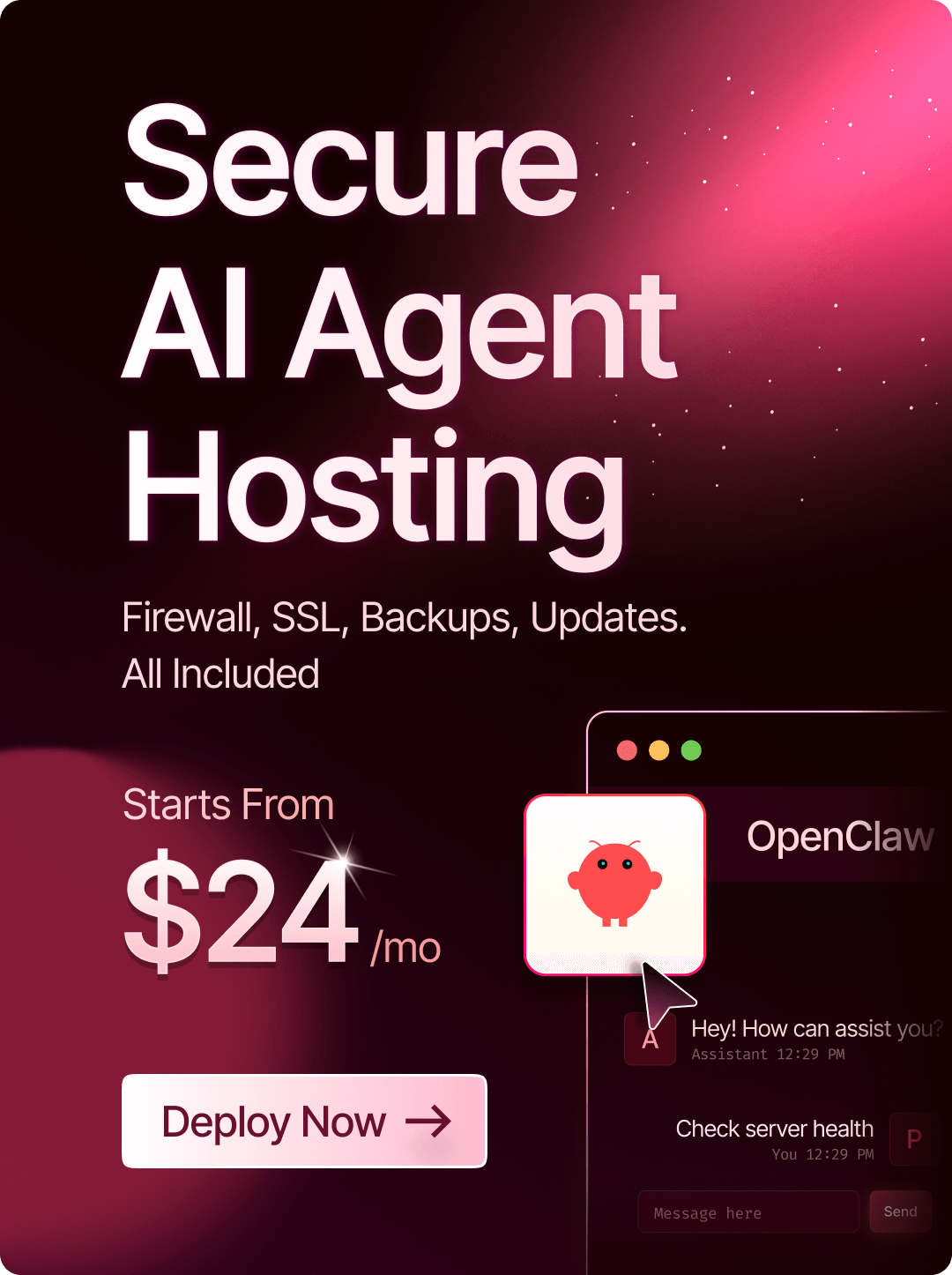










February was a defining month for xCloud. We introduced fully managed OpenClaw Hosting, expanded AI integrations and launched OpenClaw Reset. At the same time, we strengthened WordPress controls, improved server observability, and refined billing flexibility across the platform.
This release is not about small tweaks. It is about giving you deeper control, stronger recovery systems, and smarter AI infrastructure directly from your dashboard.
Imagine launching your own managed AI agent, configuring PHP-FPM per site without touching SSH, resetting OpenClaw in one click, and running AI-powered diagnostics when something breaks.
That is what February looks like.
So grab your coffee, and let us walk you through everything that shipped across v2.3.1 to v2.3.7. 🚀
📸 Highlights of xCloud February 2026 Release
February focused on AI infrastructure, smarter recovery systems, and deeper site-level control. Here is a quick look at what’s new across this month’s updates:
🦀 OpenClaw Hosting (Beta): Launch a fully managed AI agent on a dedicated xCloud server with one-click deployment, built-in messaging channels, and zero manual setup.
🔑 Claude OAuth & Anthropic Support: Generate Claude Code tokens directly from your browser and connect Anthropic API keys without CLI installation.
♻️ OpenClaw Reset: Reinstall OpenClaw from scratch on the same server with automatic backup and fresh credentials — no new server required.
⚙️ Site-Level PHP-FPM Configuration: Control PHP workers, resource limits, and process behavior per site without touching configuration files.
📄 Enhanced WP Debug Log Viewer: Structured log fields, instant search, filtering, and one-click copy for faster troubleshooting.
🔐 Temporary Sudo Users with Auto-Expiration: Create time-limited sudo access that automatically expires after 12 hours.
💳 Flexible Billing Types: Choose subscription, lifetime, or free plans directly during server creation.
Scroll down to explore each feature in detail and see how February strengthens xCloud as a smarter, AI-ready hosting platform. 🚀
❇️ OpenClaw Hosting (Beta): Fully Managed AI Agents on xCloud
February introduced one of the most important additions to xCloud so far — fully managed OpenClaw Hosting.
Many users want a powerful AI agent that can execute real tasks, manage workflows, connect to APIs, and operate across messaging platforms. But setting up infrastructure, securing servers, configuring SSL, and managing updates can slow everything down.
OpenClaw Hosting removes that complexity.
With one click, you can now deploy OpenClaw on a dedicated xCloud Managed Server. The environment comes pre-configured, secured, and optimized to run your AI agent without Docker setup, reverse proxy configuration, or manual SSL handling.
Once deployed, you can:
- Run an AI agent that maintains long-term context
- Execute real tasks and workflows
- Manage files and connect to external APIs
- Integrate messaging channels like Telegram
- Bring your own API keys for OpenAI, Gemini, and other providers
- Scale CPU, RAM, and storage anytime
The dashboard gives you full operational control. You can edit environment variables, manage OpenClaw versions, turn the OpenClaw UI on or off, and monitor updates — all without leaving xCloud.
This feature is ideal for founders building AI-powered products, agencies delivering AI services to clients, and teams that want a managed AI assistant without handling infrastructure.
OpenClaw Hosting marks the beginning of a new layer inside xCloud — not just server management, but AI execution at scale. 🚀
❇️ Claude OAuth, Anthropic Support & Smarter OpenClaw Integrations
OpenClaw became significantly more powerful in February with deeper AI provider integrations and a smoother authentication experience.
One major upgrade is browser-based Claude OAuth token generation. Previously, users needed to install the Claude Code CLI manually to generate tokens. That added friction and extra steps. Now, you can generate your Claude token directly from your browser using the same OAuth flow — no CLI installation required.
The process is simple:
Select the Claude Code option, click Generate Token, and complete the secure OAuth flow. Your token is created instantly and connected to OpenClaw.
In addition, Anthropic API key support is now available. This gives you more flexibility when selecting your LLM provider and makes OpenClaw compatible with a broader AI ecosystem.
We also improved messaging channel management:
- Add or update Telegram channels directly from the dashboard
- Automatic allowlisting when you provide your Telegram User ID during setup
- Graceful handling of malformed Telegram bot inputs
These updates remove setup friction and reduce manual configuration steps. You can now manage AI provider settings, authentication flows, and messaging integrations directly inside xCloud with clarity and control.
February was not just about launching AI agents. It was about making AI integrations cleaner, faster, and more production-ready.
❇️ OpenClaw Reset: Reinstall Clean Without a New Server
OpenClaw environments can evolve quickly. You test new configurations, connect different APIs, adjust workflows, or experiment with new integrations. Sometimes you simply want a clean start.
In the past, that meant provisioning a new server or reinstalling a new server.
Now it does not.
With OpenClaw Reset, you can reinstall OpenClaw from scratch on the same server in a single click. The system automatically creates a backup, removes the existing setup, deploys a fresh instance, and generates new credentials.
You do not need to:
- Spin up another server
- Manually remove containers
- Reconfigure messaging channels from scratch
- Handle low-level cleanup steps
Everything happens inside the dashboard with a structured and safe flow.
This feature is especially useful for developers experimenting with agent logic, agencies testing different client configurations, and teams that want a safe fallback before making major changes.
OpenClaw Reset gives you controlled recovery without infrastructure overhead. It keeps your workflow agile while protecting your environment.
❇️ Site-Level PHP-FPM Configuration: Granular Performance Control
February also introduced deeper performance control for WordPress environments with site-level PHP-FPM configuration.
Before this update, adjusting PHP-FPM settings often required SSH access or server-wide changes. That approach increased risk and limited flexibility, especially when managing multiple sites with different traffic patterns.
Now, you can configure PHP-FPM settings per site directly from the xCloud dashboard.
You can control:
- Process Manager Type
- PM Start Servers
- PM Min Spare Servers
- PM Max Spare Servers
- PM Max Requests
- PM Max Children
This allows you to fine-tune how PHP workers handle requests, manage concurrency, and respond to traffic spikes – without affecting other sites on the same server.
Agencies managing multiple client sites can now allocate resources more strategically. High-traffic sites can receive optimized worker configurations, while smaller sites remain lightweight and efficient.
This update brings enterprise-level tuning capabilities to your dashboard, eliminating manual configuration files and reducing operational risk.
With site-level PHP-FPM control, performance tuning becomes precise, isolated, and fully manageable from a single interface.
❇️ Enhanced WP Debug Log Viewer: Faster, Clearer Troubleshooting
Debugging WordPress issues often means digging through raw log files. Those logs can be large, unstructured, and difficult to interpret quickly.
February improves that experience with a significantly enhanced WP Debug Log Viewer inside the xCloud dashboard.
Logs are now structured into clear fields, including:
- Timestamp
- Level
- Source
- File Path
- Message
- Line Number
Instead of scanning walls of text, you can instantly identify warnings, fatal errors, database issues, and other log levels with proper categorization.
You can also:
- Search and filter large log files instantly
- Copy log messages or file paths with one click
- Download logs for offline review or team collaboration
This upgrade makes troubleshooting faster and more precise. Developers can isolate the root cause quickly. Agencies can share clean logs with team members or clients without manual cleanup.
The goal is simple to reduce debugging time and increase operational clarity. With structured logs and instant filtering, diagnosing WordPress issues becomes efficient and controlled directly from your dashboard.
⭐ xCloud February 2026 Release: Improvements and Bug Fixes
Beyond major feature launches, February delivered a wide range of refinements that improve stability, billing flexibility, and overall usability across the platform.Here is the full list of improvements and fixes of February 2026:
⏺️ Billing type selector added during server creation with support for subscription, lifetime, and free plans.
⏺️ Free plan flow streamlined and corrected across supported providers including Custom/Any, DigitalOcean, and GCP.
⏺️ Users can now resize their LTD plans directly from the dashboard.
⏺️ Storage space validation added for Docker-based One Click Apps before installation.
⏺️ White Label now supports switching between paid and free plans smoothly.
⏺️ Improved site filtering with tag-based filtering and A–Z site name sorting.
⏺️ Improved Docker server monitoring and container health visibility.
⏺️ Improved staging site isolation with unique site users and updated Cloudflare DNS architecture for staging.
⏺️ Improved UI alignment, spacing consistency, and full mobile responsiveness across key modals.
⏺️ Added full Vietnamese language support across the UI and notification channels.
⏺️ Extended 8G Firewall protection to all supported One Click Apps.
⏺️ Fixed server deletion issues that previously resulted in deletion_failed states.
⏺️ Fixed pCloud backup deletion crash.
⏺️ Fixed WordPress version display inconsistencies after core updates.
⏺️ Fixed 502 errors on the Site Snapshots page.
⏺️ Fixed Site Log export failures.
⏺️ Fixed staging push issues related to Patchstack and storage validation.
⏺️ Fixed OpenClaw updater and rescue feature issues.
⏺️ Fixed OpenClaw server page crashes.
⏺️ Fixed RAM monitoring display inconsistencies.
⏺️ Fixed invalid character generation in database user passwords.
⏺️ Fixed OpenLiteSpeed SSL sync issues for Cloudflare multi-domain setups.
⏺️ Fixed multisite login issue caused by incorrect HTTP_COOKIE handling.
⏺️ Fixed duplicate server reboot notifications.
⏺️ Fixed GitHub repository count cap at 100.
⏺️ Fixed cookie banner display on error pages.
These updates ensure that the rapid expansion of AI and infrastructure features remains stable, reliable, and production-ready.
February was not just about adding power. It was about refining the engine behind that power.
⛳ Wrapping Up the February Release and What Comes Next
February pushed xCloud into a new phase.
We launched fully managed OpenClaw Hosting. We expanded AI provider integrations. We introduced OpenClaw Reset for safe reinstallation. And we added an AI-Powered Repair Agent to bring self-diagnosis directly into your dashboard.
At the same time, we strengthened WordPress performance controls with site-level PHP-FPM tuning, improved debugging with structured log viewing, tightened security with temporary sudo access, and refined billing flexibility across plans.
This month focused on two core principles:
Control and recovery.
You now have deeper configuration authority, stronger safety nets, and smarter AI infrastructure running on a more stable foundation.
And we are not slowing down.
March will continue improving OpenClaw capabilities, performance observability, and managed AI infrastructure while refining server-level tooling even further.
Explore the new features today. Test OpenClaw Hosting. Try the AI Repair Agent. Tune your PHP-FPM settings per site.
Your feedback continues to shape what we build next.
Stay connected, follow upcoming updates, and join the community to help us push xCloud forward. 🚀