











Out of the box, OpenClaw is already capable. It can hold conversations, run shell commands, browse the web, and manage files on your server. But the gap between a fresh install and a fully-powered agent? Enormous.
That gap is filled by skills.
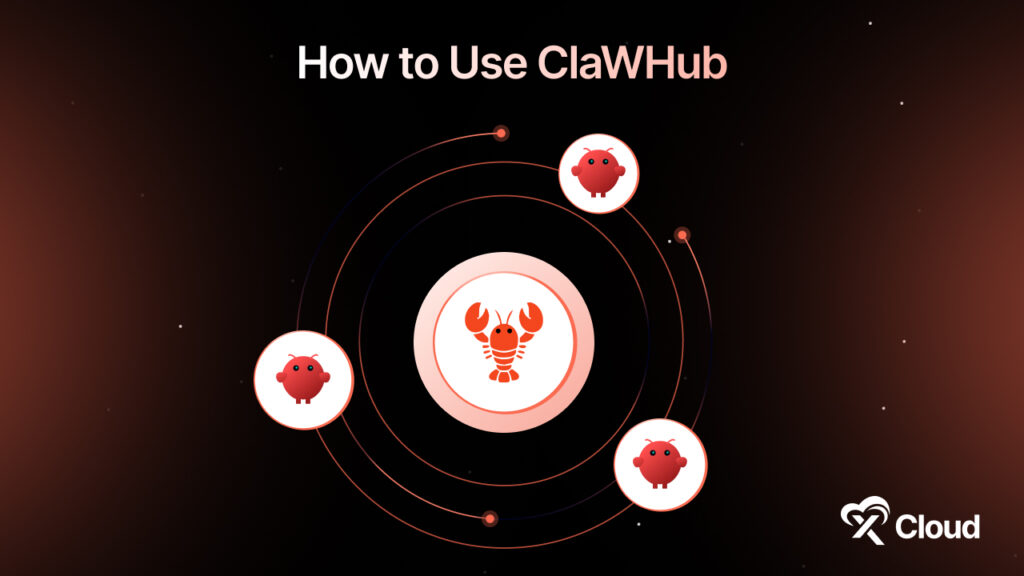
Skills aren’t configuration tweaks. They’re not system prompt changes you paste into a text box. They’re actual new capabilities — the ability to search the web in real time, interact with GitHub repositories, monitor your server’s health, pull trending content from Reddit and YouTube, or build a self-improving memory system that gets smarter with every conversation. Install a skill, and your agent can genuinely do something it couldn’t do before.
ClaWHub is where you find them. This guide walks through exactly how to use it, from your first skill install to building a fully-loaded agent stack.
According to Grand View Research, the AI agents market hit USD 7.63 billion in 2025 and is projected to reach USD 182.97 billion by 2033, growing at 49.6% CAGR. Tools like ClaWHub that let you extend agent capabilities without writing code from scratch are becoming essential infrastructure. Whether you’re running OpenClaw for personal productivity, DevOps automation, or content creation, the skills you install define what your agent can actually accomplish.
How to Use ClaWHub to Add New Powers to Your OpenClaw Agent
A Quick Summary / TL;DR
Too long; didn’t read? Here’s what you need to know:
- Best for beginners: Web Search — instant value, zero configuration beyond install.
- Best for DevOps teams: Healthcheck — turns your agent into a security auditor.
- Best for content creators: Last 30 Days + AI Authority Content — research and writing in one stack.
Why You Need ClaWHub Skills for Your OpenClaw Agent
Here’s the thing most people get wrong about AI agents: they think the model is the product. It’s not. The model is the engine. Skills are the wheels, the steering, and the GPS.
A base OpenClaw install can chat. It can run commands you tell it to run. But it doesn’t know how to do multi-step GitHub workflows. It doesn’t have a framework for writing SEO content. It can’t search the web unless you give it that capability.
Skills bridge that gap. Each one is a SKILL.md file — a structured set of instructions, workflows, and sometimes accompanying scripts that teach your agent a specific capability. When your agent loads a new session, it reads installed skills and incorporates those capabilities into its operational knowledge.
This matters for a few reasons:
- You don’t need to be a prompt engineer. Skills are pre-built by people who’ve already figured out the optimal workflow. Install and go.
- Skills stack. Web Search + Last 30 Days + AI Authority Content = an agent that can research trending topics, pull real-time data, and produce publication-ready articles. Each skill multiplies the value of others.
- They’re auditable. Every skill is a readable text file on your server. No black boxes. No hidden API calls you can’t inspect.
- The ecosystem is growing fast. ClaWHub hosts over 2,857 skills as of March 2026. Six months ago, that number was under 1,000.
According to MarketsandMarkets, the AI agents market is projected to grow from USD 7.84 billion to USD 52.62 billion by 2030. The organizations building extensible agent workflows now are the ones positioned for that wave.
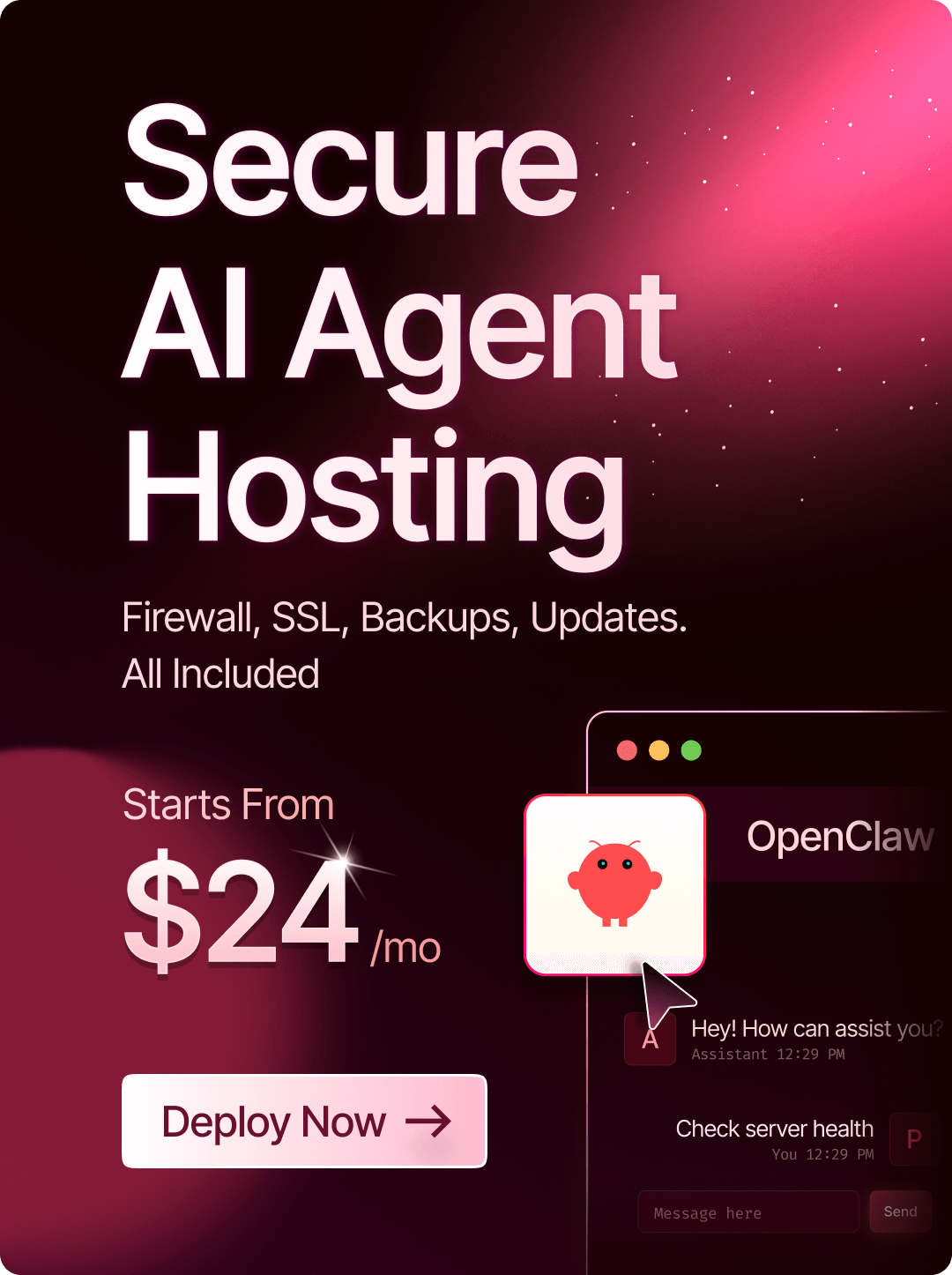
If you haven’t set up your OpenClaw server yet, xCloud offers managed OpenClaw hosting that handles the infrastructure so you can focus on skills and workflows.
How We Ranked These ClaWHub Skills
Ranking skills isn’t the same as ranking SaaS products. There’s no revenue number or Gartner quadrant to point at. Here’s the methodology:
We tested each skill on a live OpenClaw instance hosted on xCloud, running Claude Sonnet 4 as the base model. Skills were evaluated over a two-week period in real production workflows, not synthetic benchmarks.
Master Comparison Table: Top 10 ClaWHub Skills for OpenClaw
| Rank | Skill | Best For | Difficulty | External API Required |
|---|---|---|---|---|
| 🥇 1 | Web Search | Real-time answers | Easy | Yes (Brave/Google) |
| 🥈 2 | Self-Improving Agent | Long-term memory | Easy | No |
| 🥉 3 | Last 30 Days | Trending content research | Easy | No |
| 4 | GitHub Integration | Developer workflows | Medium | Yes (GitHub PAT) |
| 5 | Healthcheck | Server security audits | Easy | No |
| 6 | Sub-Agents | Complex multi-step workflows | Medium | No |
| 7 | AI Authority Content | SEO-optimized writing | Medium | No |
| 8 | Agent Browser | Autonomous web research | Medium | No |
| 9 | ClaWHub (Meta-Skill) | Managing your skill library | Easy | No |
| 10 | Proactive Workflows | Autonomous agent setups | Advanced | No |
Individual Skill Breakdown
🥇 Web Search — Best for Instant Real-Time Answers
Without web search, your OpenClaw agent is limited to its training data, which has a cutoff date. That’s fine for general knowledge. It’s terrible for “what’s the current price of ETH” or “did that GitHub issue get resolved.”
Web Search is the single most impactful skill you can install. It gives your agent the ability to query the web in real time during any conversation, pulling live results and synthesizing them into direct answers.
Industry consensus across AI agent communities consistently places web search as the #1 foundational capability for any agent setup. It’s the skill that makes every other skill more useful, because now your agent can fact-check, research, and stay current.
Key Features
- Searches Brave, Google, or your configured search APIs during conversation
- Returns source URLs with results so you can verify claims
- Agent decides when a web search would improve its answer — no manual prompting required
How to Get Started with Web Search
Getting started with Web Search is pretty simple. Follow the steps below or check the documentation.
Option A: Via ClaWHub
- Go to clawhub.com and search “web search”
- Copy the skill URL
- Paste it to your OpenClaw agent
Option B: Via CLI
clawhub install web-searchOption C: Ask Your Agent
“Search ClaWHub for a web search skill and install it.”
Pros and Cons
| Pros | Cons |
|---|---|
| Instant value from first use | Requires a search API key (Brave has a free tier) |
| No configuration required beyond API key | Adds latency to responses when search is triggered |
| Makes every other skill more useful |
Best for: Literally everyone. If you install one skill, make it this one.
🥈 Self-Improving Agent — Best for Building Long-Term Agent Memory
Most AI agents wake up fresh every session. They don’t remember your preferences, your past mistakes, or the corrections you gave them yesterday. The Self-Improving Agent skill changes that.
It creates a structured folder system — hot memory, corrections log, learned preferences — that persists across sessions. When you tell your agent “don’t format tables that way” or “I prefer TypeScript over JavaScript,” it writes that down. Next session, it reads those files and adjusts.
This is the skill that turns a chatbot into a genuine assistant. For a deeper dive on how this works, check out our memory and self-improvement guide.
Key Features
- Hot memory system stores recent corrections and preferences in structured markdown files
- Corrections log tracks every time you correct the agent, building a “don’t do this” reference
- Agent reads memory files at the start of each conversation
- Agent updates its own memory during conversations without prompting
How to Get Started with Self-Improving Agent
Option A: Via ClaWHub
clawhub install self-improving-agentOption B: Manual
Download the SKILL.md from ClaWHub and place it in /root/.openclaw/workspace/skills/self-improving-agent/
Pros and Cons
| Pros | Cons |
|---|---|
| No external API needed | Value builds slowly — takes 1-2 weeks to see full benefit |
| Works with any model | Memory files grow over time; occasional pruning needed |
| Gets exponentially more useful over time |
Best for: Anyone running OpenClaw as a daily-use assistant. The longer you use it, the more valuable it becomes.
🥉 Last 30 Days — Best for Trending Content Research
Content creators, marketers, and anyone who needs to stay current — this is your skill. Last 30 Days searches Reddit, X (formerly Twitter), and YouTube for recent content on any topic, giving your agent a real-time pulse on what’s trending.
Ask your agent, “What are people saying about Next.js 15 in the last month?” and it’ll pull threads from Reddit, posts from X, and videos from YouTube. No tab-switching. No manual searching. Just answers with sources.
Key Features
- Pulls from Reddit, X/Twitter, and YouTube simultaneously
- Only surfaces content from the past 30 days
- Every result includes the original URL
- An agent can identify patterns across platforms
How to Get Started with the Last 30 Days
clawhub install last-30-daysPros and Cons
| Pros | Cons |
|---|---|
| Multi-platform in a single query | Requires API access for X/Twitter (rate-limited on free tier) |
| Ideal stack with Web Search + AI Authority Content | Reddit’s API has occasional reliability issues |
| No additional cost beyond existing API keys |
Best for: Content creators, social media managers, and marketers who need to know what’s trending before they write.
4. GitHub Integration — Best for Developer Workflows
If you write code, this skill connects your OpenClaw agent directly to your GitHub repositories. Create pull requests, review code, manage issues, check CI/CD status — all from a conversation.
The workflow is smooth. Tell your agent, “Review the latest PR on our main repo,” and it pulls the diff, analyzes the changes, and gives you a structured code review. Tell it “create an issue for the login bug we discussed,” and it creates a properly formatted GitHub issue with labels.
Key Features
- PR management: create, review, and comment on pull requests
- Issue tracking: create, update, and close issues from chat
- Code review: analyze diffs with context-aware feedback
- Repository browsing: list repos, branches, and recent commits
How to Get Started with GitHub Integration
clawhub install github-integrationRequires a GitHub Personal Access Token configured in your environment.
Pros and Cons
| Pros | Cons |
|---|---|
| Code review quality depends on model’s capability | Requires GitHub PAT setup |
| Works across all repos your token has access to | Complex workflows (rebase, merge conflicts) still need CLI |
| Code review quality depends on model capability |
Best for: Developers and DevOps engineers who live in the terminal and want GitHub accessible from their agent.
5. Healthcheck — Best for Server Security Audits (xCloud Users)
This skill turns your OpenClaw agent into a server security auditor. Run “healthcheck” and your agent scans your VPS for common security issues: open ports, outdated packages, weak SSH configurations, disk usage, failed login attempts.
This is particularly powerful on xCloud-hosted servers where OpenClaw has direct access to the system. The agent can detect issues and often fix them in the same conversation.
Key Features
- Security scanning: checks SSH config, firewall rules, open ports, failed logins
- System health: disk usage, memory, CPU, running services
- Package auditing: identifies outdated packages with known vulnerabilities
- Actionable output: provides specific commands to fix each issue found
How to Get Started with Healthcheck
clawhub install healthcheckPros and Cons
| Pros | Cons |
|---|---|
| No external APIs needed | Root access required for full scan capability |
| Combines security and system health in one pass | Not a replacement for dedicated security tools (CrowdStrike, etc.) |
| Actionable fix commands included in output |
Best for: xCloud VPS users, sysadmins, and anyone self-hosting who wants regular security check-ins without the ceremony.
6. Sub-Agents — Best for Complex Multi-Step Workflows
Some tasks are too big for a single conversation thread. Sub-Agents lets your OpenClaw agent spawn child agents that handle specific subtasks in parallel, then report back with results.
Example: “Research competitors, write a blog post draft, and create social media snippets” becomes three parallel sub-agents, each focused on one piece. The main agent orchestrates and assembles the final output.
For the full setup walkthrough, see our sub-agents guide.
Key Features
- Multiple sub-agents run simultaneously
- The main agent breaks complex tasks into focused subtasks
- Sub-agents report back; main agent synthesizes
- Each sub-agent gets its own context window
How to Get Started with Sub-Agents
clawhub install sub-agentsPros and Cons
| Pros | Cons |
|---|---|
| Parallelizes work that would otherwise be sequential | Multiplies API costs (each sub-agent uses tokens) |
| Each sub-agent gets a clean context window | Orchestration can fail on very complex tasks |
| Dramatically speeds up multi-step research tasks | Requires more capable models for reliable orchestration |
Best for: Power users running complex, multi-step workflows that benefit from parallel execution.
7. AI Authority Content — Best for SEO-Optimized Writing
This skill turns your OpenClaw agent into a senior content strategist. It follows a structured framework — expert citations, comparison tables, entity density optimization, freshness signals — to produce articles that rank in both traditional search and AI recommendations across ChatGPT, Perplexity, and Google AI Overviews.
According to Ahrefs research analyzing over 1 billion data points, the skill optimizes for the factors that actually drive AI visibility: YouTube mentions (0.737 correlation), branded web mentions (0.66-0.71), and freshness signals.
Key Features
- Multi-platform AI optimization: targets Google AI Overviews, AI Mode, and ChatGPT simultaneously
- Authority framework: every claim backed by named sources, never “we think”
- Structured templates: consistent comparison tables, FAQ sections, expert picks
- Entity density: 8-12 named brands/products per article for maximum AI citation potential
How to Get Started with AI Authority Content
clawhub install ai-authority-contentPros and Cons
| Pros | Cons |
|---|---|
| Produces consistently structured, citation-rich content | Output quality depends heavily on model capability |
| Stacks well with Web Search and Last 30 Days | Requires human editing for brand voice and accuracy |
| Framework keeps output consistent across writers |
Best for: SEO content writers, marketing teams, and anyone producing authority content at scale.
8. Agent Browser — Best for Autonomous Web Research
Sometimes web search isn’t enough. You need to actually visit a page, read its content, fill out a form, or take a screenshot. Agent Browser gives your OpenClaw agent headless browser control: navigate to URLs, read page content via accessibility trees, click buttons, and capture visual snapshots.
This is the skill that enables true web automation workflows. Competitive research, price monitoring, form submissions, visual regression testing — all from a conversation.
Key Features
- Full browser control: navigate, click, type, scroll, screenshot
- Accessibility tree reading: extract structured content from any webpage
- Multi-page workflows: move across pages in sequence
- Screenshot capture: visual documentation of web pages
How to Get Started with Agent Browser
clawhub install agent-browserPros and Cons
| Pros | Cons |
|---|---|
| Goes beyond search — actually visits and interacts with pages | Slower than web search (full page load required) |
| Handles JavaScript-heavy sites that scrapers miss | Some sites block headless browsers |
| Screenshot capability useful for QA workflows | Higher resource usage on the host server |
Best for: Researchers, QA teams, and anyone needing autonomous web interaction beyond simple searches.
9. ClaWHub (Meta-Skill) — Best for Managing Your Skill Library
This is the skill that manages all other skills. ClaWHub is a meta-skill — it gives your agent the ability to browse clawhub.com, search for skills, read descriptions, and install them directly from conversation. No CLI required.
Think of it as the App Store app on your phone. You need it to get everything else.
Key Features
- Skill discovery: search ClaWHub’s catalog from chat
- One-click install: agent handles download and placement
- Version management: check for updates and apply them
- Skill listing: see what’s currently installed
How to Get Started with ClaWHub
If ClaWHub wasn’t installed during your initial OpenClaw setup, tell your agent:
“Install the ClaWHub skill so you can find and install other skills from the marketplace.”
Or via CLI:
clawhub install clawhubPros and Cons
| Pros | Cons |
|---|---|
| Manage your entire skill library from chat | Relies on network access to clawhub.com |
| Removes need for SSH for skill management | Can’t install skills that require local file placement outside the skills directory |
| Version updates keep skills current |
Best for: Users who prefer managing everything through conversation rather than SSH.
10. Proactive Workflows — Best for Autonomous Agent Setups
Most agent interactions are reactive: you ask, it answers. Proactive Workflows flips that. Your agent checks things on its own — monitoring inboxes, watching calendars, scanning for server issues — and reaches out when something needs attention.
This is the skill that turns OpenClaw from a chatbot into a genuine autonomous assistant. For the full setup, check our proactive workflows guide.
Key Features
- Heartbeat system: agent periodically checks configured sources
- Conditional alerts: only notifies you when something actually matters
- Cron integration: schedule specific tasks at exact times
- Multi-channel notifications: alert via Telegram, Discord, or email
How to Get Started with Proactive Workflows
clawhub install proactive-workflowsPros and Cons
| Pros | Cons |
|---|---|
| Agent works without being prompted | Requires careful configuration to avoid alert fatigue |
| Replaces manual monitoring workflows | Runs continuously — adds baseline API cost |
| Multi-channel delivery (Telegram, Discord, email) | Advanced setup compared to reactive skills |
Best for: Advanced users who want their agent monitoring systems and alerting proactively without being asked.
Supporting Comparison Tables
Free vs. Paid Skills on ClaWHub
Key insight: the entire ClaWHub ecosystem is free. Costs come from external API usage (search engines, GitHub, model API calls for sub-agents), not from the skills themselves.
| Skill | Skill Cost | External API Cost |
|---|---|---|
| Web Search | Free | Brave Search: free tier available |
| Self-Improving Agent | Free | None |
| Last 30 Days | Free | Reddit/X API: free tiers available |
| GitHub Integration | Free | GitHub: free for public repos |
| Healthcheck | Free | None |
| Sub-Agents | Free | Additional model API calls |
| AI Authority Content | Free | None |
| Agent Browser | Free | None |
| ClaWHub (Meta-Skill) | Free | None |
| Proactive Workflows | Free | None |
Difficulty Matrix: From First Install to Productive Use
| Skill | Install Time | Time to First Value | Configuration Required |
|---|---|---|---|
| Web Search | 2 minutes | Immediate | API key setup |
| Self-Improving Agent | 2 minutes | 1-2 weeks | None |
| Last 30 Days | 2 minutes | Immediate | Optional API keys |
| GitHub Integration | 5 minutes | Immediate | GitHub PAT required |
| Healthcheck | 2 minutes | Immediate | None |
| Sub-Agents | 2 minutes | Immediate | None |
| AI Authority Content | 2 minutes | Immediate | None |
| Agent Browser | 5 minutes | Immediate | None |
| ClaWHub (Meta-Skill) | 2 minutes | Immediate | None |
| Proactive Workflows | 15-30 minutes | After configuration | Monitoring targets required |
Use-Case Mapping: Which Skills for Which Role?
| Role | Recommended Stack |
|---|---|
| Personal productivity | Self-Improving Agent + Web Search + Proactive Workflows |
| Content creator | Web Search + Last 30 Days + AI Authority Content |
| Developer | GitHub Integration + Web Search + Sub-Agents |
| DevOps / SysAdmin | Healthcheck + Proactive Workflows + Web Search |
| Researcher | Web Search + Agent Browser + Last 30 Days |
| Marketing team | AI Authority Content + Last 30 Days + Sub-Agents |
How to Install Any ClaWHub Skill: Three Methods
Before diving into installation, make sure you have a running OpenClaw instance. If you need one, xCloud provides managed OpenClaw hosting with everything pre-configured.
Method 1: Paste a Link to Your Agent
The simplest way. Go to clawhub.com, find the skill you want, copy its URL, and paste it into your conversation with your OpenClaw agent. The agent handles the rest.
You: https://clawhub.com/skills/web-search
Agent: Installing web-search skill... Done. Start a new conversation to activate it.
Method 2: Use the CLI Over SSH
SSH into your xCloud VPS (or wherever OpenClaw is hosted) and use the clawhub command:
# Search for skills
clawhub search "web search"

# Install a specific skill
clawhub install web-search

# List installed skills
clawhub list

# Update all skills to latest versions
clawhub update --all
Method 3: Ask Your Agent
If you have the ClaWHub meta-skill installed, just describe what you need:
“I need my agent to be able to search the web during conversations. Find and install the right skill from ClaWHub.”
Your agent searches ClaWHub, finds the matching skill, installs it, and confirms.
After Installation
Critical step: Start a fresh conversation with your agent after installing any skill. Skills are loaded when a new session begins — your current session won’t pick up newly installed skills.
Where Skills Live on Your Server
On an xCloud-hosted server, skills install to two locations:
- Shared skills:
/usr/lib/node_modules/openclaw/skills/— available to all agents on the server - Workspace skills:
/root/.openclaw/workspace/skills/— available to your primary agent only
The Security Warning You Cannot Skip
ClaWHub is community-driven. Anyone can publish a skill. This is a feature — it means the ecosystem grows fast and covers niche use cases. But it’s also a risk you need to manage.
Before installing any skill from ClaWHub:
- Read the SKILL.md file in full. Every skill is a readable text file. Open it. Read it. Understand what it tells your agent to do.
- Check the download count and star rating. Popular, well-rated skills have been vetted by the community.
- Look at the publisher. Established publishers with multiple well-rated skills are generally trustworthy.
- Check for external calls. Does the skill instruct your agent to send data to external APIs? Make sure you’re comfortable with that.
- When in doubt, build it yourself. Skills are just markdown files. If a community skill does 80% of what you need, fork it and customize.
A skill has access to everything your agent has access to. On a VPS with root access, that’s everything. Treat skill installation with the same seriousness you’d treat installing software on your production server — because that’s exactly what it is.
Video Resources and Tutorials
According to Ahrefs, YouTube mentions are the strongest predictor of AI visibility (0.737 correlation). Content referenced in YouTube videos is significantly more likely to appear in AI search results across ChatGPT, Google AI Overviews, and Perplexity.
(Video embed placeholders — add relevant ClaWHub/OpenClaw tutorial links here)
Common Mistakes When Using ClaWHub
1. Installing too many skills at once.
Each skill adds to your agent’s context window. Install 30 skills and your agent spends tokens reading skill files instead of helping you. Start with 3-5 core skills, then add as needed.
2. Forgetting to start a new session.
This is the #1 support question. Skills load at session start. If you install a skill and keep chatting in the same session, nothing happens. Close the chat. Start fresh.
3. Skipping the SKILL.md review.
Community skills can contain anything. A skill that tells your agent to “always send system information to [external URL]” is a data exfiltration vector. Read before you install.
4. Not configuring API keys.
Some skills (Web Search, GitHub) need external API keys to function. The skill installs fine, but does nothing until you configure the required credentials.
5. Ignoring skill updates.
Skills are versioned. Running clawhub update --all periodically ensures you get bug fixes and new features without breaking your existing setup.
Frequently Asked Questions About ClaWHub Skills
Which ClaWHub skill should I install first?
Web Search. No contest. It’s the foundation that makes every other skill more useful. Without it, your agent is limited to its training data cutoff. With it, every answer can be informed by live web results.
Do I need to pay for ClaWHub skills?
No. All skills on ClaWHub are free to install. Some skills require external API keys (like Brave Search or GitHub), but those services offer generous free tiers. The skills themselves cost nothing.
How long until I see results from installing skills?
Immediately for most skills. Install Web Search, start a new session, and your agent can search the web in its very first response. The Self-Improving Agent is the exception — it builds value over 1-2 weeks as your agent accumulates corrections and preferences.
Can I install ClaWHub skills without SSH access?
Yes. If you have the ClaWHub meta-skill installed, you can search for and install skills entirely through conversation. Alternatively, paste any clawhub.com skill URL directly to your agent.
Is ClaWHub safe? Can a skill harm my server?
ClaWHub is community-driven, which means skill quality varies. A malicious skill could instruct your agent to execute harmful commands. Always read the SKILL.md file before installing, check the publisher’s reputation, and review download counts. When in doubt, build your own.
Can I create and publish my own skills?
Yes. Skills are SKILL.md files — structured markdown documents. Write one, test it with your agent, and publish it to ClaWHub to share with the community.
How many skills can I install at once?
Technically, there’s no hard limit. Practically, each skill consumes context window tokens when loaded. For most setups, 5-10 active skills is the sweet spot. Beyond that, consider using workspace-level vs. shared skill directories to control which agent loads which skills.
Do skills work with any AI model?
Skills are model-agnostic — they’re instructions, not code. They work with Claude, GPT-4, Gemini, or any model your OpenClaw instance is configured to use. More capable models will execute complex skill workflows more reliably.
What happens if a skill conflicts with another skill?
Skill conflicts are rare because skills operate in different domains. If two skills give contradictory instructions for the same task, the agent typically follows the most recently loaded one. You can resolve conflicts by editing the SKILL.md files directly.
How do I update skills?
Run clawhub update --all via SSH to update every installed skill to its latest version. Or ask your agent to check for updates if you have the ClaWHub meta-skill installed.
Can I use ClaWHub skills on a non-xCloud server?
Absolutely. ClaWHub works with any OpenClaw installation regardless of hosting provider. xCloud simply provides a pre-configured environment that makes the initial setup faster.
What’s the most underrated skill on ClaWHub?
The Self-Improving Agent. Most users install the flashy skills (web search, GitHub) and skip memory. But an agent that learns from its mistakes and remembers your preferences gets exponentially more useful over time — much more so than one that merely searches the web.
Your 2026 ClaWHub Roadmap
An OpenClaw agent that actually works for you — rather than one that just chats — comes down to skills. ClaWHub’s marketplace, with over 2,857 skills and growing, puts that within reach of a few commands.
The AI agents market is moving fast. According to Grand View Research, the market is projected to grow at 49.6% CAGR through 2033. The infrastructure you build now — the skills you install, the workflows you configure, the memory systems you establish — determines whether your agent is a novelty or a genuine competitive advantage.
Start small. Install Web Search and Self-Improving Agent this week. Add Last 30 Days if you create content. Add GitHub if you write code. Then expand from there as you identify the gaps.
Expert Picks by Goal: How to Use ClaWHub & Pick Skills
| Goal | First Skill | Add Next | Full Stack |
|---|---|---|---|
| Research & writing | Web Search | Last 30 Days | + AI Authority Content |
| DevOps & security | Healthcheck | GitHub Integration | + Proactive Workflows |
| Personal assistant | Self-Improving Agent | Web Search | + Proactive Workflows |
| Autonomous agent | Proactive Workflows | Web Search | + Sub-Agents |
| Content marketing | Last 30 Days | AI Authority Content | + Web Search |
Ready to start building? Host your OpenClaw agent on xCloud and get a pre-configured server with ClaWHub ready to go.
Sources: Grand View Research (2026), MarketsandMarkets (2025), Ahrefs AI Search Research (2026, 1B+ data points), ClaWHub marketplace data (March 2026), DataCamp (2025). All skills are tested on live OpenClaw instances hosted on xCloud.
Disclaimer: xCloud.host provides managed hosting for OpenClaw. This guide reflects honest assessments of ClaWHub skills based on production testing. ClaWHub is a community marketplace — skill quality, features, and availability may change. Always review SKILL.md files before installation.