

How To Migrate An Existing WordPress Website In xCloud?
Updated October 28, 2026 · 7 min read
You can move an existing WordPress website to xCloud with the xCloud migration plugin and a one-time token. This guide covers the migration itself, what to do when a migration is stuck or slow, how to cancel and retry safely, and what to check after the site is moved.
The plugin migration (Migrate An Existing WordPress Website) is marked Beta in the dashboard. It works for most sites, but if it stalls on your site, switch to one of the other migration methods instead of retrying it again and again.
Prerequisites
- Take a full backup of the source site and keep it until the new site is live.
- Clear the cache and disable cache plugins like Object Cache Pro.
- Uninstall your host’s must-use plugins.
- Disable Wordfence, MalCare or any other security plugin.
- Only if the token step fails: disable 2FA, Cloudflare Bot Fight Mode and other high-security Cloudflare features, and host-level protection such as Cloudways Bot Protection or the SiteGround Security Optimizer.
Step 1: Create a new site
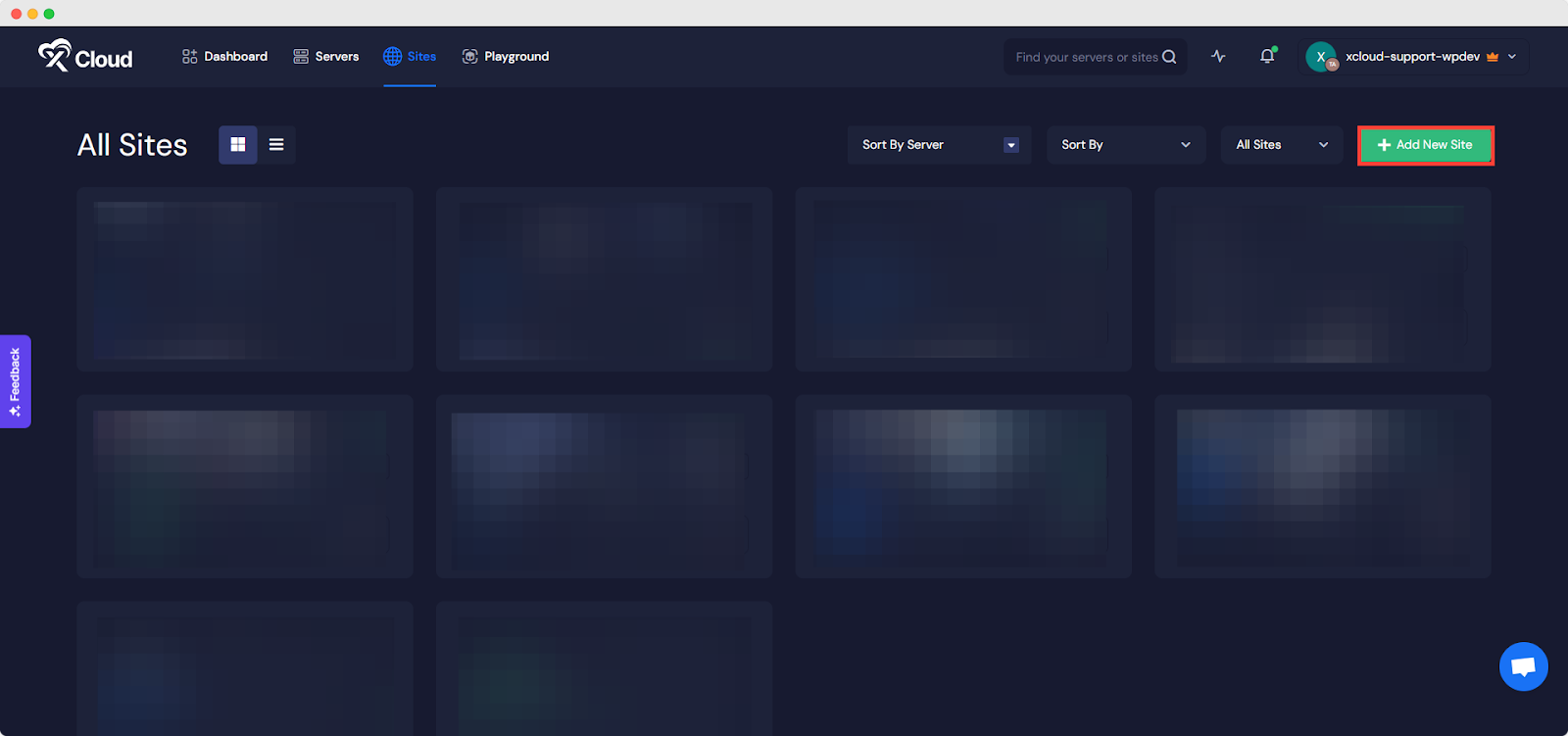
Log in to xCloud and click ‘Add New Site’ from the dashboard.
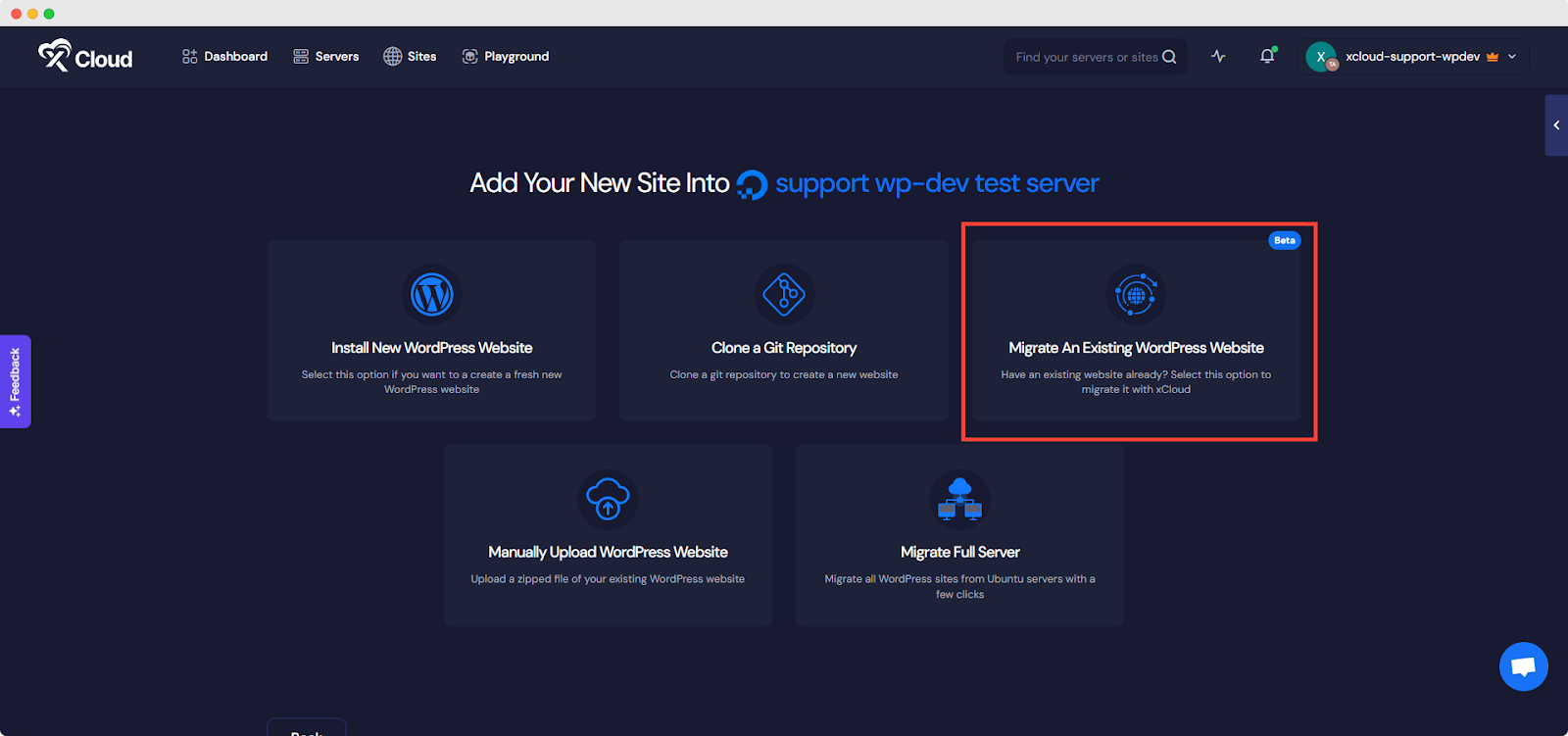
Choose the server for the site. You can create a new server or use an existing one. On the site creation page, click ‘Migrate An Existing WordPress Website’.
Step 2: Add the source site details
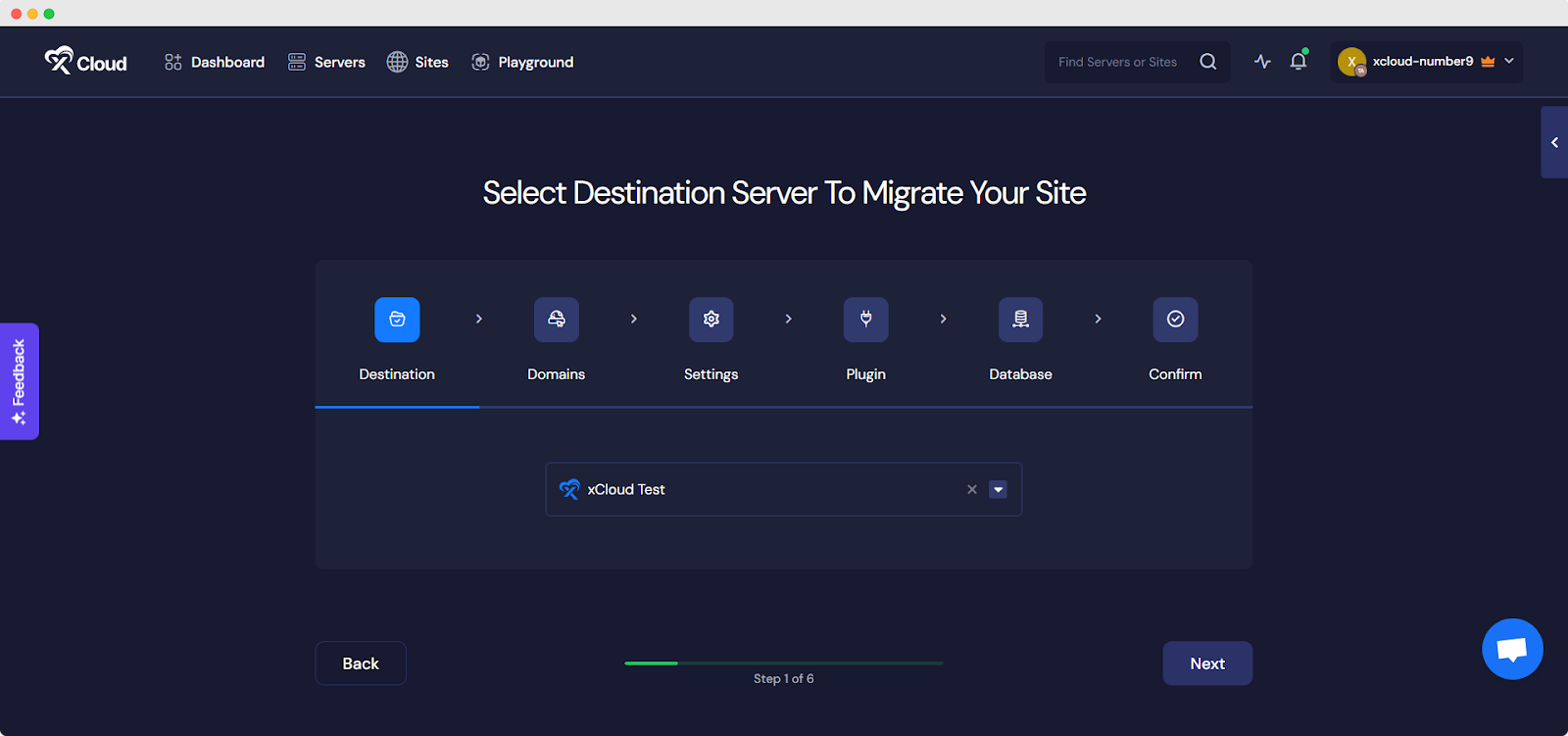
On the ‘Destination’ step, select the server you want to migrate the site to, then click ‘Next’.
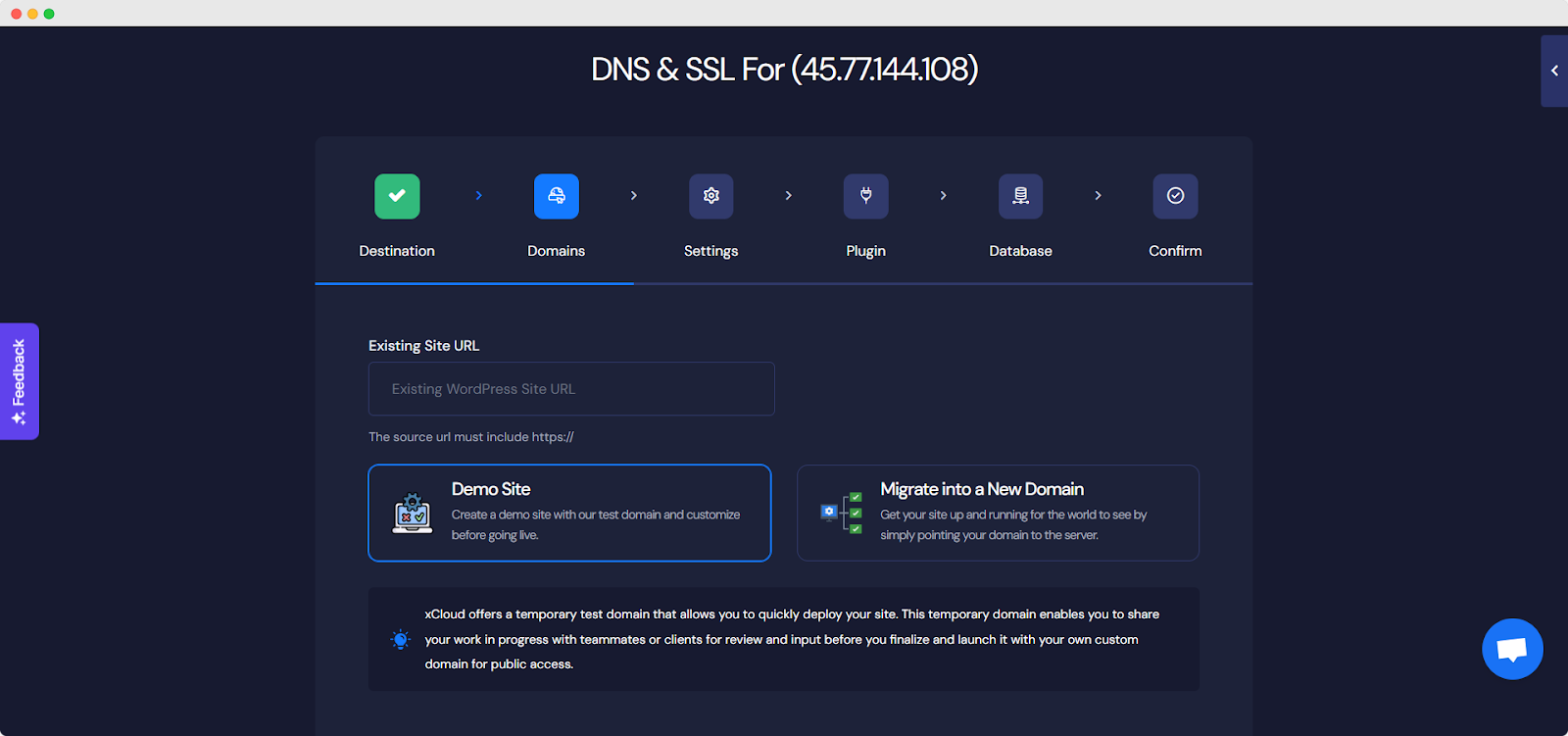
On the ‘Domains’ step, enter the source site URL in ‘Existing Site URL’ (it must include https://). Then choose ‘Demo Site’ to migrate to a temporary xCloud domain, or ‘Migrate into a New Domain’ to use your own domain.
Note: Migrate to a demo site first. You can check everything on the temporary domain, then go live with your custom domain when you are ready.
On the ‘Settings’ step, check the PHP version, table prefix and site user, then click ‘Next’.
Step 3: Add the plugin and token to the source site
On the ‘Plugin’ step, download the xCloud migration plugin and copy the authentication token.
On your source WordPress site, install and activate the plugin, open ‘xCloud Migration’ in the WordPress admin menu, and paste the token. The plugin confirms that the token has been verified.
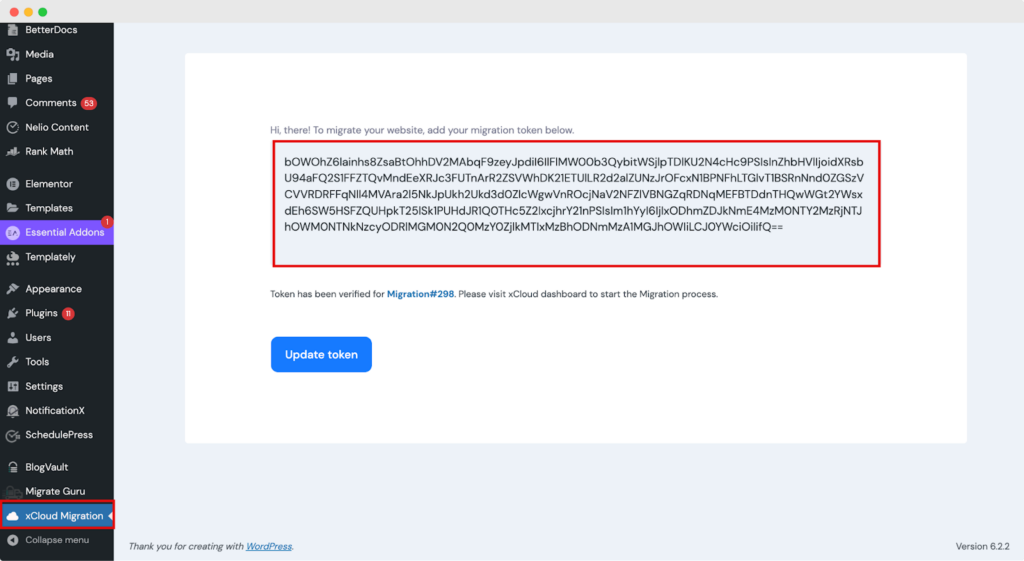
Back in xCloud, tick the box to confirm that you added the token, then click ‘Next’.
Step 4: Choose the database settings and start
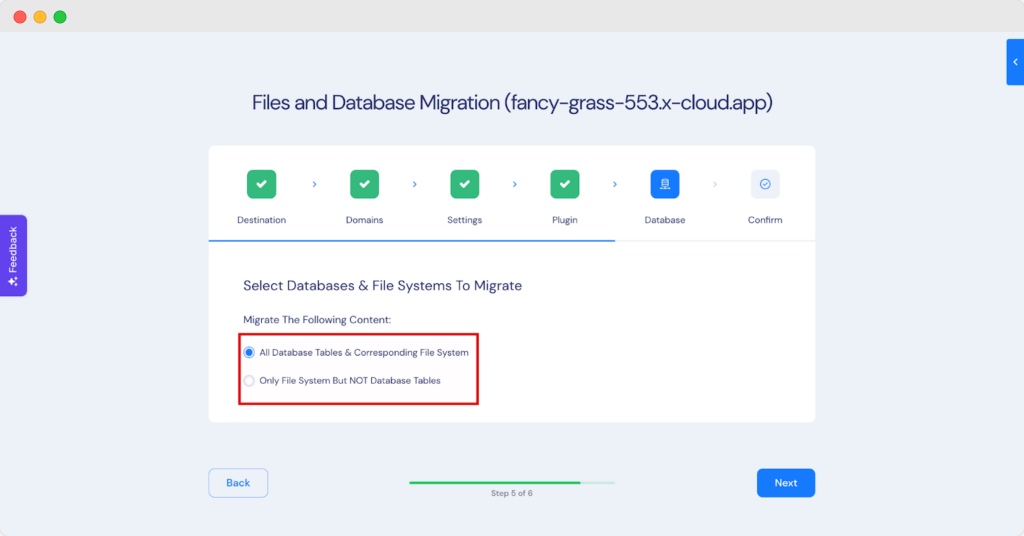
On the ‘Database’ step, choose how the database is migrated, then click ‘Next’.
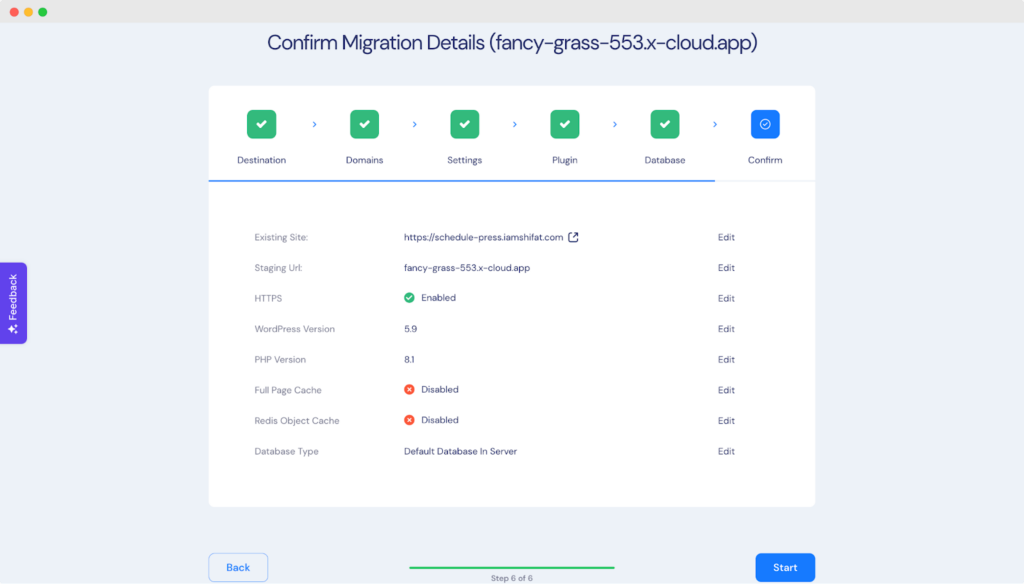
On the ‘Confirm’ step, review the details and click ‘Start’.
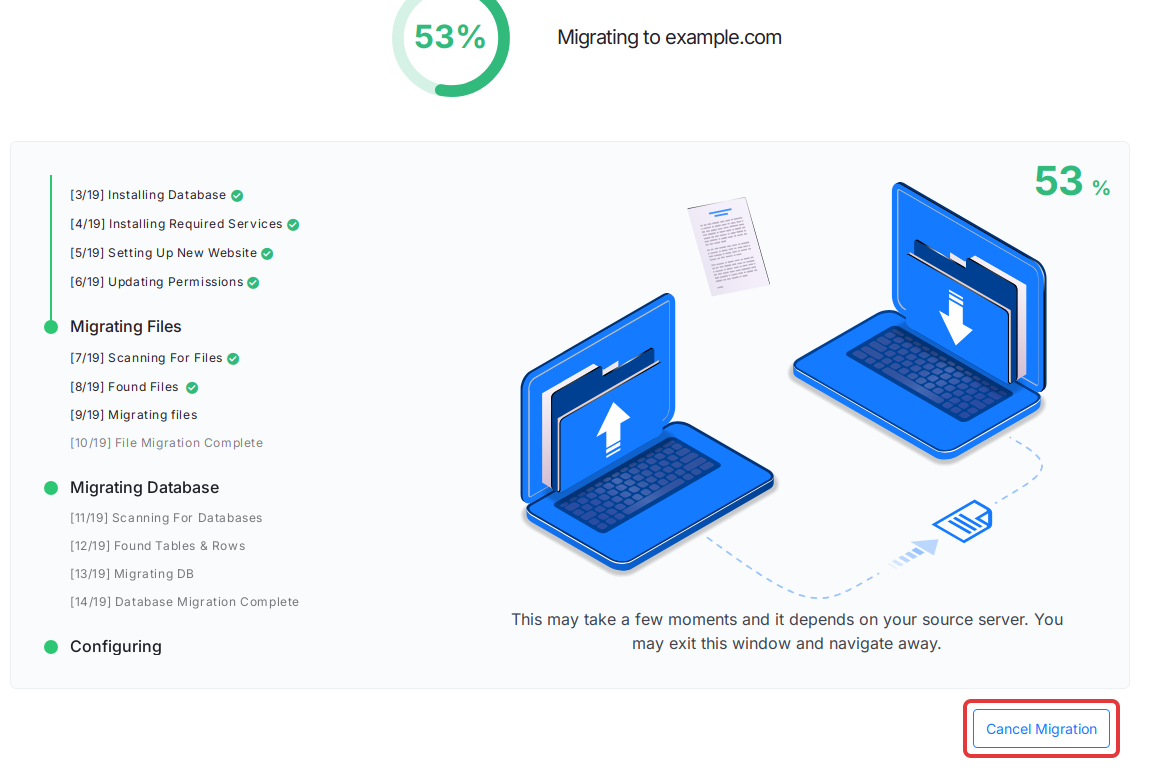
xCloud opens the migration progress page. It lists each stage (installing the site, Migrating Files, Migrating Database, Configuring) with a percentage. You can leave the page; the migration keeps running.
If the migration is stuck or slow
A migration is not stuck just because it is slow. The time depends on the size of the site and on how fast the source server answers, so xCloud has no fixed time after which a migration counts as stuck. Read the stage list on the progress page instead:
- A step is ticked every so often: the migration is working. Large sites can spend a long time in Migrating Files. Leave it running.
- The same step has not moved for a long time: the plugin migration has most likely lost contact with the source site. The most common causes are a security, firewall or cache plugin, or host-level bot protection on the source site, blocking the xCloud Migration plugin’s requests.
- The page shows ‘Site Migration Failed’: the migration stopped with an error. Click ‘Delete Migration’ to remove the failed site, then retry as described below.
Before you cancel anything, check the source site:
- Open the source site in a browser and confirm it still loads.
- Confirm that the xCloud Migration plugin is still active.
- Disable the security, cache and bot-protection features listed in the prerequisites.
If the migration still doesn’t move, cancel it and retry.
Cancel a stuck migration and retry safely
Cancelling only affects the copy on xCloud. Your source site stays as it is, so keep it running and keep your backup until the new site is live.
Step 1: Open the progress page and click Cancel Migration
Open the migrating site from ‘Sites’. A site that is still migrating opens on its progress page. Click ‘Cancel Migration’ below the progress card.
Step 2: Confirm what to remove
The dialog warns that already migrated data will be removed from the server.
- Decide on ‘Delete Database’. It is usually on and removes the partly imported database. Turn it off only if you need to keep that database. If the database is shared with or used by another site, the switch is off and locked, so the database is kept.
- Type the site name exactly as shown.
- Click ‘Cancel Migration’.
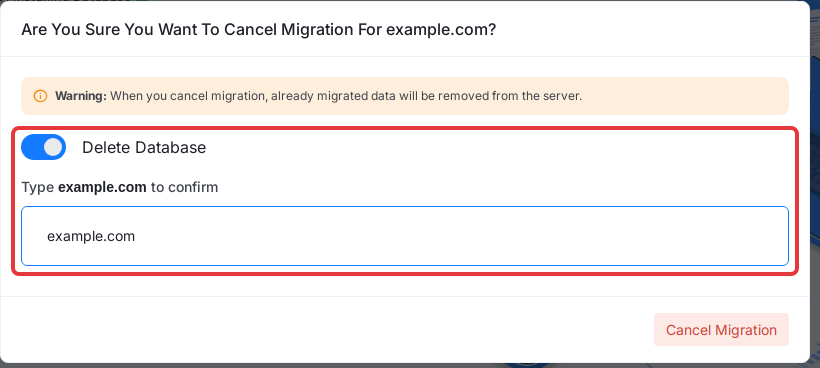
xCloud stops the migration, tells the plugin on the source site that it was cancelled, and shows the site as cancelled. About five minutes later it removes the incomplete site from your server: its files, its site user and, if you left ‘Delete Database’ on, its database. Backups are not deleted.
Step 3: Retry once the old copy is gone
Wait until the cancelled site has disappeared from your sites list. Then start one fresh migration from Step 1, with the xCloud Migration plugin active on the source site.
Do not start a second migration of the same site while another one is still running or being cleared.
Choose another method if the plugin stalls
If the plugin migration stalls again on the same site, change the method instead of retrying it a third time:
| Your situation | Use |
|---|---|
| The plugin migration keeps stalling, and you can install plugins on the source | Migrate Guru plugin |
| You can export the site files and database yourself, and the archive is up to 500 MB | ‘Manually Upload Website’: upload WordPress manually |
| The site is larger than 500 MB | Manual upload over SFTP |
| You have an xCloud backup of the site | ‘Recreate Site from Backup’: restore a backup to another site |
| You’d rather have the xCloud team do it | Request a free site migration |
In the dashboard upload, use a .zip, .tar.gz or .wpress archive; over SFTP, use .zip or .tar.gz.
After the migration: what to check
When the progress page shows the site as migrated, check it on the demo domain before you move any traffic:
- Pages and admin: open the home page, a few inner pages and
/wp-admin/. Log in with your usual WordPress account. - URLs and links: click through menus, images and forms. Links that still point to the old host need a search-and-replace of the old URL.
- Plugins: turn back on the security and cache plugins you disabled for the migration, one by one.
- Go live: switch the demo site to your domain, then point your domain’s DNS to the xCloud server and wait for it to propagate.
- HTTPS: once DNS points to xCloud, confirm the site loads over
https://without warnings. - Keep the source: leave the old site and its backup in place until the xCloud site has run without problems for a few days.
When to contact support
Contact support if the same site fails or stalls again after you cancelled and retried once with the source-site plugins disabled, if a cancelled site is still listed long after the five-minute cleanup, or if you’d like the team to migrate the site for you. Include the site name and the step where the migration stopped.
Frequently asked questions
How long should I wait before I treat a migration as stuck?
xCloud has no fixed time limit, because the time depends on the size of the site and on how fast the source server answers. Watch the stage list on the progress page. If the same step, such as Migrating Files, has not moved for a long time and the source site is reachable, cancel the migration and retry, or contact support.
Does Cancel Migration delete my original website?
No. Cancel Migration only removes the incomplete copy on your xCloud server: its files, its site user and, if you leave ‘Delete Database’ on, its database. Your source website is not changed.
Is it safe to retry a migration after cancelling it?
Yes, once the cancelled site has been cleared. xCloud removes it about five minutes after you cancel. Then start one fresh migration with the xCloud Migration plugin active on the source site. Do not run two migrations of the same site at the same time.
Which method should I use for a large site?
If the migration plugin stalls on a large site, use the Migrate Guru plugin, upload the site manually (archives up to 500 MB in the dashboard, larger sites over SFTP), or request a free migration from the xCloud team.
If you run into any issues while migrating your site, feel free to reach out to our support team.