

How to Change Node Version with xCloud
Updated November 1, 2026 · 2 min read
Each xCloud server runs one Node.js version, and every Node.js site on the server uses it, including n8n and Uptime Kuma sites. Different projects may need a specific Node.js version, so pick the one your apps are tested with. For what else comes with a Node.js server, see the Node.js hosting page.
Change the Node.js Version
- Open your server and go to Management → Node Configuration.
- Under Default Node.js Version, choose a version from Default Server Node.js Version.
- Click Save Changes.
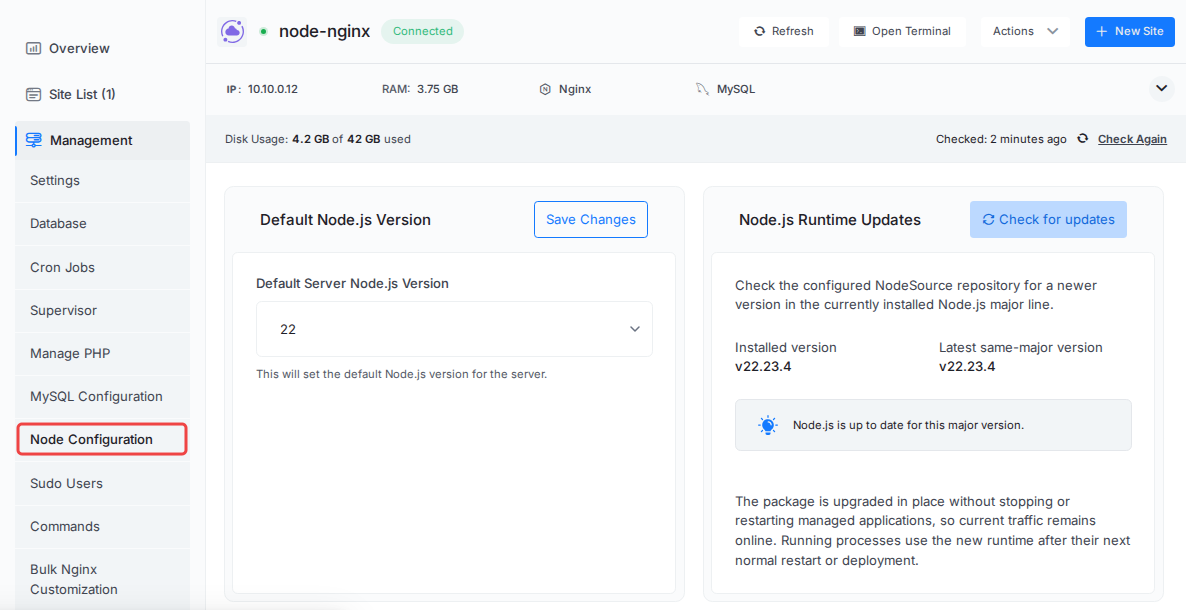
xCloud installs the version in the background, which takes a few minutes. You can choose Node.js 14, 16, 18, 20, 21, 22 or 24. When no version is chosen, xCloud installs Node.js 24.
What Happens to Your Sites
When you change the version, xCloud restarts your running Node.js sites on the new one, so expect a short interruption. Sites you stopped stay stopped. If a site does not come back, open the site, go to Settings → Rescue Site, turn on Restart PM2 Process, and click Run Now. A new deployment from Git restarts the site too.
n8n Needs Node.js 24
xCloud installs and updates n8n only on a server that runs Node.js 24 or later. On an older version, the update stops with Incompatible Node.js Version after you click Confirm Update, and its Go to Node Configuration Page button opens the page where you change the version. Choose 24, click Save Changes, wait a few minutes for it to install, then run the update again. See Update n8n for the full steps.
Choose a Supported Version
Node.js 14, 16, 18, 20 and 21 are end of life and no longer get security fixes, including the October 2026 Node.js security release. Use Node.js 24, or 22 if your app needs it.
A major version change can break an app, so test your app with the new version on a separate server first and back up your site.
To install security updates within the version you already run, see How to update Node.js on your xCloud server.
Still stuck? Contact our support team for any of your queries.