

How to Deploy n8n with xCloud with One Click Apps
Updated November 1, 2026 · 7 min read
n8n is a workflow automation platform that allows users to connect different services and build complex workflows with minimal effort. With a large library of integrations and a visual interface, n8n is ideal for teams looking to increase productivity without writing extensive custom code.
With xCloud’s One Click Apps feature, you can deploy n8n with ease. Follow the steps below to quickly set up n8n in a demo or production environment with xCloud.
🔖Recommendations
📌Web Server for Deployment
Though you can deploy the n8n application from both NGINX and OLS servers, we recommend deploying n8n on an NGINX server for the best performance and stability. While you can use an OLS server, Nginx generally provides a more reliable experience.
📌CPU Requirements
To deploy n8n, you need a server with at least 4 GB of RAM and 2 CPU cores.
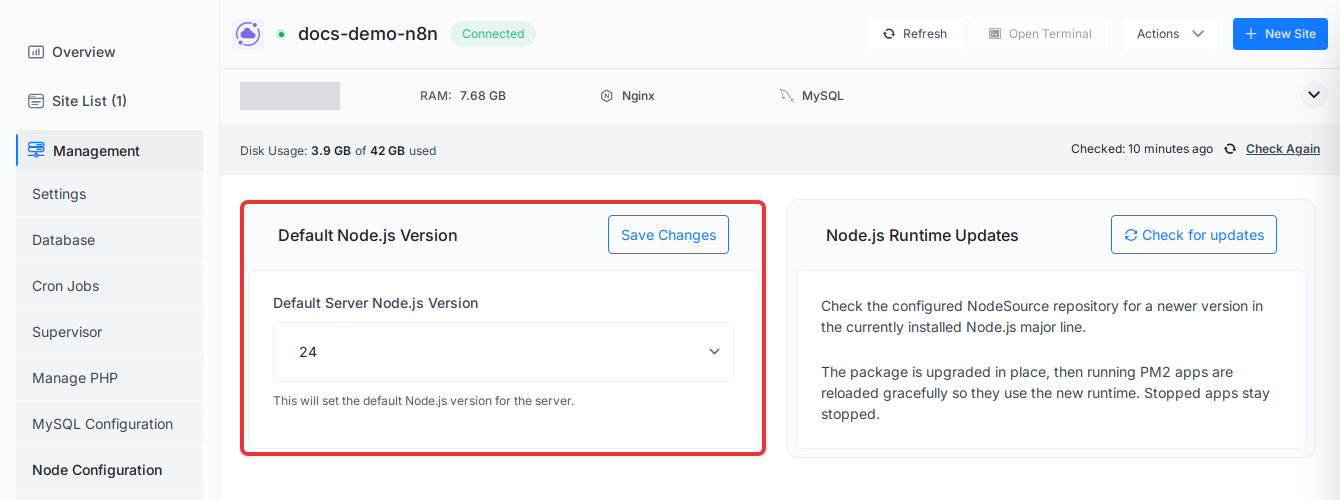
The server must also run Node.js 24 or later. Check it in Management → Node Configuration.
Note: n8n is available in our plans, including the free plan. But you have to upgrade to our PRO plans to access the Environment feature.
Step 1: Access the One Click Apps Dashboard
Begin by logging into your xCloud account. Once logged in, navigate to your dashboard and click on the ‘New Site’ button.
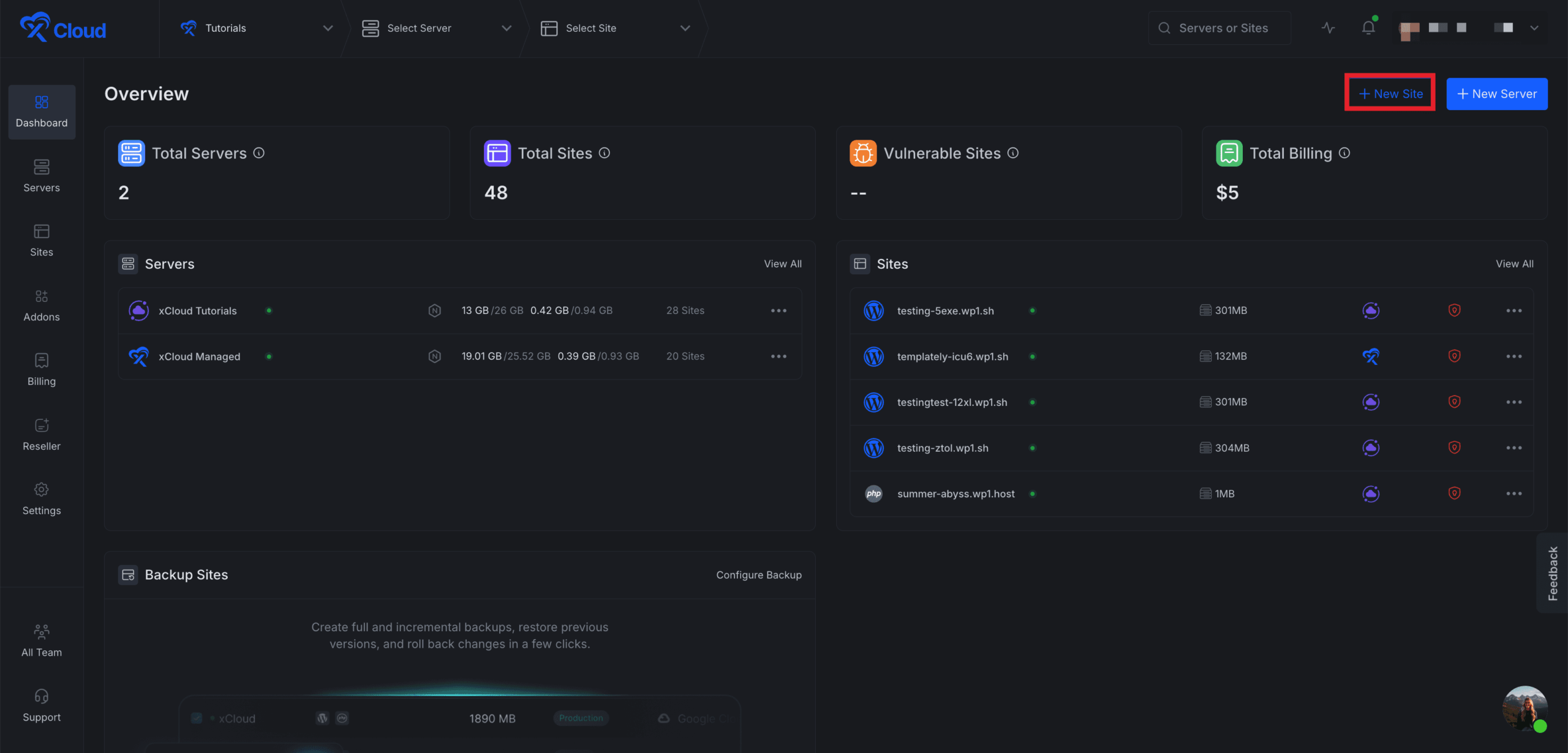
This will take you to the site creation interface. From here, choose the ‘Server’, then go to the ‘One Click Apps’ section. Select ‘n8n’ from the available applications to initiate the deployment process.
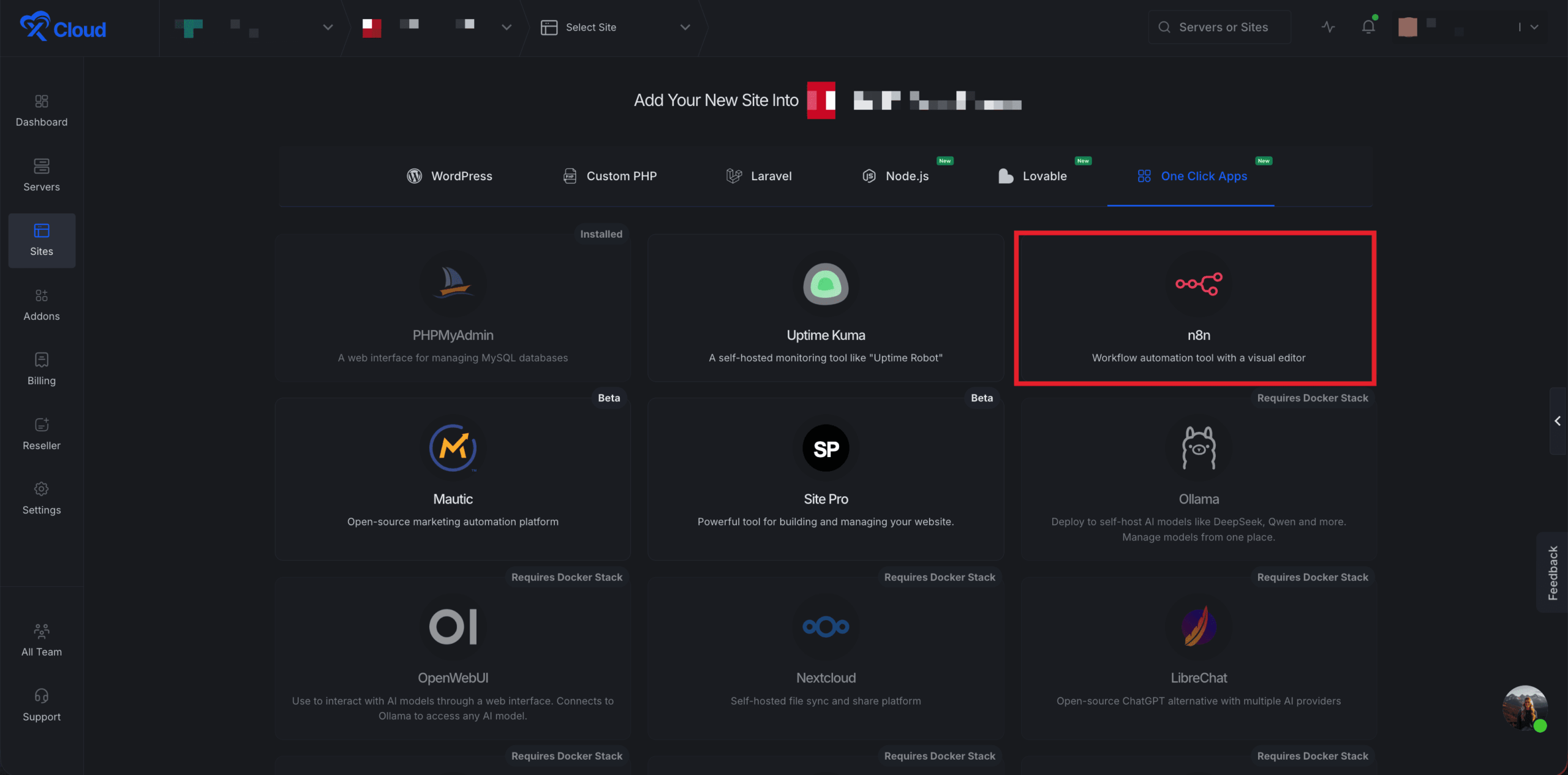
Ensure your server is already connected to xCloud. If not, follow the instructions on the dashboard to establish a server connection. Once connected, you can create a new site either from the main dashboard or the site list by selecting the ‘Create New Site‘ option.
Step 2: Set Up the n8n Application
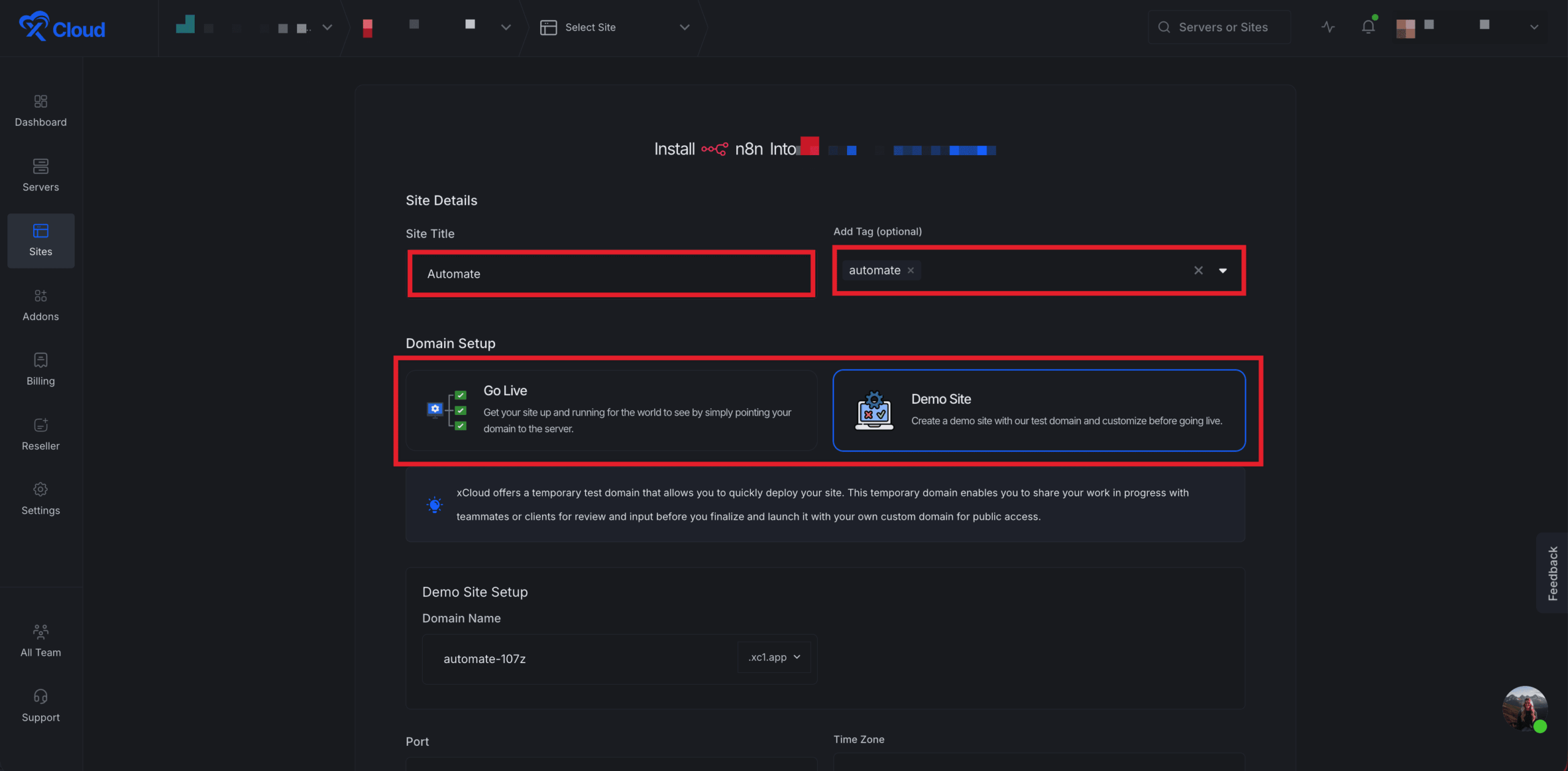
In the site setup screen, you will be prompted to enter basic site information. Provide a ‘Site Title’ and add relevant ‘Tags’ to help organize your deployment. At this point, you can choose between two deployment modes: ‘Go Live’ for a production-ready deployment or ‘Demo Site’ for testing purposes. Selecting ‘Go Live’ will immediately create a live environment, while choosing ‘Demo Site’ allows you to experiment in a staging environment before promoting to production.
Step 3: Configure Domain Settings
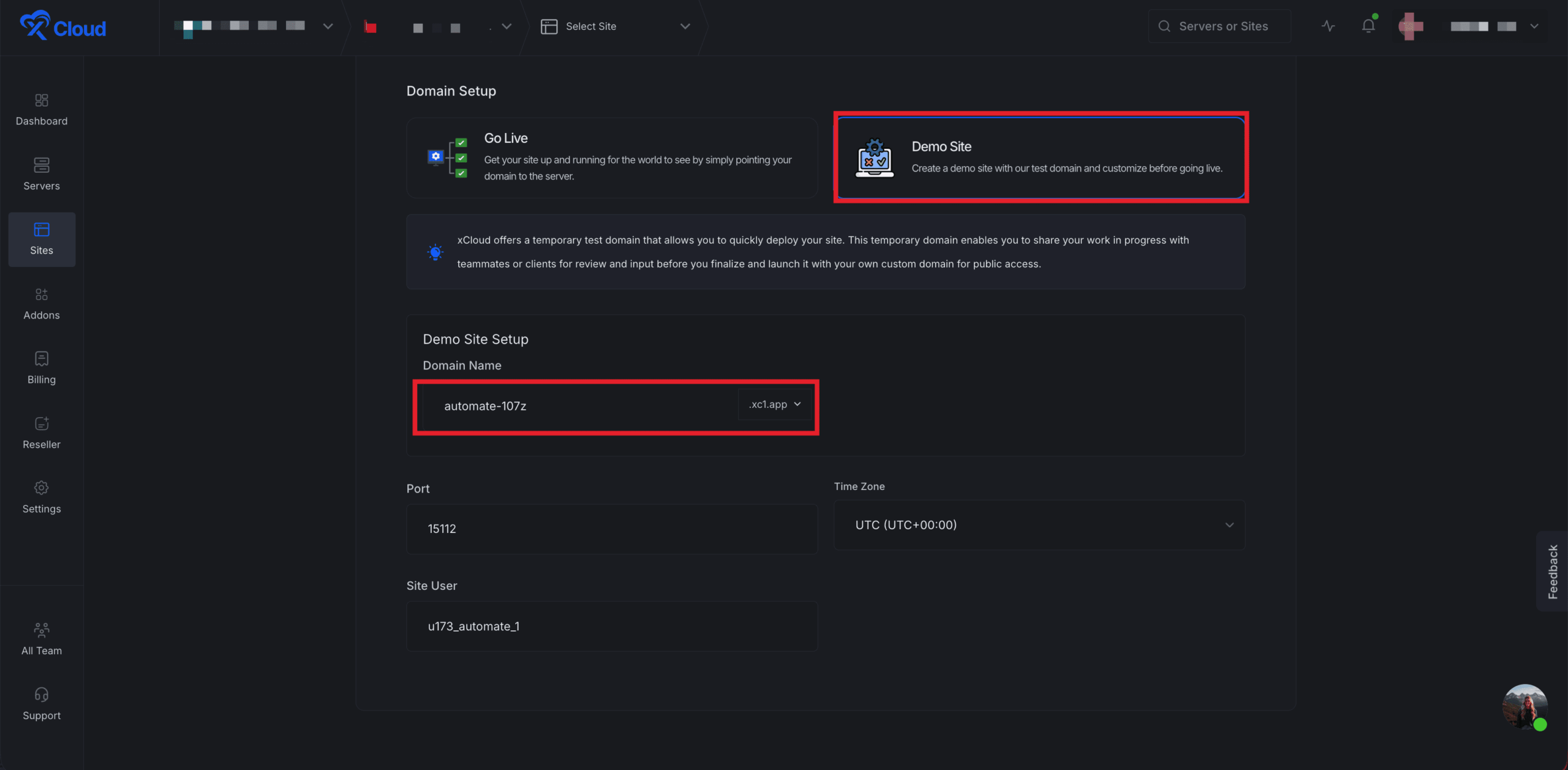
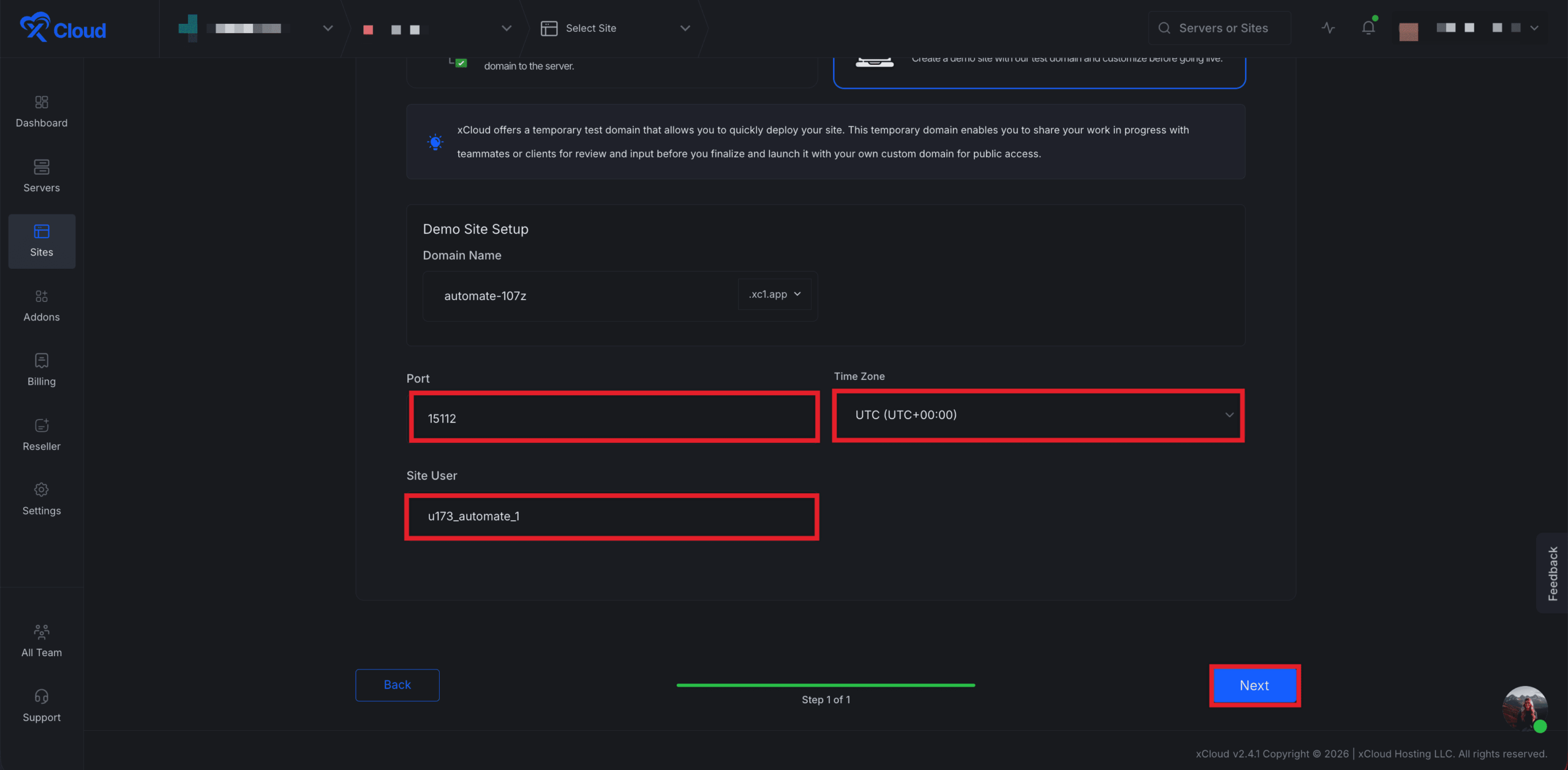
If you select the ‘Demo Site’ option, xCloud will assign a temporary subdomain for your n8n application.
Note: Once a demo site is promoted to a live environment, you cannot revert to using the demo domain. Ensure your choice aligns with your deployment goals before proceeding.
Step 4: Configure and Install the Site
Then, a default ‘Port’, ‘Site User’ will be selected automatically. Then choose a ‘Timezone’ for this site. Once all settings have been configured, click the ‘Next’ button to proceed.
Note: We recommend leaving the port and site user as the default.
Step 5: Visit the n8n Site
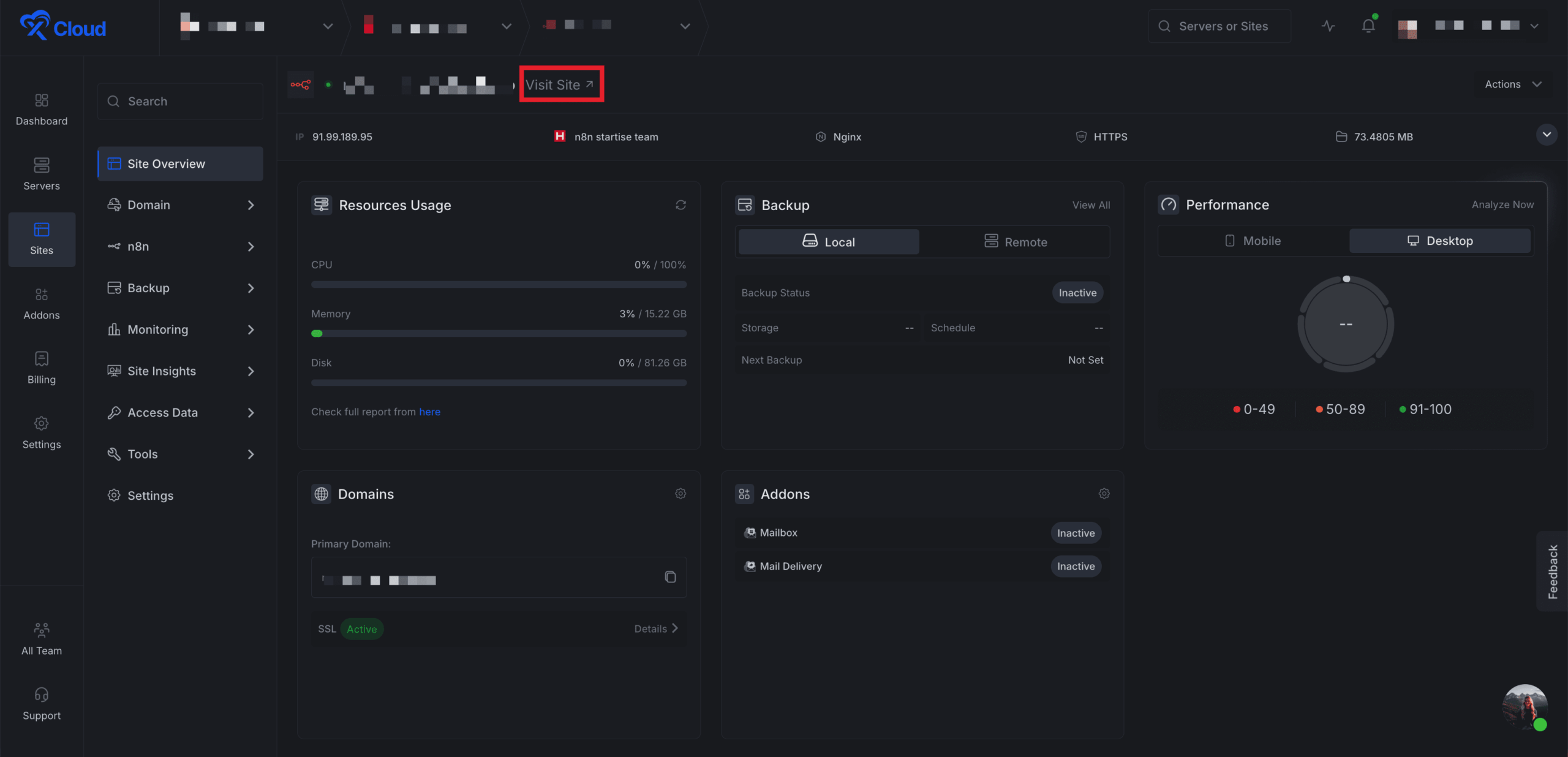
With n8n set up with xCloud, you should be able to log in and confirm that it’s working. From the dashboard, click on the ‘Visit Site’ app.
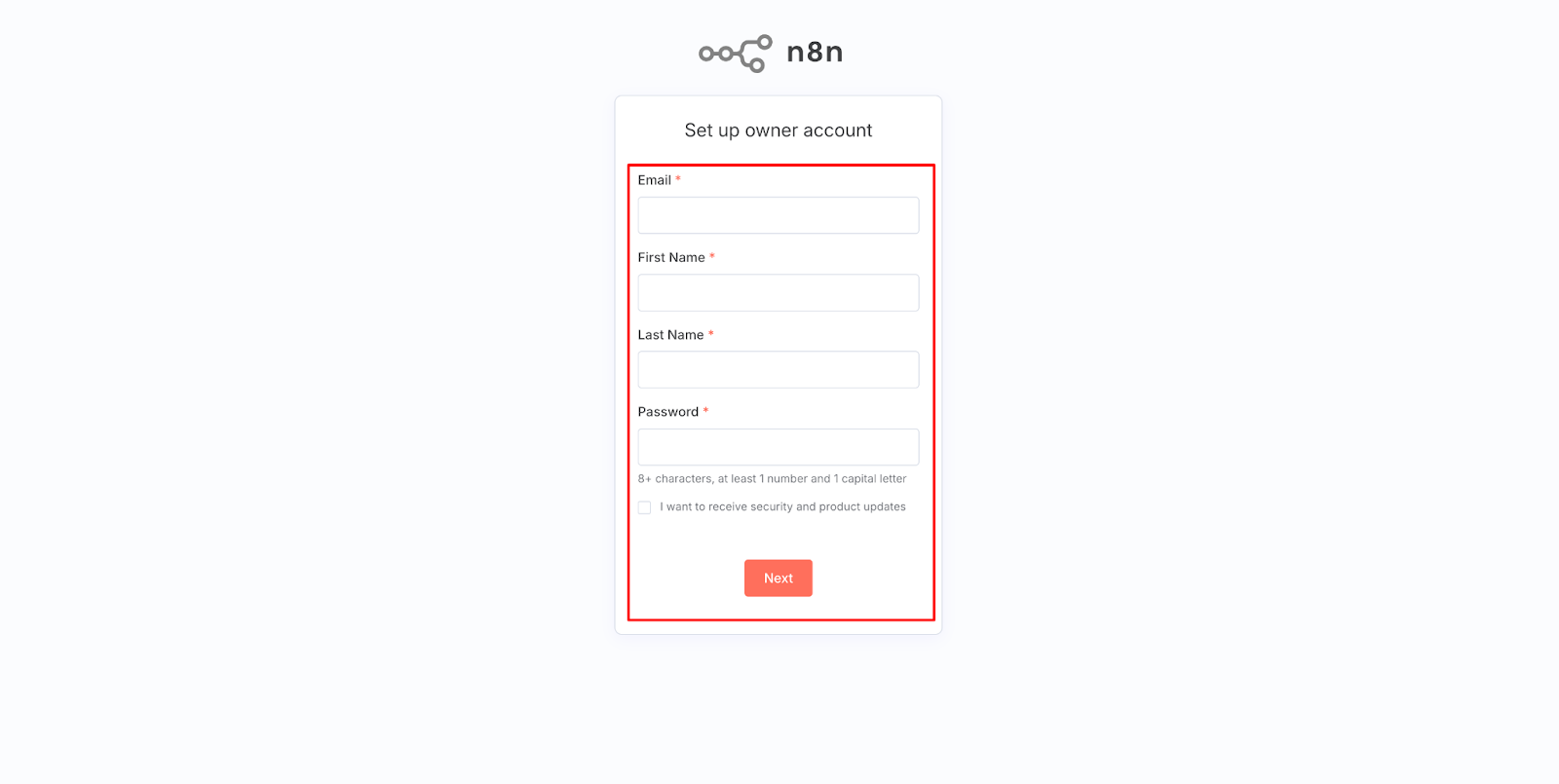
This will open the n8n dialog window for registration, which should look something like the example below. Simply enter your details and create a password according to the specs indicated. Hit the Next button, then click through any additional popups, leaving them empty for now.
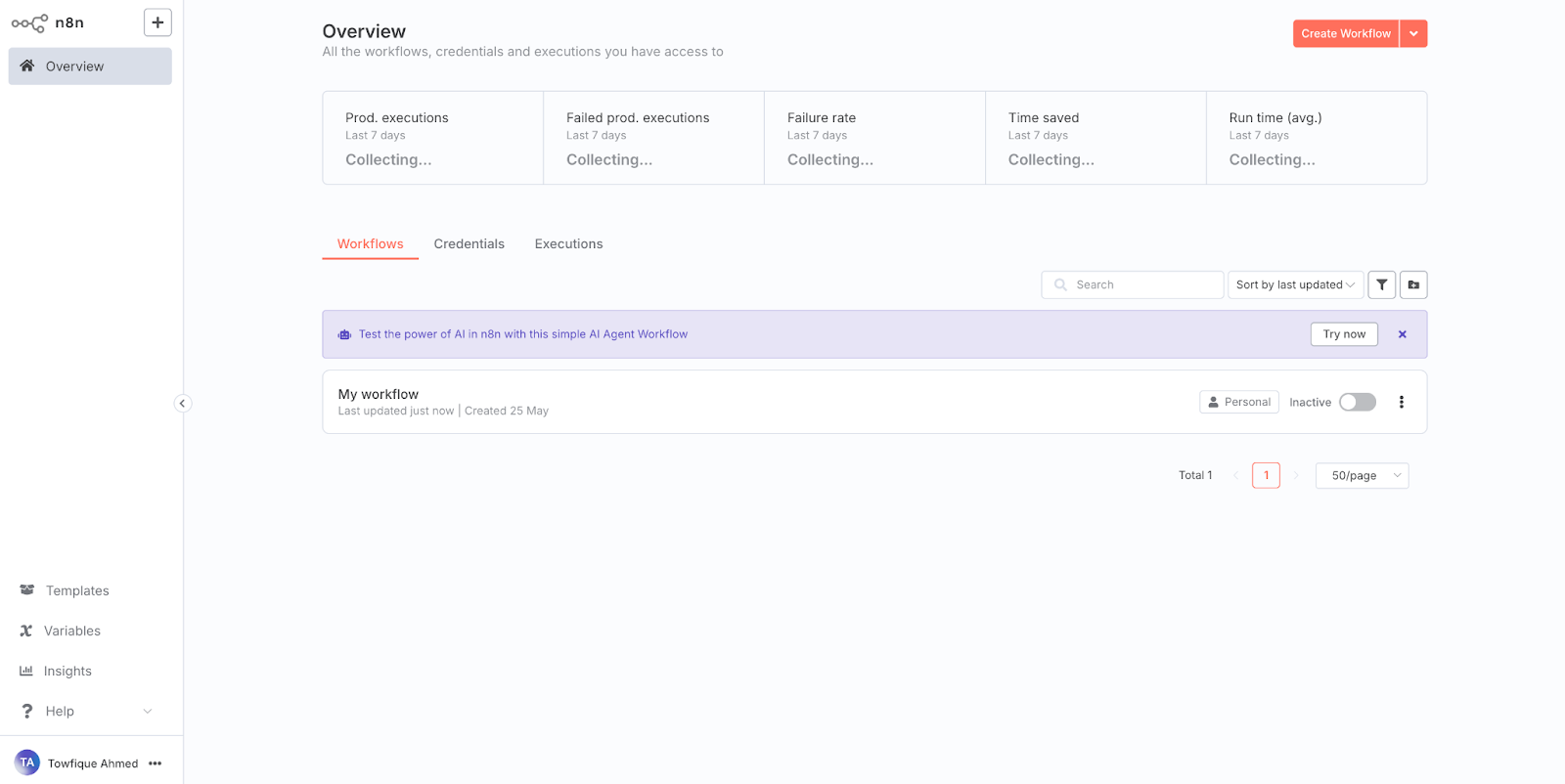
This should bring you to the n8n Overview page. Now that your n8n instance is up and running, let’s fine-tune its settings for security and customization. From here, go to the ‘Create workflow’ , set according to your preferences.
Add Your Custom Domain
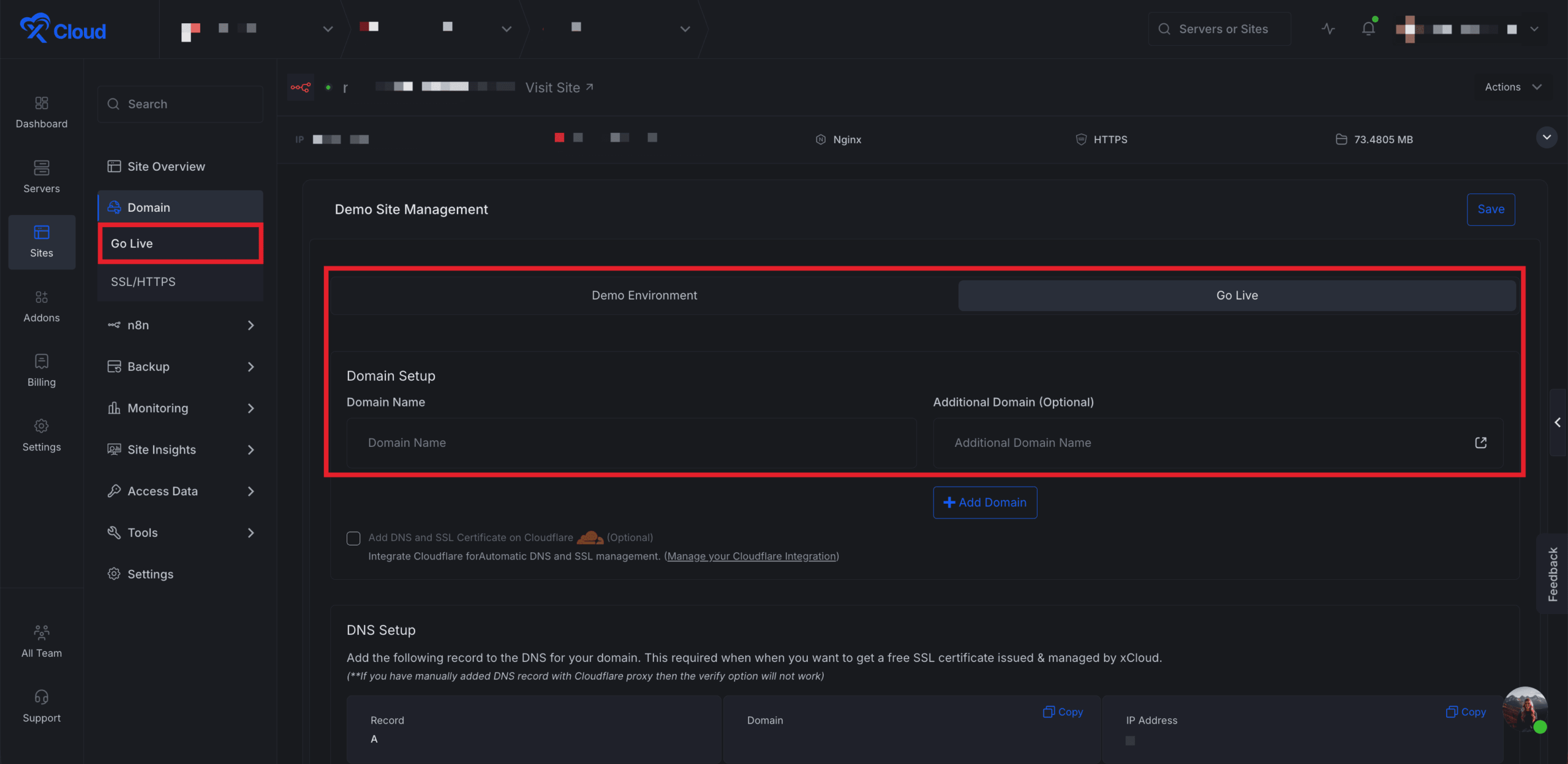
You can add your own ‘Domain’ to host the site by going to the Domain section. Also, you can add an ‘Additional Domain’ with your custom domain.
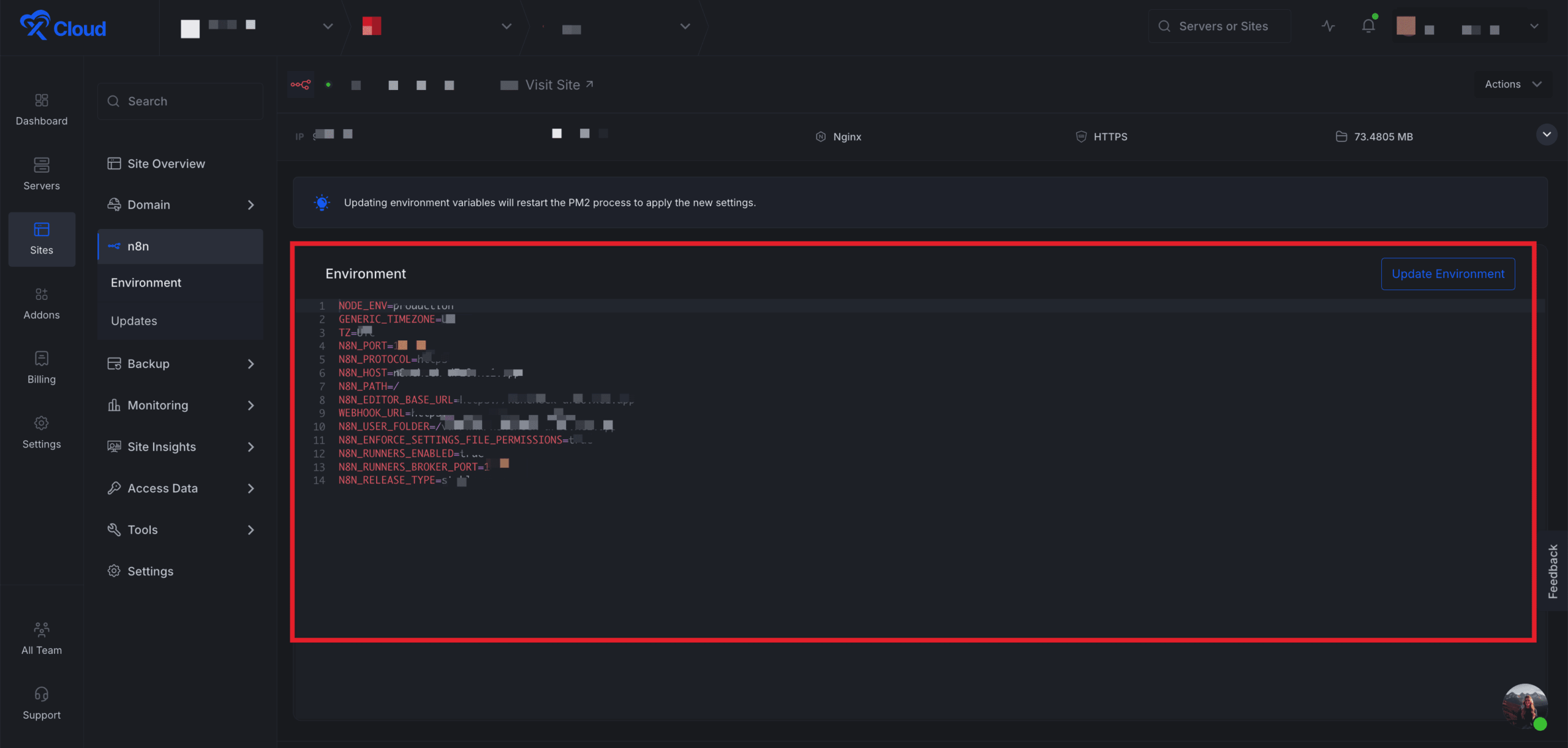
Environment Editor for n8n
The Environment section in xCloud allows you to customize configuration settings for your n8n instance. Just go to the ‘Environment’ option from the sidebar and adjust as you need, then click on the ‘Save’ button.
Update n8n
xCloud does not update n8n for you. You start every update yourself from the site’s Updates page, and xCloud always installs the latest n8n release. One update changes every n8n site on the same server, because they all run the same copy of n8n.
Before you update
- Check the Node.js version. xCloud only updates n8n on a server that runs Node.js 24 or later. Open the server and go to Management → Node Configuration to see it. If it is older, change it first with How to Change Node Version with xCloud. When you change the version, xCloud restarts your running n8n sites on the new one, so expect a short interruption. If a site does not come back, restart it as that guide describes.
- Read the n8n release notes. A new n8n release can change how some nodes work. Check the n8n release notes for the version you are moving to.
- Save your workflows. Download the workflows you can’t lose from the n8n editor before you start.
- Plan a short downtime. n8n stops on every n8n site of the server while the new version goes in, then starts again.
Step 1: Open the Updates page
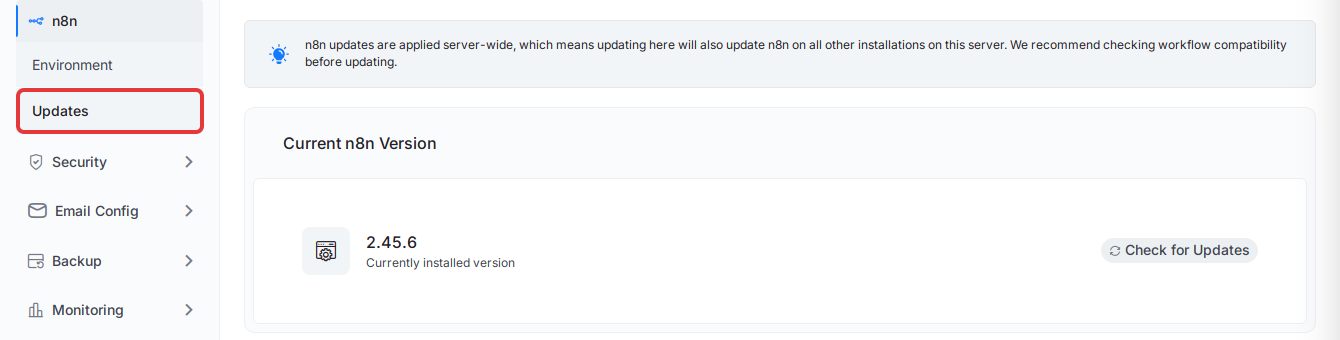
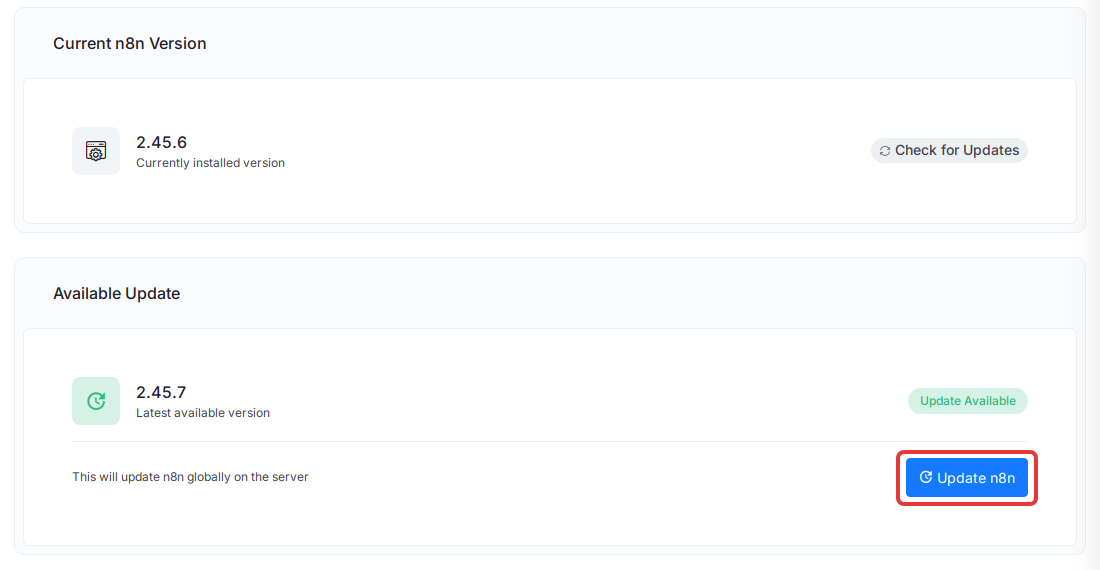
Open your n8n site and click Updates under n8n in the site menu. The Current n8n Version card shows the version you run, and the page looks for a newer release when it opens. Click Check for Updates to look again.
Step 2: Start the update
If a newer release exists, the Available Update card shows it with an Update Available badge. Click Update n8n. If you already run the latest release, you see n8n is up to date instead, and there is nothing to do.
Step 3: Confirm the update
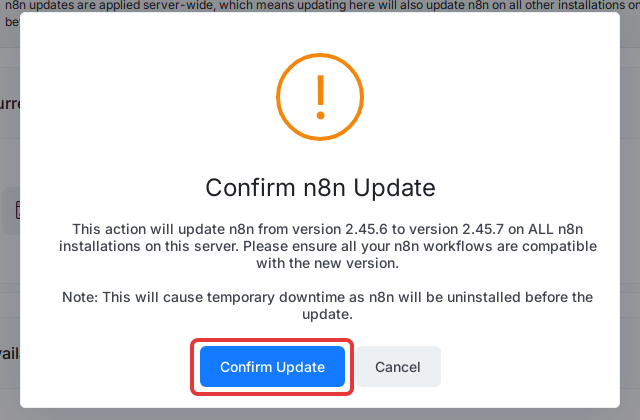
The Confirm n8n Update window shows the version you have, the version you get and a reminder that the update applies to all n8n sites on the server. Click Confirm Update.
The update runs in the background and may take a few minutes. xCloud stops it if it is still running after 30 minutes.
Step 4: Check the result
A popup says n8n update has been initiated. This may take a few minutes to complete. Reload the page to see the update as Running in Recent Updates. The status does not change on its own, so reload again after a few minutes. When it is done, the status is Finished. Open your n8n site and run one of your workflows to make sure it still works.
If an n8n update fails
xCloud prepares the new n8n version next to the one you run and checks that it installed correctly before it touches your sites. If something goes wrong:
- Before n8n is stopped (for example, the download fails), your current n8n keeps running and nothing changes.
- After n8n is stopped, xCloud puts the previous version back and starts all n8n sites on the server again.
A failed update shows the status Failed in Recent Updates. The row still says Updated to version, with the version it tried to install, so go by the status. An update that runs too long shows Timeout. The list does not change on its own, so reload the page to see either status. You can run the update again.
xCloud sends an n8n Update Failed alert by email with the full error. Slack and Telegram show the last lines of the error. WhatsApp sends a link to your Updates page. These alerts follow your notification settings, and Slack, Telegram and WhatsApp must be connected first.
The first four messages below appear after you click Confirm Update, before the update starts. The last one comes in the alert.
| What you see | Why | What to do |
|---|---|---|
| Incompatible Node.js Version after you click Confirm Update | The server runs a Node.js version older than 24 | Click Go to Node Configuration Page, choose Node.js 24, save, wait a few minutes for it to install, then update again. |
| Insufficient Server Resources after you click Confirm Update | The server has less than 4 GB of RAM or fewer than 2 CPU cores | Click Resize server under Management → Settings on the server, where available. Otherwise upgrade the server with your cloud provider. Then update again. |
| Monitoring Not Configured after you click Confirm Update | The server has not reported its resources yet | Wait a few minutes, then update again. |
| An n8n update is already running for this server after you click Confirm Update | Another update on the same server has not finished | Wait for it to finish, then check Recent Updates. |
| An error in the alert that says the new n8n version requires a different Node.js version, and No package changes were made | The new n8n release needs a Node.js version your server doesn’t run | Nothing changed, and your current n8n keeps running. Contact our support team before you change the server’s Node.js version, because the n8n you run now may not work on the new one. |
You can safely click Update n8n again after you fix the cause. If the second try also fails, or n8n does not come back online, open a support ticket and paste the error from the email. For a site that shows a 503 error, see How to Fix 503 Bad Gateway Errors for n8n Application.
The dashboard has no button to go back to an older n8n version after a successful update. If a workflow stops working after an update, contact our support team.
Frequently asked questions
Does xCloud update n8n automatically?
No. xCloud never updates n8n on its own. You start each update from the site’s Updates page with Update n8n.
Can I update one n8n site and keep another on the old version?
No. All n8n sites on a server share one copy of n8n, so an update changes every n8n site on that server. Put a site on its own server if it must stay on a different version.
Which Node.js version does n8n need on xCloud?
xCloud updates n8n only on a server that runs Node.js 24 or later. Change it in Management → Node Configuration. xCloud restarts your running n8n sites on the new version.
What happens to my n8n site if an update fails?
If it fails before n8n stops, your current n8n keeps running. If it fails after, xCloud puts the previous version back and starts your n8n sites again. Either way you get an n8n Update Failed alert. Fix the cause and click Update n8n again, or contact support if it fails twice.
That’s how you deploy n8n with xCloud’s One Click Apps and keep it up to date.
If you run into any issues, feel free to reach out to our support team.