

How To Install MariaDB With xCloud?
Updated September 5, 2024 · 2 min read
With xCloud, you can now install MariaDB on servers managed by your providers like GCP, Vultr, and Hertzner, as well as on xCloud-managed servers. This allows you to achieve optimal query speed and enhanced site responsiveness with MariaDB, ensuring high performance and strong data integrity. MariaDB’s optimized engines provide fast and reliable data access for your site. Learn how to install MariaDB with xCloud.
*Note: In the upcoming release, xCloud will provide MariaDB support for AWS servers.
How To Install MariaDB With xCloud?
Here, we will install MariaDB in xCloud-managed servers. Follow the step-by-step guidelines to learn how.
Step 1: Create A New Server In xCloud
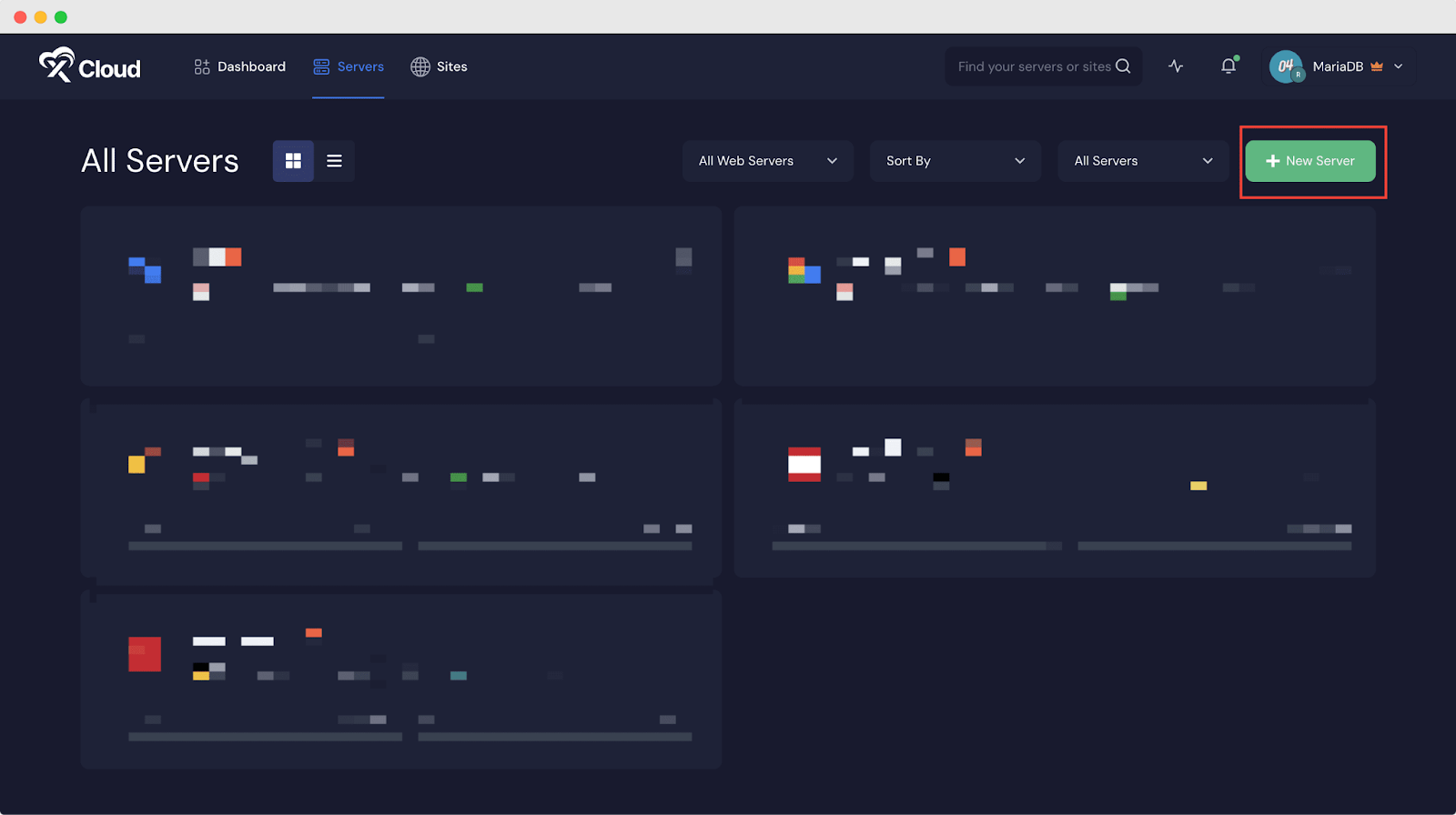
First, log in to your xCloud account and move to the ‘Servers’ tab. Click on ‘New Server’ to create a new server.
Step 2: Choose Hosting Managed By xCloud
To set up MariaDB, you need to choose your hosting provider. Here, in this tutorial, we are choosing the hosting managed by xCloud. Scroll down and choose your hosting.
Step 3: Configure Server Setup
Add the ‘Server Name’ and ‘Server Tag’ from the ‘Server Details’ section. Choose the ‘Server Type’, ‘Server Size’, and other details as required.
Step 4: Select Database Server
Now, from the ‘Database’ Section**,** select your database server. Here, choose MariaDB and click ‘Next’.
*Note: xCloud supports Maria DB version 10.6.
Following these steps, you can successfully set up MariaDB in xCloud-managed servers. You can stop or restart MariaDB from here.
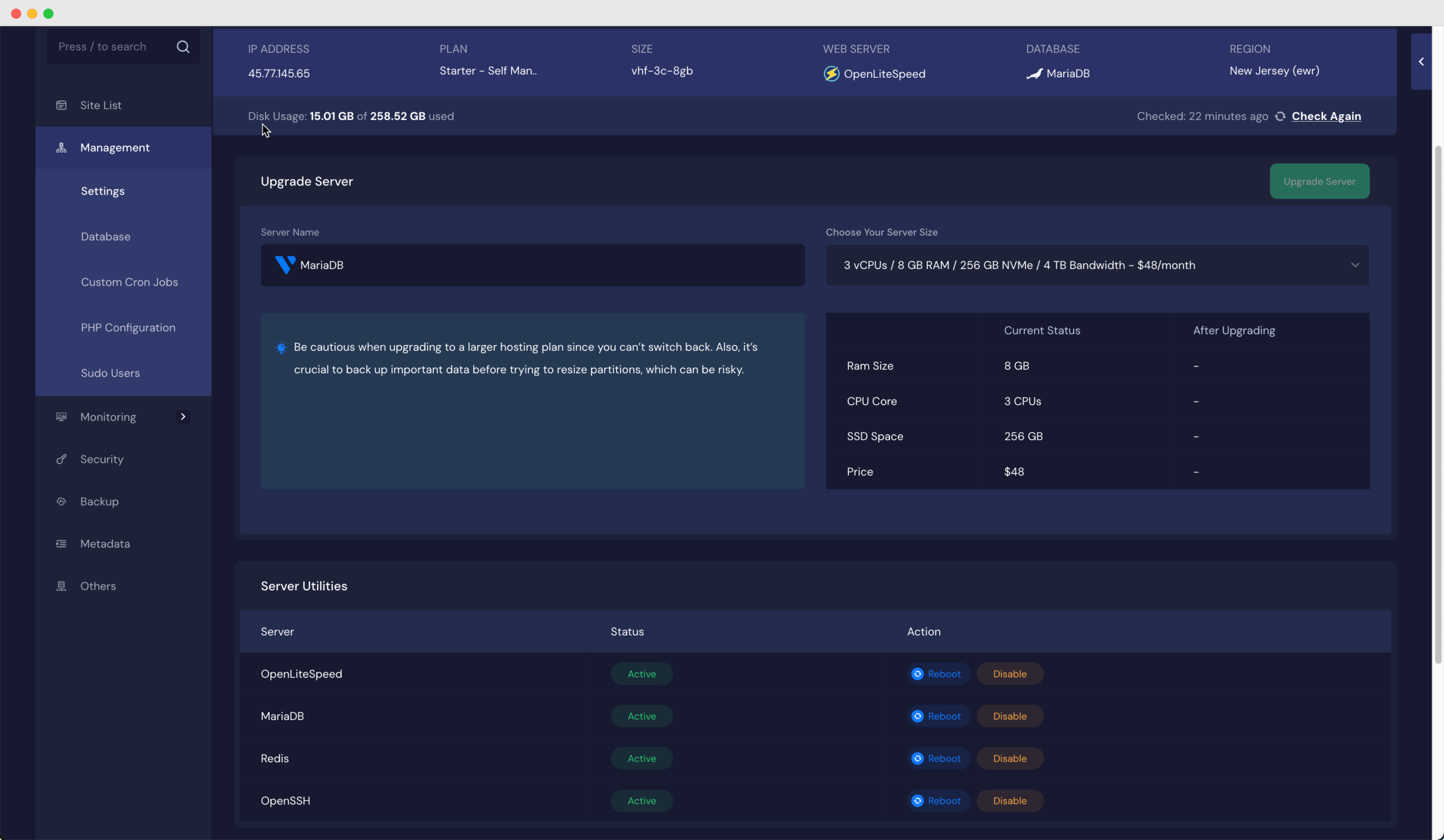
In one server, you can use only one database from MySQL or MariaDB. If you want to use MariaDB in your server, you need to create a new server. And if you want to migrate your existing server from MySQL to MariaDB, you need to create a new server and clone your all the sites into that server.
Note: Currently MariaDB is not available on AWS servers and ARM-based servers.
If you face any issues or need further assistance, reach out to xCloud support. Our team is available to help you with any challenges you face while integrating and managing your external database.