

Understanding Sudo Users And Site Users In xCloud
Updated November 1, 2026 · 6 min read
xCloud has two types of system users: sudo users and site users. Sudo users can run commands as root across the whole server. Site users can only reach the files of their own site.
If you lost a sudo password, you can get back in from the dashboard. Go straight to Lost your sudo password?
Sudo users in xCloud
xCloud turns off password login for the root user. Instead, you add sudo users who can run commands as root, which lets you manage the whole server.
Most servers show ‘Sudo Users’ under ‘Management’ and ‘Others’ directly in the server menu. On OpenClaw, Paperclip, Hermes and DeepSeek Harness servers, both pages are under ‘Settings’. On a Plain server, if ‘Sudo Users’ shows a page-not-found error, change the end of the address in your browser from /sudo-users to /sudo.
What to know about sudo users:
- A sudo user has full access to the server and can view and change every site on it. Don’t create one for a client unless they truly need root access.
- You can add several sudo users to one server.
- Every sudo user needs an SSH key. The key logs you in, and the password is what you type when you run a command with
sudo. - You need two-factor authentication turned on for your account to add or edit a sudo user.
How to add a sudo user
Step 1: Open Sudo Users
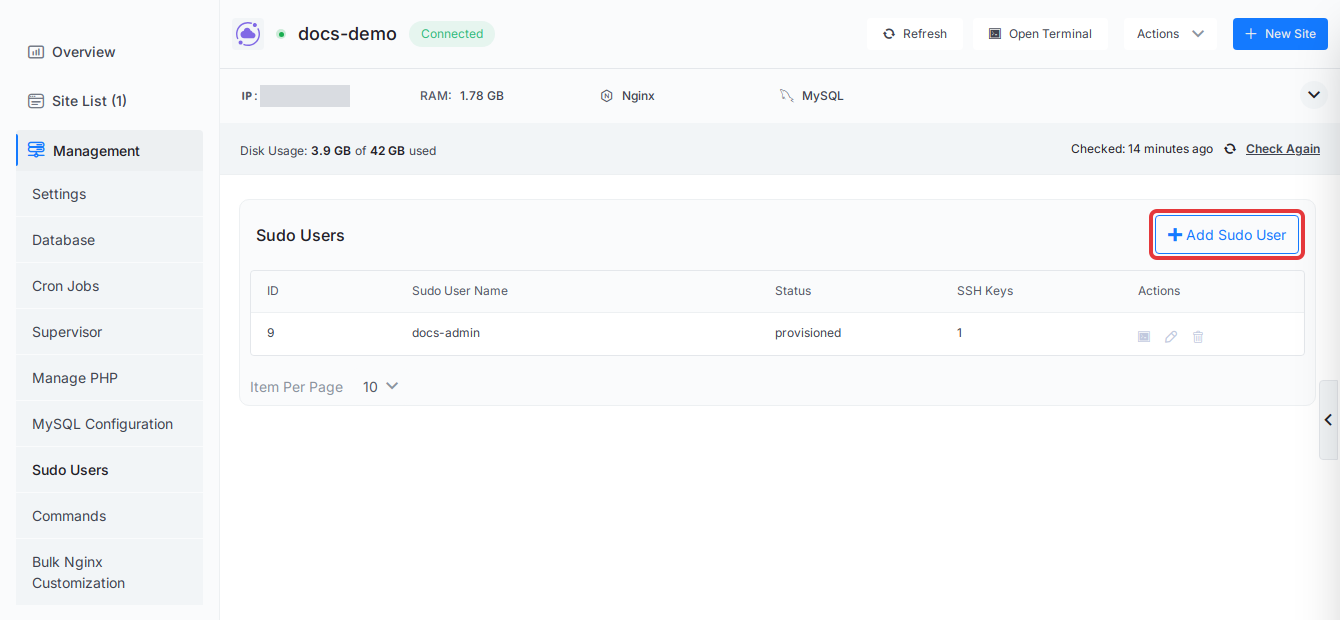
Open your server, then go to ‘Management’ → ‘Sudo Users’ and click ‘Add Sudo User’. The ‘Add Sudo User’ form opens. On a Plain server, if ‘Sudo Users’ shows a page-not-found error, change the end of the address in your browser from /sudo-users to /sudo.
Step 2: Add your SSH key
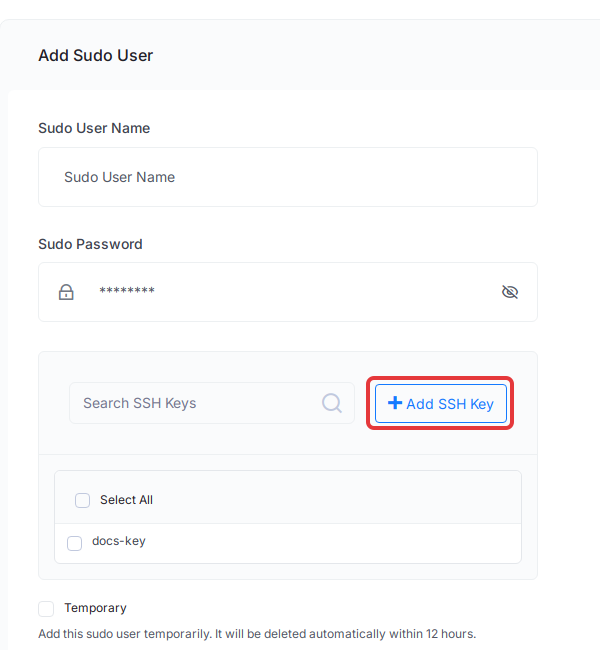
Skip this step if your key is already in the list. Otherwise, click ‘Add SSH Key’. To create a key first, follow this guide.
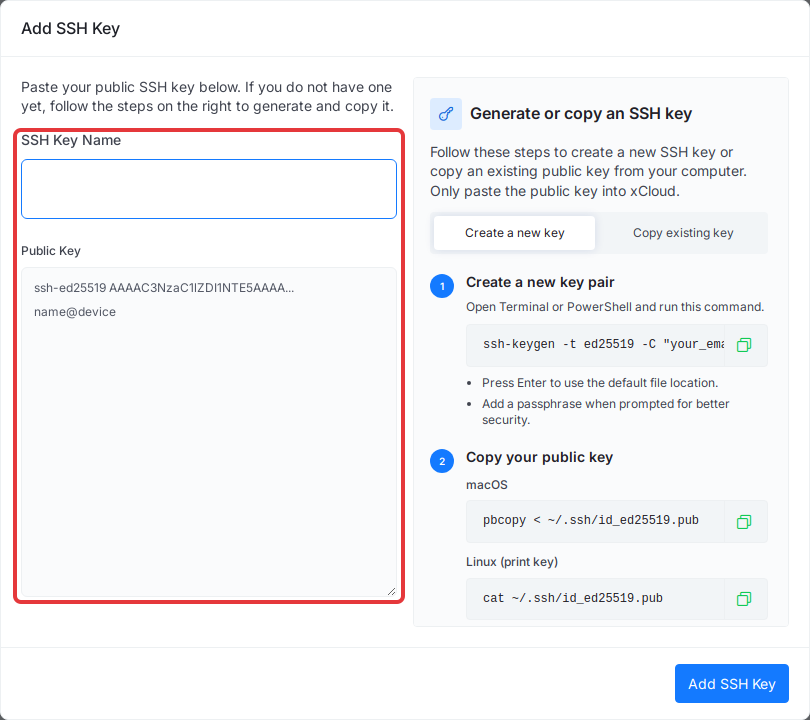
Enter an ‘SSH Key Name’, paste your key into ‘Public Key’, and click ‘Add SSH Key’. The key now appears in the list on the form.
Step 3: Fill in the user details
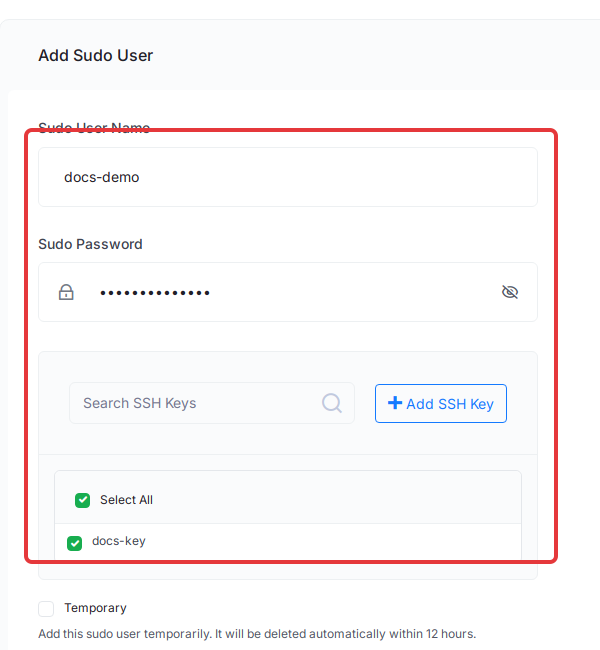
Enter a ‘Sudo User Name’ and a ‘Sudo Password’, tick your SSH key, and click ‘Save’. The password must be 6 to 64 characters. The name can be up to 32 characters. It must start with a lowercase letter and can only use lowercase letters, numbers, hyphens and underscores. You can’t use xcloud, or a name already used by a site user or another sudo user on this server. To give someone short-term access, tick ‘Temporary’, and xCloud deletes the user automatically within 12 hours.
The new user appears in the ‘Sudo Users’ list. It’s ready when its ‘Status’ shows provisioned.
Lost your sudo password?
You can get sudo access back without the old password. What you do depends on which user it belongs to.
| Which user | What to do |
|---|---|
The default xcloud user, created with the server |
Copy its password from ‘Others’, then test it in the web terminal |
| A sudo user you added yourself | Set a new password with ‘Reset Sudo Password’ |
| You don’t know, or neither works | Add a new sudo user |
root |
There’s no password to recover. See Root can only log in with an SSH key |
xCloud needs a working connection to your server to save a new password or add a user. You also need two-factor authentication turned on for your account to reset a password or add or remove a sudo user. These steps restore access only. If you lost access because a site was hacked, you still need to clean up that site.
Find the default password
Step 1: Copy the password
Open your server and go to ‘Others’. In the ‘Sudo Password’ card, click ‘Copy’, or click the eye icon to see it.
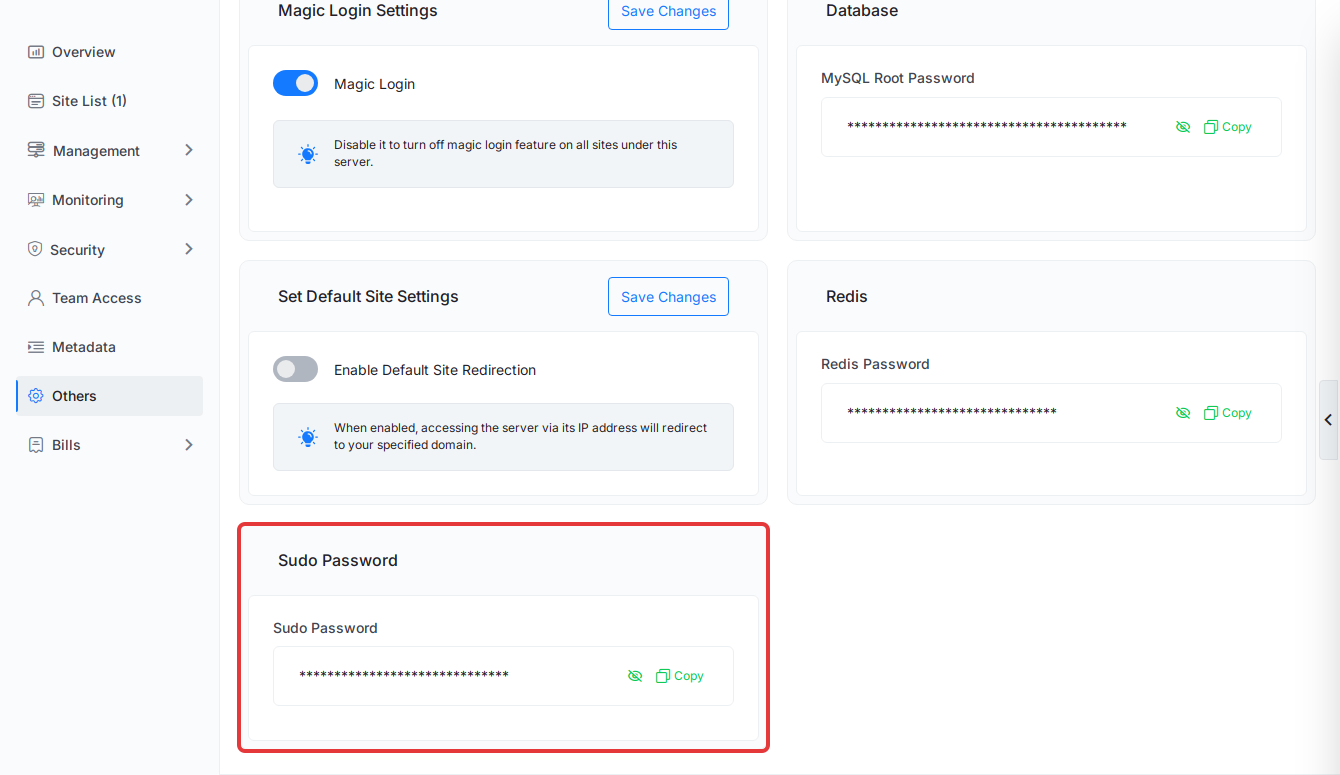
This card only shows the password set for the xcloud user when the server was created. If someone changed it on the server by hand, the card won’t match, so add a new sudo user instead. You need permission to manage server access to see this card.
Step 2: Check that it works
You can’t connect over SSH as xcloud with this password, because password login is off. Your SSH key may not be on this user either. Use the web terminal instead.
On the server’s overview page, click ‘Open Terminal’. The terminal opens logged in as root. Switch to the xcloud user and check the password:
su - xcloud
sudo -v
Enter the copied password when asked. If the command returns with no error, the password works. You can now use sudo in this terminal. If you see Sorry, try again, the password doesn’t match, so add a new sudo user instead.
If ‘Open Terminal’ is locked, turn on two-factor authentication for your account, then try again. If you don’t see it, your role can’t open the terminal, so follow Add a new sudo user instead.
Reset the password of a sudo user you added
xCloud doesn’t show this password again after you save it, so you set a new one.
Step 1: Open the user
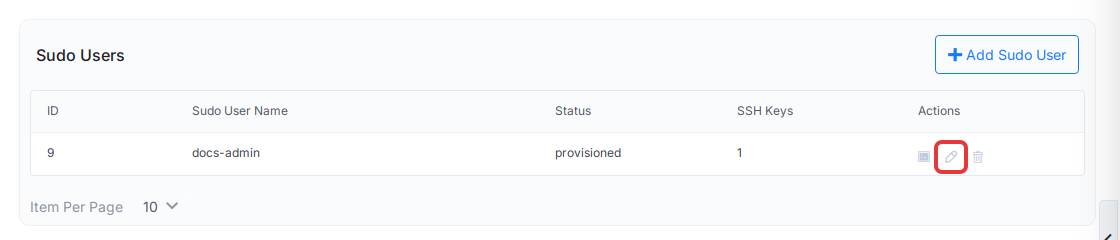
Go to ‘Management’ → ‘Sudo Users’ and click the pencil icon next to the user.
Step 2: Set the new password
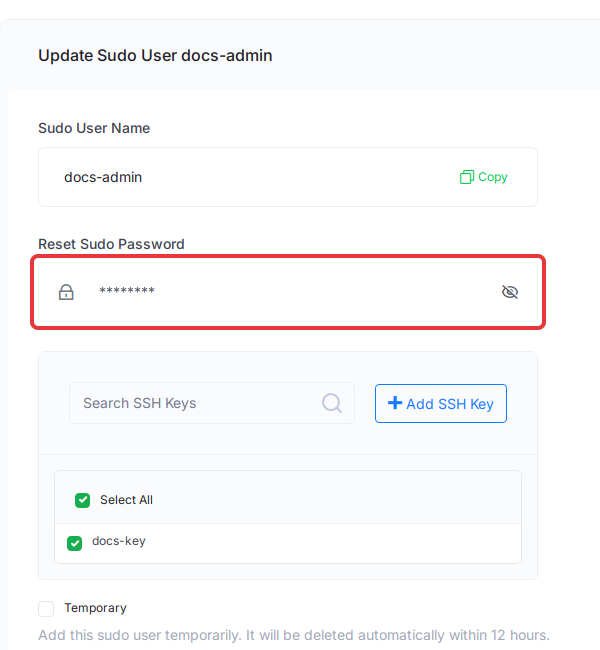
Type the new password in ‘Reset Sudo Password’. Keep at least one SSH key ticked, then click ‘Save’.
Step 3: Check that it worked
Wait for ‘Status’ to change back to provisioned. Then connect over SSH as that user and run:
sudo -vEnter the new password when asked. If the command returns with no error, your new password works. If ‘Status’ shows failed, check that the server shows as connected in xCloud and save again.
Add a new sudo user
This is the fastest way back in if you don’t know which user you had. Follow How to add a sudo user. Your existing users keep working, and you can remove any user you added with the delete icon in the list. For root, this only removes its SSH keys.
Root can only log in with an SSH key
Root password login stays off by design, so no root password exists for you to recover. Run sudo -i as a sudo user to work as root. You can also add root as a sudo user with your SSH key, or use the web terminal. Do you provide root access? explains each option.
Site users in xCloud
Each site has its own site user, who can connect over SSH and SFTP but can only reach that site’s files. This makes site users a good fit for giving a client SFTP access.
Use the site user for direct file changes or WP-CLI commands on a site. This avoids file ownership problems.
What to know about site users:
- A site user can’t open other sites’ folders or change server settings such as Nginx or PHP.
- Site users have no sudo access and no sudo password, and you can’t give them sudo. For server-wide work, add a sudo user.
- Each site has one site user. It signs in with a public key or a password, and public key sign-in can use several SSH keys.
How to set up site user access
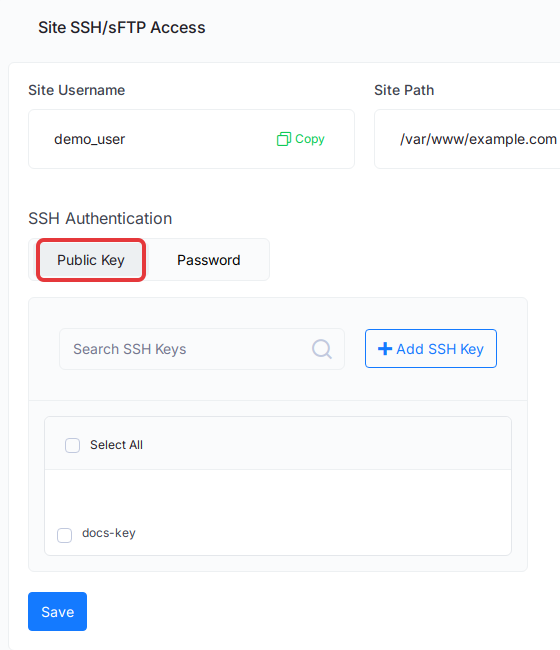
Open your site and go to ‘Access Data’ → ‘SSH/sFTP’. The ‘Site Username’, ‘Site Path’ and ‘SSH String’ are already filled in. Then choose how the user signs in.
Public Key: Under ‘SSH Authentication’, select ‘Public Key’, tick your SSH key, and click ‘Save’. A message appears that starts with ‘Site SSH Key has been updated successfully.’
Password: Select ‘Password’, enter a password, and click ‘Save’. You see the same message, even though you set a password and not a key.
Your password can’t contain any of these characters: ' ^ £ $ % & * ( ) } { @ # ~ ? > < , | = _ + ¬ -. If you see ‘Password contains invalid characters’, choose a different password. Also avoid spaces, backticks and ; [ ] \ ". xCloud accepts them, but the password saved on the server won’t match what you typed.
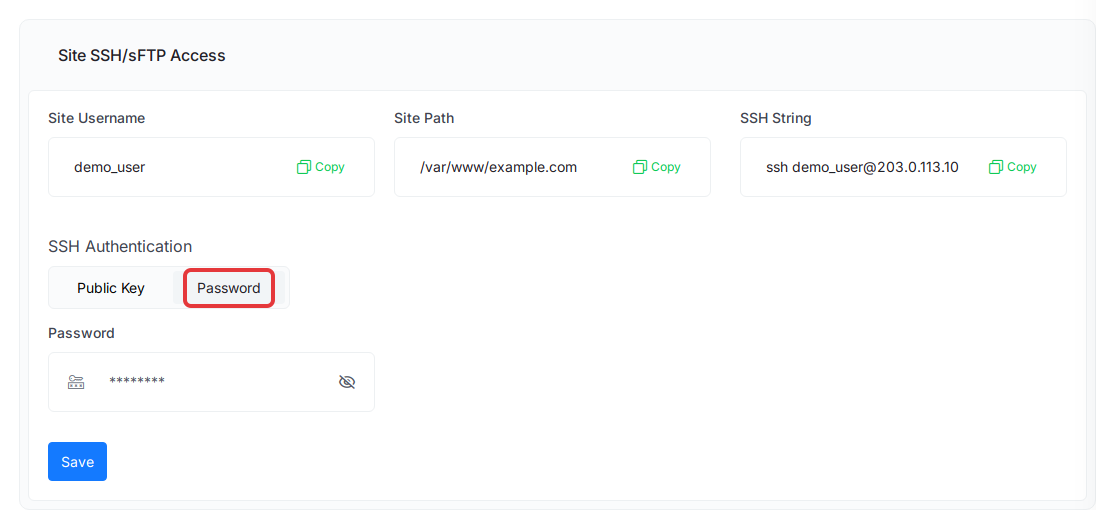
To check that it works, copy the ‘SSH String’ from the page and run it in your terminal. With ‘Public Key’, your SSH key logs you in. With ‘Password’, enter the password when asked. If the error says the server rejected the change or a Re-key is running, your earlier settings stay in place, so try again in a few minutes.
You can now connect as a sudo user or a site user by following the SFTP access guide.
Frequently asked questions
Can xCloud show me a sudo password I set myself?
No. The dashboard doesn’t show it again after you save. Open the user under Management → Sudo Users and set a new one in Reset Sudo Password.
Does the root user have a password I can reset?
No. Root password login stays off and the root sudo user has no password field. Use a sudo user and run sudo -i, or add root as a sudo user with your SSH key.
Can a site user get sudo access?
No. Site users only reach their own site’s files and have no sudo password. Add a sudo user for server-wide work.
Do I need the sudo password to log in over SSH?
No. Sudo users log in with an SSH key. You type the sudo password only when you run a command with sudo.
If you run into any issues, feel free to reach out to our support team.