

How to Increase the PHP Memory Limit for a Site and Server With xCloud
Updated May 24, 2026 · 4 min read
When a WordPress site needs more PHP memory, update the site-level PHP memory limit first. This controls the PHP settings for that specific site. If you also need to adjust the default PHP configuration for the server, update the server-level PHP memory limit after that.
Before you start
- Make sure you have access to the xCloud team where the site and server are hosted.
- Check which site needs the higher PHP memory limit.
- Use the site-level setting first if only one site needs more memory.
- Use the server-level setting only when you want to adjust the PHP configuration for that PHP version on the server.
Increase the PHP memory limit from the site settings
Use this method first. It updates the PHP configuration for the selected site. Go to ‘Sites’ from the xCloud dashboard. Select the site where you want to increase the PHP memory limit. Next, open Site Settings from the site menu.
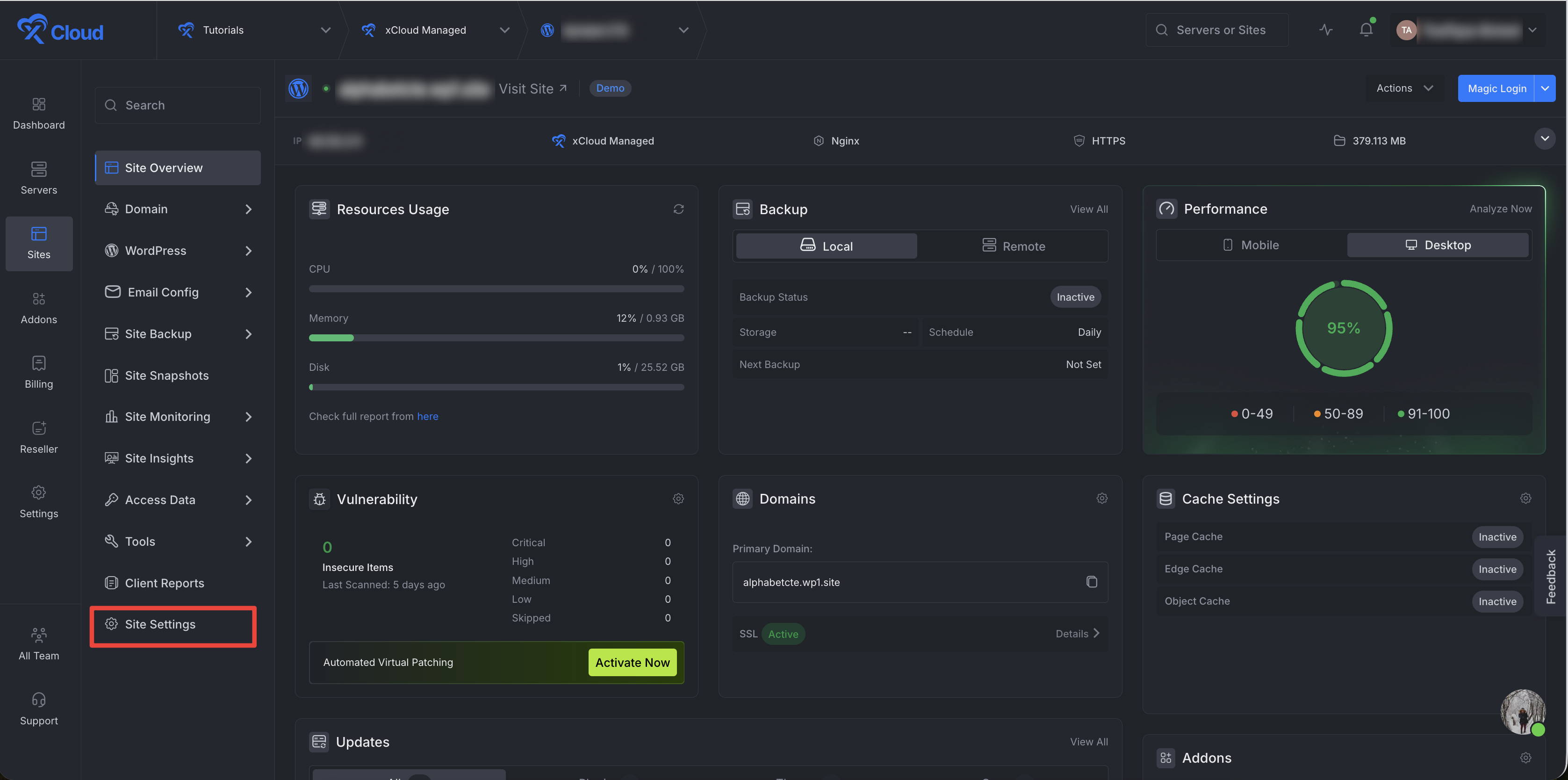
Find the PHP Configurations section from the dashboard and click on the ‘Manage’ button.
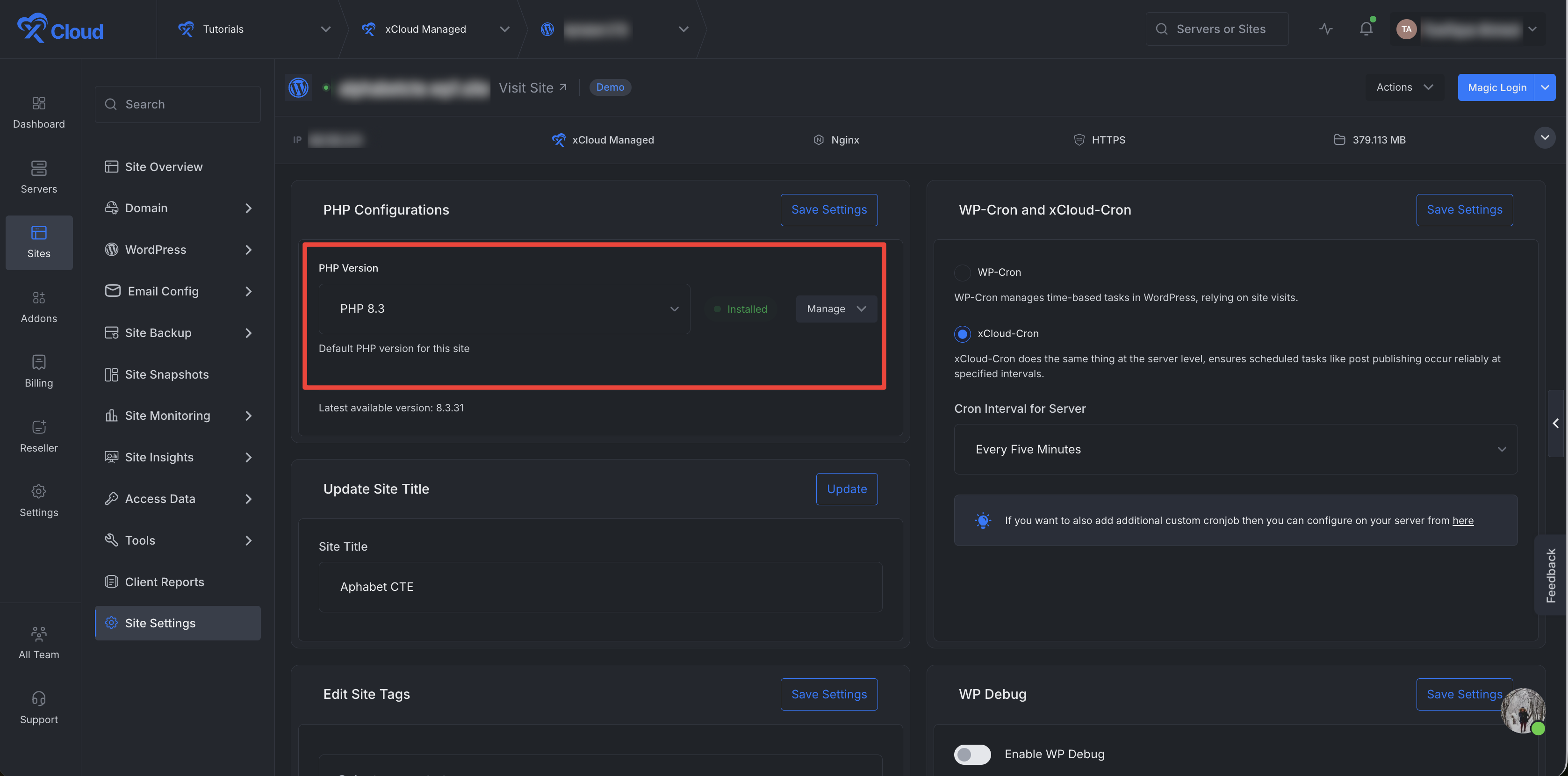
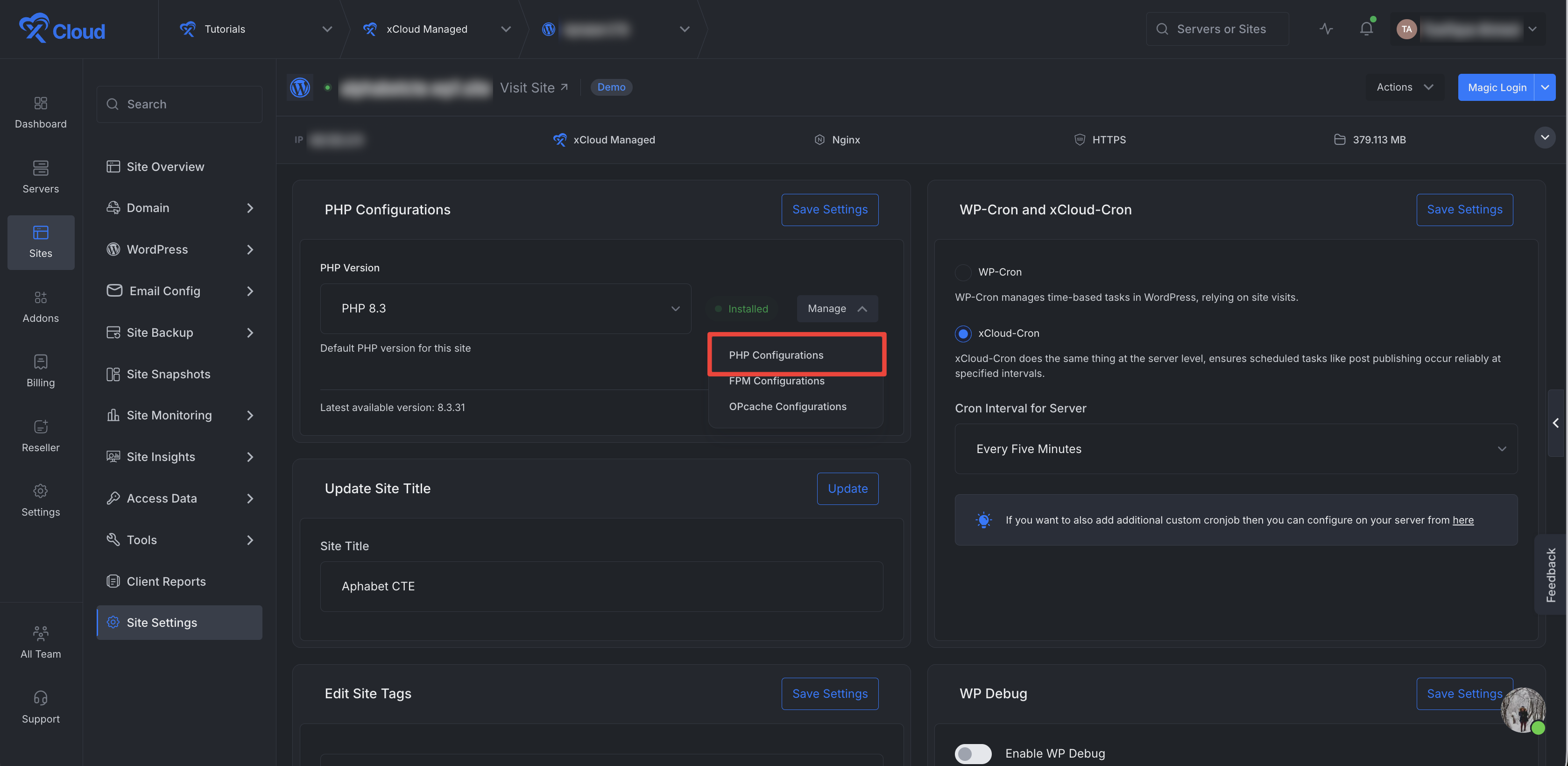
Select PHP Configurations from the dropdown.
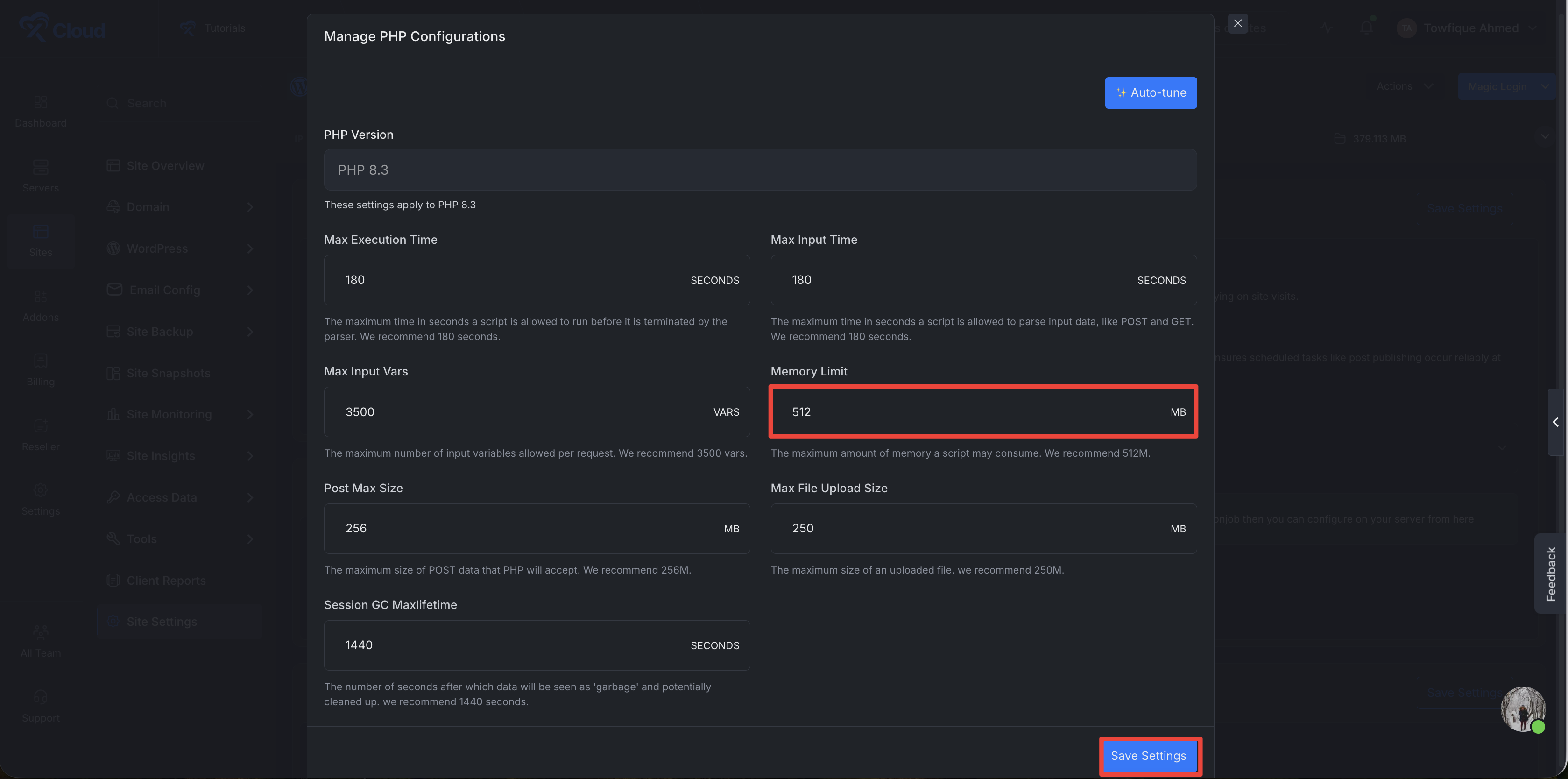
In the Manage PHP Configurations panel, find Memory Limit. Enter the new memory limit value in MB, for example 512. Click on the ‘Save Settings’.
Increase the PHP memory limit from the server settings
Use the server-level option when you need to update the PHP configuration for a PHP version installed on the server.
- Go to Servers from your xCloud Dashboard.
- Select the server where the site is hosted.
- Open Management.
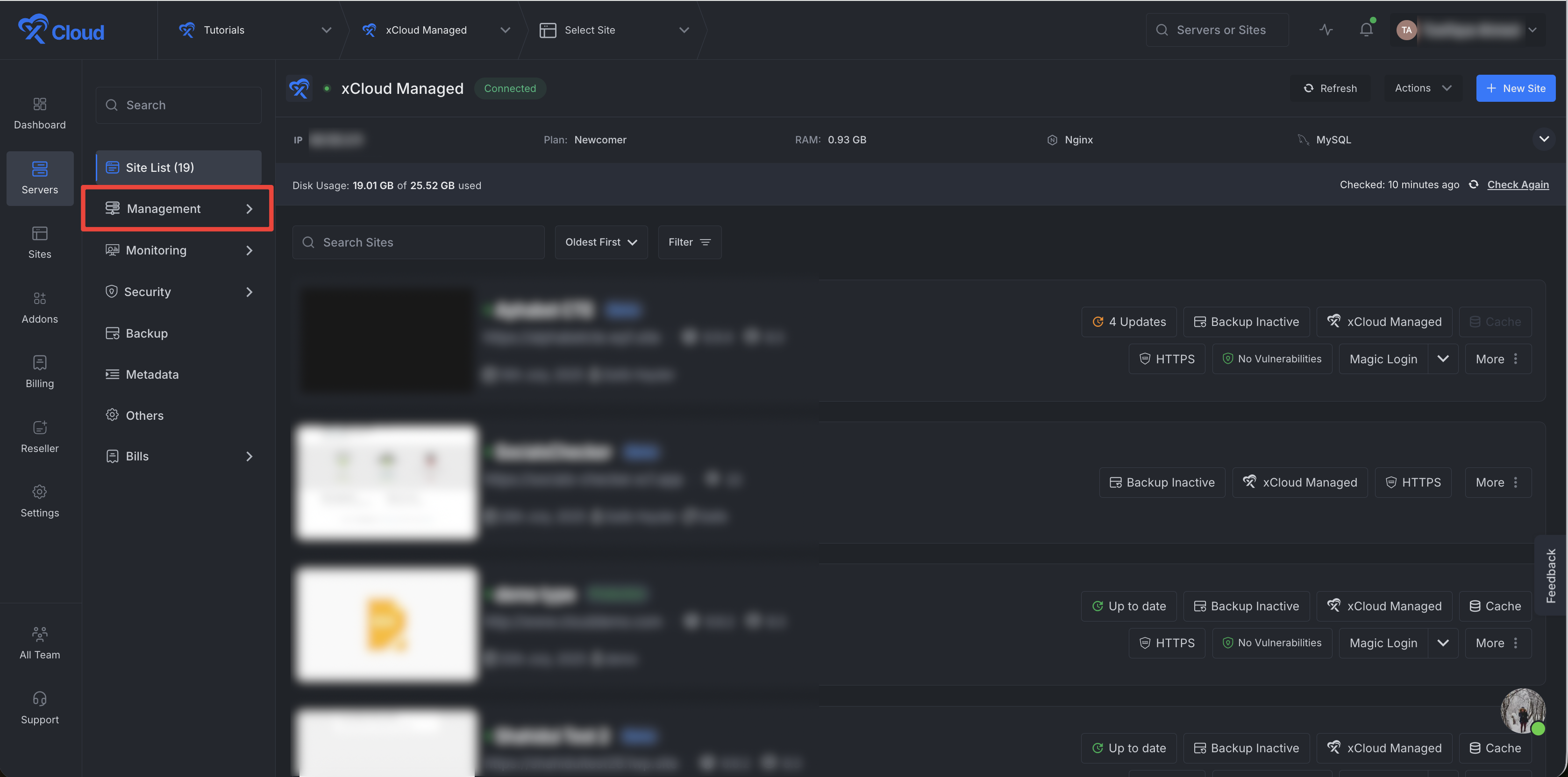
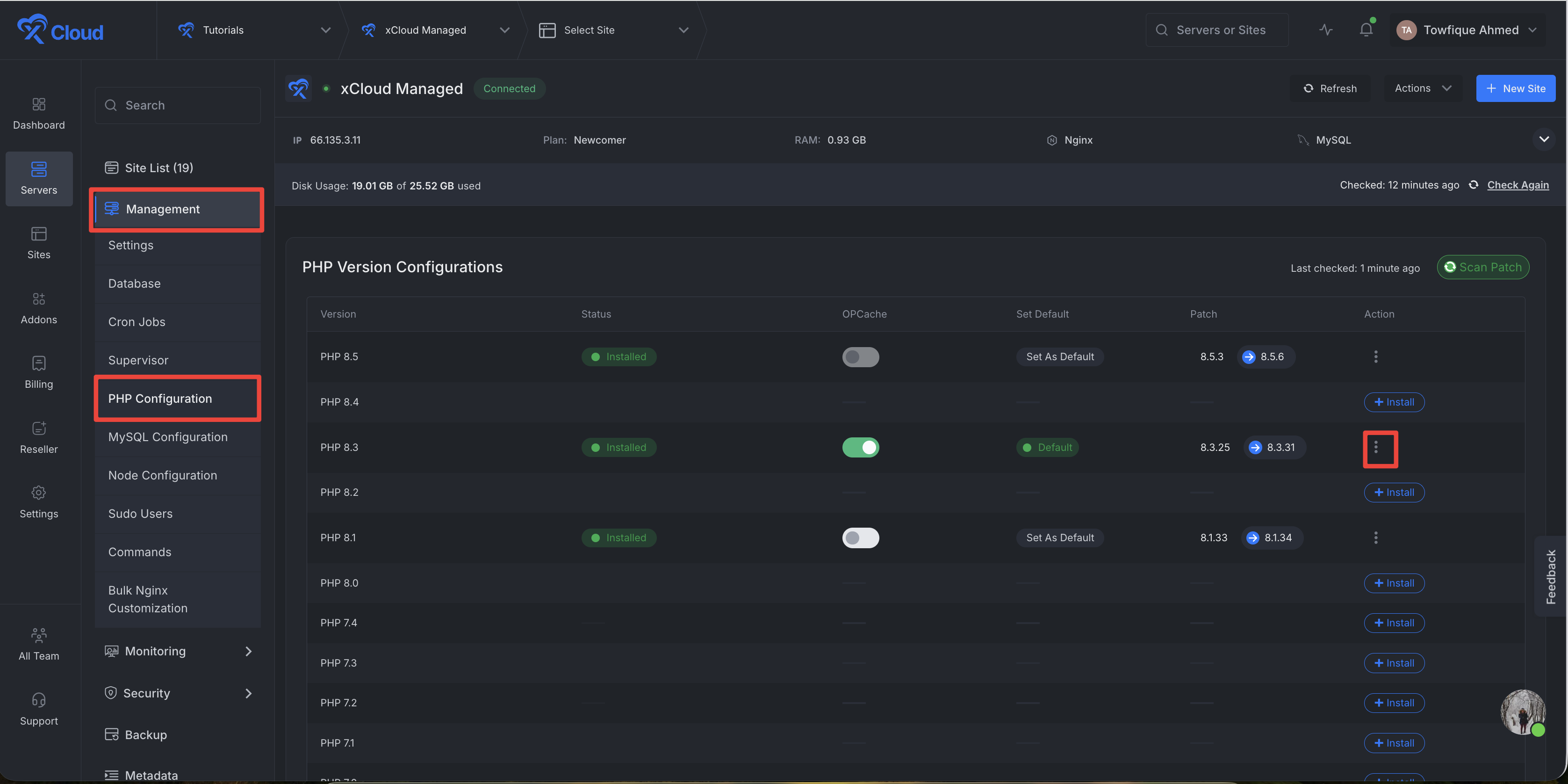
Next, choose ‘PHP Configuration’ from the navigation menu and click on the three-dot icon beside the PHP version that you are using for all the sites of this server as default.
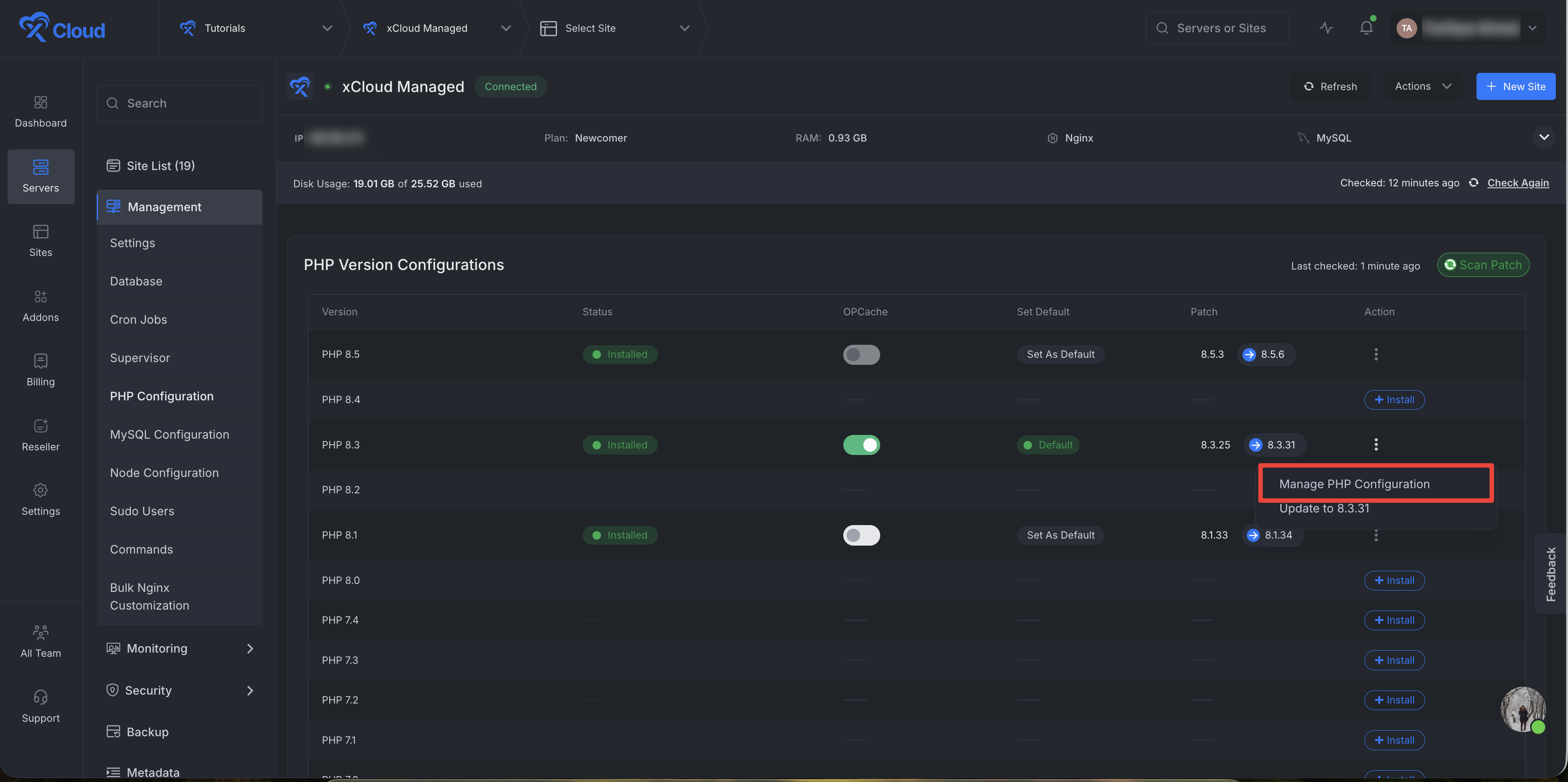
Open the action menu for that PHP version. Click Manage PHP Configuration.
In the Update PHP Configurations popup, find Memory Limit. Enter the new memory limit value in MB. Click Save Changes.
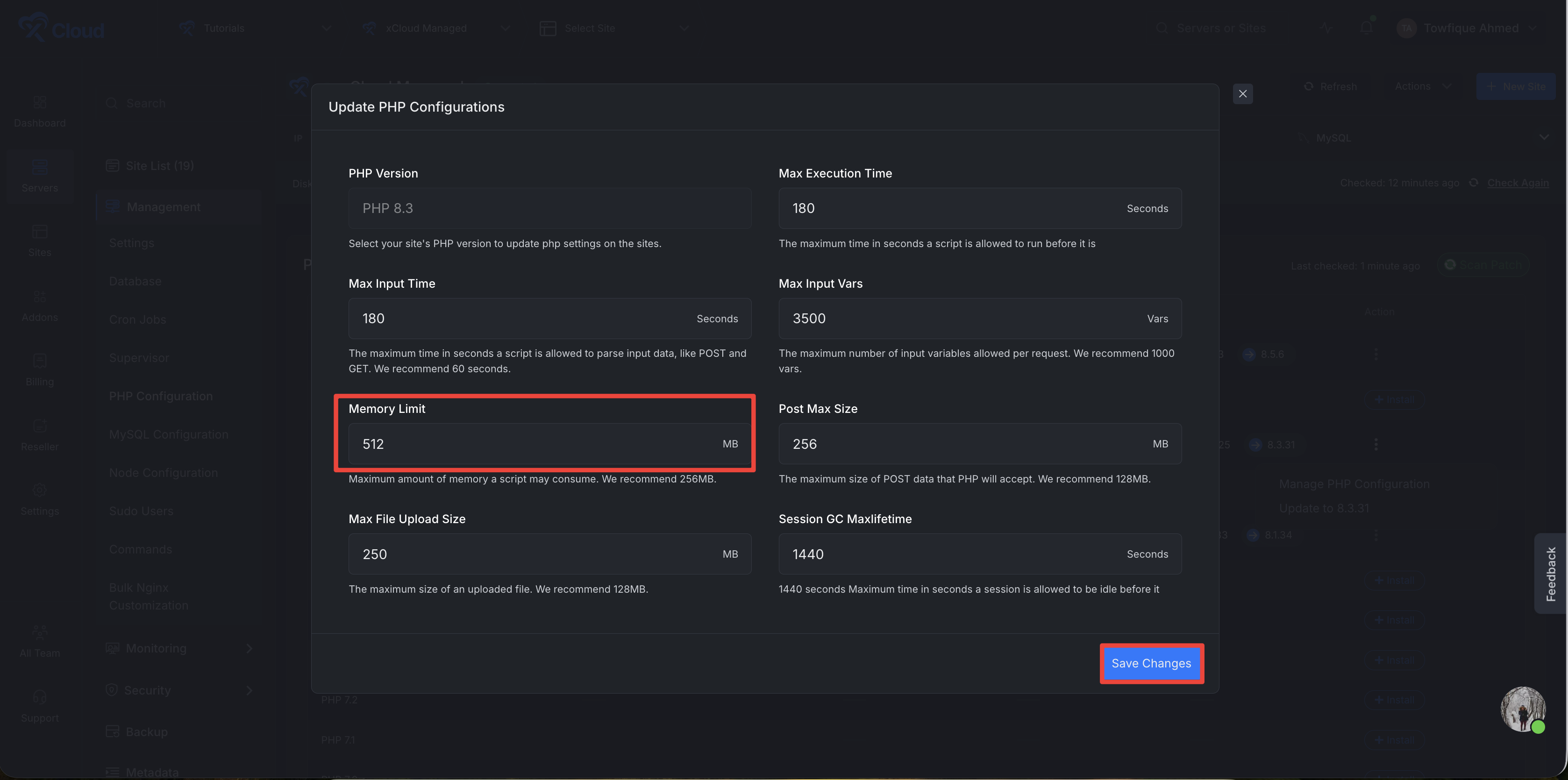
That is how easily you can increase the PHP maximum memory limit for websites in xCloud.
Site-level vs server-level PHP memory limit
| Option | Use it when |
|---|---|
| Site-level PHP memory limit | Only one site needs a higher PHP memory limit. |
| Server-level PHP memory limit | You want to adjust the PHP configuration for the selected PHP version on the server. |
Recommended values
A common value for WordPress sites is 256 MB or 512 MB. Larger WooCommerce, LMS, builder, or import-heavy sites may need more memory. Avoid setting a very high value unless the site needs it, because PHP memory usage still depends on the server’s available RAM.
Verify the change
- Reload the site or WordPress admin page that previously showed the memory issue.
- If the issue was caused by a plugin, import, backup, or update process, retry that action.
- If WordPress still shows a lower memory value, check whether the site has a WordPress-level memory constant such as
WP_MEMORY_LIMITorWP_MAX_MEMORY_LIMIT.
Troubleshooting
The site still shows a memory limit error
Increase the site-level PHP memory limit first, then retry the failed action. If the issue continues, check whether a WordPress plugin, theme, or custom code is setting a lower WordPress memory value.
The site needs more memory during imports or backups
Set the site-level memory limit to a higher value, then run the import or backup again. For very large operations, also check execution time, upload size, and post max size from the same PHP configuration panel.
The memory limit is already high but the server is still slow
A higher PHP memory limit does not add RAM to the server. If the server is low on memory or CPU, review the server resource usage and consider optimizing the site or upgrading the server plan.
Related docs
- How To Configure PHP Settings of Your Site
- How To Increase The PHP Maximum Memory Limit In xCloud?
- How To Solve The WordPress Memory Limit Exhausted Error?
FAQ
Should I update the site-level or server-level memory limit first?
Update the site-level PHP memory limit first. This is the best option when only one site needs more memory.
Does increasing PHP memory limit increase my server RAM?
No. It only changes how much memory a PHP script is allowed to use. Your server still has the same physical RAM.
Do I need to restart the server?
xCloud applies the saved PHP configuration through the dashboard workflow. If the change does not appear immediately, wait a short time and reload the affected WordPress page.
Still stuck? Contact our support team for any of your queries.